REVIEW · SAN FRANCISCO
Beginner Surfing in San Francisco at Pacifica Beach
Book on Viator →Operated by Adventure Out LLC · Bookable on Viator
Surfing starts with a safe plan.
This beginner clinic in Pacifica, just outside San Francisco, is built to help you go from clueless to catching some waves. You get a land lesson first, then water time in beginner-friendly conditions, with a calm, no-drama coaching approach.
I especially like how the session is structured for first-timers. You get a clear safety and technique foundation on land, plus plenty of time paddling and practicing the pop up before you’re asked to ride waves. I also like the small group size, capped at 8 travelers, which helps you get hands-on guidance when you need it.
One thing to consider: the price does not include parking fees, and the whole experience depends on having good weather. If you’re hoping for perfect flexibility or you hate driving to the coast, build that into your day.
In This Review
- Key things I’d prioritize before you book
- Pacifica Beach: Why this beginner class works so well
- The 30-minute land lesson: where you learn to read the ocean
- The water plan: whitewater first, then small rides
- Coaching style: small group attention that actually helps you stand up
- Gear included: wetsuit and surfboard, no added rental math
- Price and value: what $139 buys you (and why it can be fair)
- Timing and conditions: morning or mid-day, with weather as the decider
- Who should book this beginner clinic (and who might not)
- Should you book Beginner Surfing in San Francisco (Pacifica Beach)?
- FAQ
- How long is the beginner surfing lesson?
- How much time will I spend in the water?
- Where does the lesson take place?
- Do I need to bring surf gear or a wetsuit?
- Are the instructors certified?
- What’s the teaching approach for beginners?
- Can I choose when the lesson happens?
- Is there a minimum age requirement?
- How big are the groups?
- What if the weather is bad or I need to cancel?
Key things I’d prioritize before you book
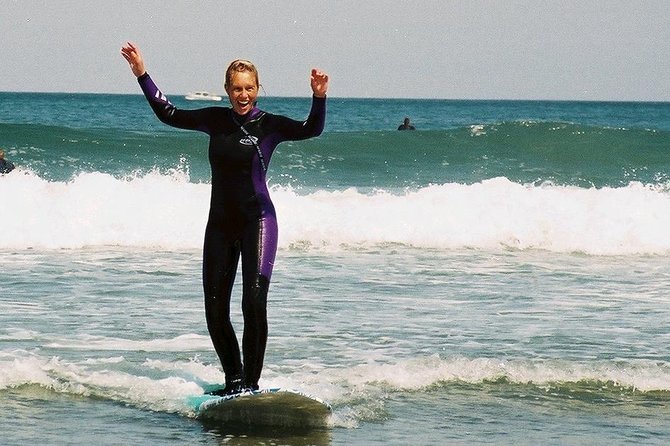
- All equipment included: wetsuit and surfboard are provided at no charge.
- Real coaching, not just standing around: about 1:30 to 2 hours in the water during a 2.5-hour lesson.
- Beginner pacing: start in shallow water riding whitewater before going farther out.
- Safety credentials: instructors are CPR/First-Aid and lifeguard certified.
- Small class feel: maximum of 8 people, in an English-speaking group.
- You choose timing: morning or mid-day lesson options.
Pacifica Beach: Why this beginner class works so well
Pacifica is one of those places where you can see the ocean doing its thing—waves, sets, and foam lines—without feeling like you’ve walked into a secret test. For a first surf lesson, that matters. The clinic is designed around a beginner-friendly progression, so you’re not thrown straight into deep water and chaotic conditions.
The location also makes sense for a SF visit. You’re based in San Francisco, but the meeting point is on CA-1 in Pacifica, and you’re close to public transportation. That helps if you don’t want the whole day to revolve around getting your car perfectly parked at the coast.
In practice, Pacifica’s surf zone gives instructors a place to teach the basics with control. You’ll start where it’s safe to learn, then work your way toward more “real surfing” as you get comfortable.
You can also read our reviews of more tours and experiences in San Francisco.



The 30-minute land lesson: where you learn to read the ocean
Before anyone hits the water, you get a land lesson that takes about 30 minutes. It’s not filler. This is where the clinic sets you up for what comes next: ocean awareness, wave behavior, and simple safety habits that keep learning fun instead of stressful.
Here’s what you should expect on land:
- Ocean awareness and conditions
- How wave breaks work and what to look for
- Safety in and out of the water
- Wave etiquette (so you know how to share space)
- Paddling fundamentals
- Push up and pop up technique
- How to balance once you’re on the board
This is also where you get the stuff that usually takes months of trial and error on your own. Surfing is physical, sure—but it’s also about timing and position. A good land lesson helps you stop guessing and start doing.
You’ll also get suited up during the setup time at the start. Plan for some “getting ready” before the teaching becomes action.
The water plan: whitewater first, then small rides
Water time is where you’ll feel the difference between a real lesson and a “try surfing” photo session. In this clinic, you can expect around 1:30 to 2 hours in the water within the total 2 hours 30 minutes.
The progression is simple and beginner-friendly:
- Start in shallow areas
- Ride the whitewater when you’re learning
- Move outward only when you’re ready
That progression matters because catching your first waves is mostly about confidence and repeatability. Whitewater riding lets you practice getting up, balancing, and feeling the board respond without the pressure of bigger, harder-to-read waves.
The instructors are also CPR/First-Aid and lifeguard certified, which is a huge comfort for first-time surfers. You should feel like someone has a safety checklist in their head. That confidence lets you focus on the technique instead of worrying about what could go wrong.
Coaching style: small group attention that actually helps you stand up
The class max is 8 travelers, and that’s not just a “nice-to-have.” In surfing, the problem is usually the same: you’re doing something slightly off, and you don’t know it yet. A small group means the instructor can watch what you’re doing and correct you while it’s still fresh.
The vibe here is consistently described as patient and encouraging. Instructors like Alan and Al are singled out for being detailed and joyful, with a safety-first approach that keeps beginners from feeling lost. Coaches such as David and Joao also come up in the teaching style people talk about—especially being careful, supportive, and focused on getting you to stand on the board.
What you’re really paying for isn’t just waves. It’s the feedback loop: try, get corrected, try again. When that happens quickly, you progress faster than you’d expect after just one session.
Gear included: wetsuit and surfboard, no added rental math
For a lot of “beginner activity” pricing, the headline number turns out to be the beginning, not the end. Here, the clinic includes all rental gear at no charge, plus all taxes, fees, and handling charges.
You should come expecting:
- A provided wetsuit
- A provided surfboard
- A professional guide throughout
That’s great value because you don’t have to hunt for rentals, deal with deposit confusion, or show up under-prepared. It also helps you avoid a common beginner issue: using gear that doesn’t fit well for your body or experience level.
One practical point: the lesson length includes time to get suited up and down to the beach. Even if you don’t control that schedule, you’ll want to arrive ready to move quickly once you get there.






Price and value: what $139 buys you (and why it can be fair)
At $139 per person, this is positioned as an all-in beginner surf clinic with guidance and equipment. The real question isn’t just the dollar amount—it’s what you get for that time.
You’re getting:
- A complete beginner lesson plan (land + water)
- About 30 minutes of technique and safety teaching
- 1:30 to 2 hours in the water
- All surf gear rental at no charge
- A small group with up to 8 people
- Professional, certified instructors
If you tried to piece this together yourself, you’d likely spend time and money just to rent gear, find surf instructions, and figure out beginner conditions. Here, the setup is built for first-timers, including wave etiquette and the safety side of learning the ocean.
Parking fees are separate, so that’s the one “hidden” cost to budget. If you’re already planning a coast day with your own transport, that’s manageable. If you’re trying to keep everything simple by staying car-free, plan around transit and whatever local ride options get you to the meeting point.
Timing and conditions: morning or mid-day, with weather as the decider
You can choose a morning or mid-day lesson. That matters because ocean conditions often change through the day, and your energy level matters for learning something new.
One more reality check: the experience requires good weather. If conditions aren’t right, it’s canceled and you’ll be offered a different date or a full refund. That’s not an inconvenience you can ignore—it’s part of surfing.
So the smart move is to book with a bit of flexibility. If your schedule is tight with no spare day, you might want to pick a time window where you can adapt if you get a weather-based shift.
Who should book this beginner clinic (and who might not)
This one fits best if you’re truly new or mostly new. The clinic is built around ocean awareness, safety, paddling, pop up, balancing, and then short rides in shallow whitewater areas. If you’ve never surfed, it’s exactly the kind of structure that makes the sport feel possible.
It’s also a good choice if you want a group experience without losing personal attention. The instructor-to-student attention is helped by the small class cap.
Minimum age is 12, so it can work well for older teens and families. Most travelers can participate, and confirmation comes at booking time.
The main reasons you might look elsewhere are also clear:
- You want to pay as little attention to safety coaching as possible (this class is safety-forward).
- You dislike weather-dependent outdoor activities.
- You’re coming with zero ability to handle parking costs at the coast.
Should you book Beginner Surfing in San Francisco (Pacifica Beach)?
Yes, if you want your first surfing session to feel safe, structured, and focused on standing up. The combination of land instruction, certified instructors, and meaningful time in the water makes this a solid “start here” option.
I’d especially book if you’re the type who learns faster when someone corrects you in real time. The small group size and the calm, beginner-focused environment are the real strengths, not the board or the location alone.
If you can spare an extra day for weather changes, and you don’t mind planning for possible parking, this is a good value way to turn a coast visit into a skill you’ll actually use again.
FAQ
How long is the beginner surfing lesson?
The lesson runs about 2 hours 30 minutes.
How much time will I spend in the water?
You can expect about 1:30 to 2 hours of water time during the 2.5-hour session.
Where does the lesson take place?
The class meets at 5000 CA-1, Pacifica, CA 94044, and ends back at the same meeting point.
Do I need to bring surf gear or a wetsuit?
No. All rental gear, including a wetsuit and surfboard, is included at no charge.
Are the instructors certified?
Yes. Instructors are CPR/First-Aid and lifeguard certified.
What’s the teaching approach for beginners?
You start with a land lesson covering safety, wave basics, etiquette, paddling, push up and pop up, and balancing. Then you move into the water and begin in shallow areas riding the whitewater before going further out.
Can I choose when the lesson happens?
Yes. You can choose between a morning or mid-day lesson.
Is there a minimum age requirement?
Yes. The minimum age is 12 years.
How big are the groups?
The maximum group size is 8 travelers.
What if the weather is bad or I need to cancel?
The experience requires good weather. If it’s canceled due to poor weather, you’ll be offered a different date or a full refund. You can cancel for a full refund up to 24 hours before the experience starts. If you cancel less than 24 hours before, it isn’t refunded.