San Francisco changes every few blocks. This tour stitches together big-name sights with neighborhood stories, all in one smooth day plan. You’ll move from government grandeur to murals, then up to a top-view panorama. The end result is a fast way to get your bearings.
I like two things most: the way the guide (for example, Rolando) adds context that makes each stop feel connected, and the payoff views—especially Twin Peaks and the Golden Gate Bridge—without turning it into a long, tiring all-day grind.
One thing to plan around: it depends on good weather, and with several stops kept to short time windows, you may want extra time afterward if something really grabs you.
In This Review
- Key highlights you’ll actually feel
- A smart way to see San Francisco in 4–5 hours
- Italian-American streets and the Chinatown contrast
- City Hall’s golden dome: quick, iconic, and photo-friendly
- The Mission District murals and food culture
- Castro’s activism story, from Harvey Milk to today
- Twin Peaks: the best SF skyline moment (and why it works here)
- Haight-Ashbury and the counterculture thread
- Painted Ladies and the Full House pop-culture connection
- Billionaire’s Row cruising: Mansions without the marathon
- Golden Gate Bridge: the headline stop, with real engineering awe
- Sausalito across the bridge: Bay views plus a real town
- Palace of Fine Arts: 1915 Exposition legacy in a quiet stroll
- Who this tour fits best
- Value check: what you get for the time
- Should you book Local Flavors in San Francisco?
- FAQ
- How long is the tour?
- What time does the tour start?
- Where is the meeting point?
- Where does the tour end?
- Is lunch included?
- What is included in the price?
- What stops are included?
- How many travelers are in the group?
- Is the tour offered in English?
- Does the tour require specific weather?
- What is the cancellation policy?
Key highlights you’ll actually feel
- Rolando-style storytelling that turns sightseeing into local context, not just photo stops
- City Hall’s golden dome viewing moment that’s quick and ticket-free
- Twin Peaks panorama for the classic SF skyline from a top vantage point
- Castro + Harvey Milk connection that explains why this neighborhood matters
- Golden Gate Bridge + Sausalito together for the Bay view plus a charming waterfront break
- Palace of Fine Arts rotunda with its 1915 Exposition legacy and Greek-myth vibe
A smart way to see San Francisco in 4–5 hours
If you only have a morning or half a day, this route makes a lot of sense. You get a classic SF mix—architecture, neighborhoods, major viewpoints—while still spending real time at places that tell you something.
The schedule runs about 4 to 5 hours total, including travel time. It starts at 8:30am at 2800 Hyde St and returns you back to the same meeting point. That loop matters because you’re not constantly re-planning transportation or guessing what order to see things in.
Also, you’ll be in an air-conditioned vehicle with a small group (max 12), which helps on a city with lots of hills and shifting weather. And since it uses a mobile ticket and is offered in English, it’s straightforward to join and stay on track.
You can also read our reviews of more tours and experiences in San Francisco.
Italian-American streets and the Chinatown contrast
Most SF tours go straight to the postcard spots. This one starts with something more personal: Italian-American culture. You’ll be in a neighborhood where you can expect authentic Italian restaurants, quirky cafes, and charming boutiques. Even if you’re not hunting for food, this start gives you a feel for how SF neighborhoods can have their own identity—almost like different mini-cities.
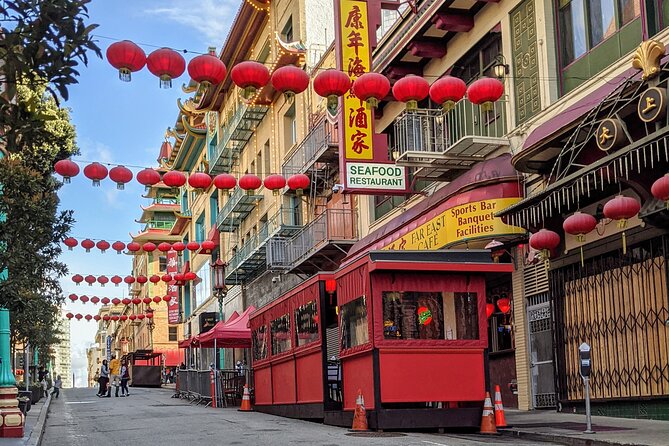
Then you shift gears to Chinatown. This area is the oldest Chinatown in the US, and it’s also tied to the broader story of immigration and community life in San Francisco. The tour frames it as a place that has faced real challenges but still functions as an active neighborhood with shopping, major restaurants, and cultural events.
Practical tip: if you’re the type who likes to plan your walking later, pay attention to storefronts and street names around Chinatown during this stop. Even with limited time, you can pick up useful clues for an afternoon return.
What to consider: Chinatown and the Italian-American area are both very “street-level.” If your priority is lots of long museum time, this opening may feel more like orientation than a deep stop.
City Hall’s golden dome: quick, iconic, and photo-friendly
One of the easiest wins is San Francisco City Hall. Approaching it, you’ll notice the grand Beaux-Arts look and the golden dome that defines the skyline in a very specific way. This building isn’t just pretty—it’s the physical center of the city’s government life.
Your stop is about 10 minutes, and the experience is basically “see it, look closely, take your photos.” The tour includes a free admission note for this stop, so you’re not burning energy on ticket questions.
Why it’s worth it: City Hall sets a tone. After murals and neighborhood culture, you suddenly get civic scale. It’s a different kind of “SF identity,” and it helps the rest of the day feel more grounded.
The Mission District murals and food culture
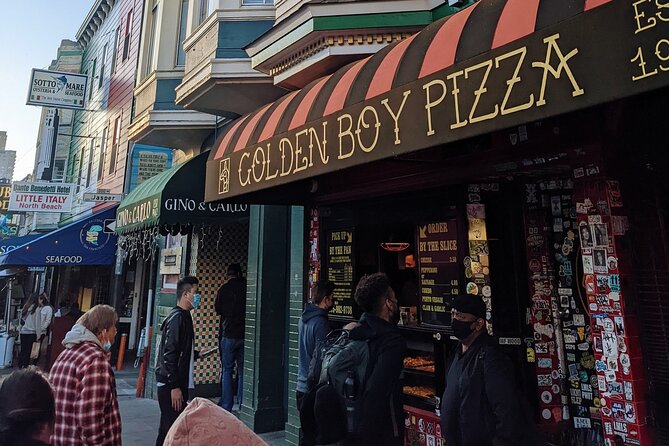
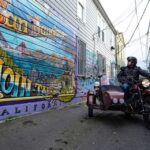
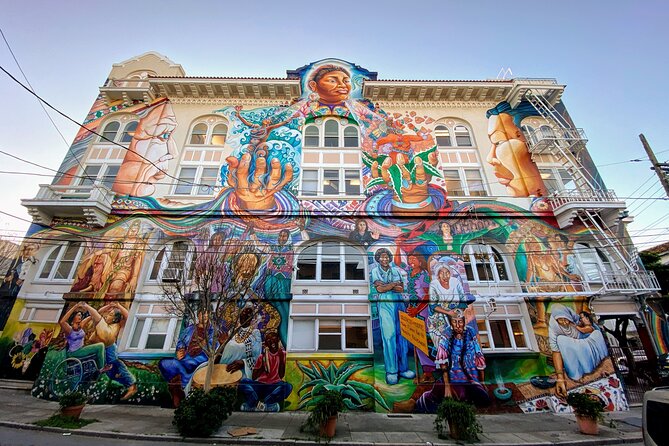
Next comes the Mission District, tied to Latin American cultural roots and known for its colorful murals and strong food scene. Even in the short stop window (about 20 minutes), you can get the key idea: this neighborhood isn’t just a backdrop. It’s a living place where art and everyday life share the same walls.
What I like here is the way the tour balances art with real-world context. You’ll hear that the area has faced pressures like gentrification and rising housing costs, but it still remains an important, beloved part of San Francisco.
How to use this stop well: during your 20 minutes, pick one mural or block to focus on. Don’t try to “see everything.” A single good focal point makes the photos better, and it makes the stories stick.
Possible drawback: murals and streets can be crowded at certain times, and your time is limited. If you know you want mural hunting as a main activity, plan to return on a separate day.
Castro’s activism story, from Harvey Milk to today
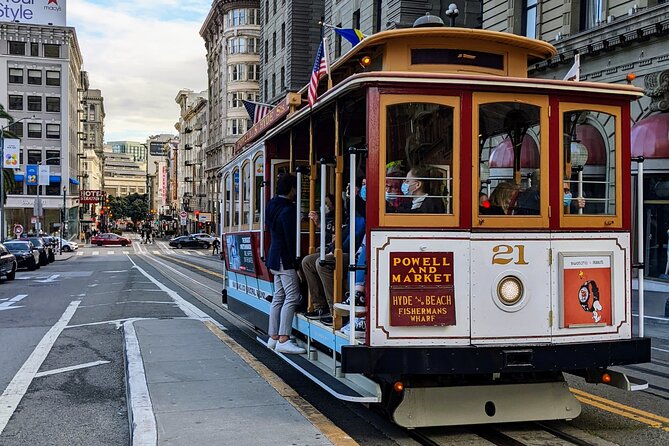
The tour includes the Castro neighborhood, one of SF’s most recognizable areas and also one of its most meaningful. The point here isn’t just appearance. You’ll learn it’s tied to LGBTQ+ activism and culture, including the fact it was home to the first openly gay elected official in the US—Harvey Milk.
This matters because many visitors treat the Castro as a theme park for rainbow photos. The tour helps you understand it as a neighborhood with people, local businesses, and long-term community identity.
Practical angle: if you want to keep your energy for the rest of the route, treat the Castro stop like a “story stop.” Look around, note the businesses, then move on. Later, if you want to shop or linger, you’ll know what kind of streets to seek out.


Twin Peaks: the best SF skyline moment (and why it works here)
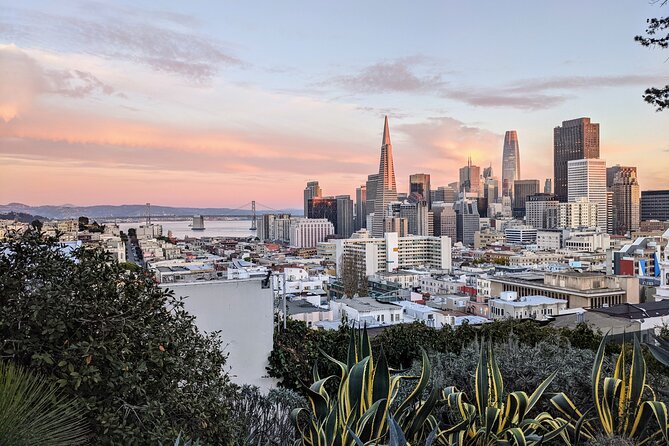
If there’s one stop built for first-time visitors, it’s Twin Peaks. You’ll get one of the best panoramic views of San Francisco, from one of the city’s tallest peaks. Your time here is about 15 minutes, which is enough to take in the big picture and get a couple of solid photos.
Why this timing works: Twin Peaks gives you the “map in your head.” After seeing downtown architecture and neighborhood streets, you finally see how everything sits in relation to the bay and hills. That makes the next stops—Golden Gate views and Bay crossing—feel less random.
Weather note: since the tour requires good weather, Twin Peaks is where conditions really matter. If you’ve got a clear forecast, this is the best part to look forward to.
Haight-Ashbury and the counterculture thread
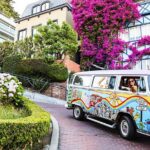
The route also includes Haight-Ashbury, closely tied to the counterculture movement of the 1960s. The neighborhood is described as a place that drew young people with a free-spirited, bohemian vibe, and it connected to famous musicians such as the Grateful Dead, Jefferson Airplane, and Janis Joplin.
Even if you’re not a music-history person, this stop helps explain a big piece of SF mythology: creative rebellion isn’t just a story—it shaped neighborhoods, reputations, and street identity.
What to consider: Haight-Ashbury is more “feel and street character” than “one specific must-see building.” Your short time window may not let you explore deep blocks, so save extra time if you want to shop or walk.
Painted Ladies and the Full House pop-culture connection
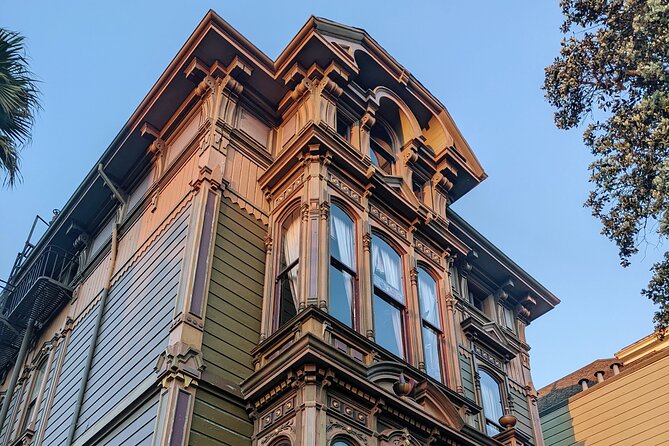
Next is Painted Ladies, the row of Queen Anne Victorian homes made famous by the 90s TV show Full House. Your stop is about 20 minutes, and it’s one of those classic SF photo spots where the scene is instantly recognizable.
I like this stop because it gives you a clean visual marker for San Francisco’s architectural story. The Victorian style here isn’t abstract—it’s a real street view, and you can connect it to the city’s overall design personality.
Quick tip: take your photo first, then look for details right after—ornate trim and rooflines. The first shot is for memory. The second glance is for real appreciation.
Billionaire’s Row cruising: Mansions without the marathon
After Painted Ladies, you’ll witness mansions as you cruise down what’s unofficially called Billionaire’s Row. This part is different from the earlier stops. You’re not stuck in one spot. You’re watching the neighborhood change as homes get larger and more dramatic.
Why it fits this kind of tour: it gives you a taste of SF wealth contrasts without demanding a long dedicated outing.
What to consider: if you prefer to walk for your views (not just ride by), this portion won’t feel like enough.
Golden Gate Bridge: the headline stop, with real engineering awe
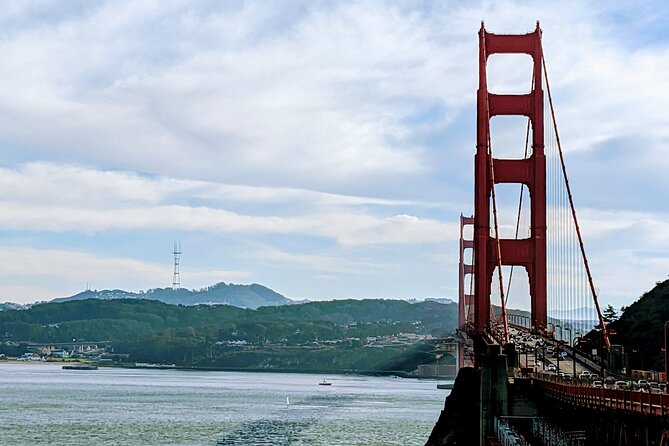
Then comes the moment most people saved SF for: the Golden Gate Bridge. Your stop is about 20 minutes, and it’s presented as arguably the city’s most iconic landmark. This is not just a view. It’s an engineering achievement that still reads as modern even after decades.
The tour frames this stop as a chance to understand why people travel from around the world to see it. Even if you’ve seen photos before, being close to the bridge changes scale and perspective.
Practical advice: if visibility is good, prioritize the angle where the bridge cables and roadway lines look longest. You’ll get a more “this is real” photo than the quick front-on shot that flattens everything.
Sausalito across the bridge: Bay views plus a real town
After the bridge, you’ll cross into Sausalito, located just across the Golden Gate Bridge. This is a picturesque town known for scenic Bay views, a charming houseboat community, and a lively downtown.
Your time here is about 1 hour, and lunch is not included. The tour suggests you stroll along the waterfront promenade, browse boutique shops and art galleries, and pick a meal where it fits your style and budget.
This stop is valuable because it changes the pace. Instead of viewing SF from vantage points, you get a more local “day-out” feeling—flat-ish waterfront walking and a place to slow down.
What to consider: since lunch isn’t included, you’ll want cash or card ready for food. And if you’re expecting a full guided walking tour of Sausalito, know your time is limited.
Palace of Fine Arts: 1915 Exposition legacy in a quiet stroll
To close the sightseeing arc, you’ll visit the Palace of Fine Arts Theatre. This structure is the only remaining from the 1915 International Exposition, and it’s described as one of the most beautiful landmarks in SF. You can expect a rotunda that measures 162 ft (49 meters), and a walk underneath it that feels like stepping into a myth-story setting.
Your stop is about 15 minutes. That’s enough for photos, a quick look around, and a moment of calm at the end of the day.
Why it’s a good finish: the earlier stops can be intense—views, neighborhoods, crowds of people in famous spots. Palace of Fine Arts gives you a softer landing before heading back.
Who this tour fits best
This is a strong choice for:
- First-timers who want a guided order for the main sights and a handful of neighborhood lessons
- People who like mix-and-match sightseeing: landmarks plus local culture
- Visitors who prefer short stops with context rather than one long attraction per day
- Anyone who wants a tour that helps them plan the rest of their trip afterward
You might want to skip or adjust your expectations if:
- You prefer long time in museums or deep neighborhood walking
- You want lunch handled for you (it’s not included)
- You’re traveling in conditions where good weather is unlikely, since the tour calls for it
Value check: what you get for the time
This tour includes the comfort of an air-conditioned vehicle, a mobile ticket, and access to a route where the stops are presented with admission notes as free. You also get something you can’t buy at a box office: interpretation.
The biggest value is time management. In 4–5 hours, you see City Hall, neighborhoods like Mission and Castro, a major viewpoint at Twin Peaks, the Golden Gate Bridge, a Bay-town interlude in Sausalito, and a landmark finish at Palace of Fine Arts. That’s a lot to fit into one morning—especially with a small group size.
Should you book Local Flavors in San Francisco?
Yes, if you want an efficient way to learn the city’s “why,” not just its “what.” The combination of neighborhood culture, civic architecture, and top Bay viewpoints is a smart mix for a first day.
I’d book it especially if you like knowing where to go next. A good guide (like the Rolando-style storytelling you may encounter) can give you the context that makes your later self-guided wandering feel more confident. Just make sure you’re flexible on weather, and plan to handle lunch on your own in Sausalito.
If you tell me your travel dates and whether you’ll have another day to explore, I can suggest how to pair this tour with a follow-up plan around the stops you care about most.
FAQ
How long is the tour?
The tour runs about 4 to 5 hours, and that total includes travel time.
What time does the tour start?
The start time is 8:30am.
Where is the meeting point?
The tour meets at 2800 Hyde St, San Francisco, CA 94109, USA.
Where does the tour end?
The tour ends back at the meeting point on Hyde St.
Is lunch included?
No. Lunch is not included.
What is included in the price?
An air-conditioned vehicle is included.
What stops are included?
The itinerary includes stops at San Francisco City Hall, Mission District, Twin Peaks, Painted Ladies, Golden Gate Bridge, Sausalito, and the Palace of Fine Arts Theatre, plus additional neighborhood sections including Italian-American culture, Chinatown, the Castro, Haight-Ashbury, and a cruise past Billionaire’s Row.
How many travelers are in the group?
The tour has a maximum of 12 travelers.
Is the tour offered in English?
Yes, it’s offered in English.
Does the tour require specific weather?
Yes, it requires good weather. If it’s canceled due to poor weather, you’ll be offered a different date or a full refund.
What is the cancellation policy?
Free cancellation is available. You can cancel up to 24 hours in advance for a full refund. If you cancel less than 24 hours before the start time, the amount paid is not refunded.