REVIEW · SAN FRANCISCO
San Francisco Castro Mission Loop Tour
Book on Viator →Operated by Roam Local · Bookable on Viator
Two neighborhoods, one smart walking loop. You get a guided pass through the Castro and Mission District that helps you read the city like a local, not a checklist. This is a walking tour built around neighborhood culture and history, with stops that are close enough to keep momentum and interesting enough to make you slow down.
I especially like Ryan’s storytelling—he’s funny, animated, and gives you a lot of city lore without turning the walk into a lecture. I also like the small-group feel, capped at a very limited size, so you can ask questions and get answers that fit what you’re curious about.
One consideration: you should be ready for a lot of walking and hills, and the tour runs best with good weather since it depends on the day outside.
In This Review
- Key things to know before you go
- Why the Castro and Mission Loop works so well
- Meeting point at Castro Street and Market: start strong, stay together
- Stop 1: Castro District and Liberty Hill (with Castro Theatre nearby)
- Stop 2: Mission District murals, Victorian architecture, and Buried Lagoon
- Ryan’s guide style: why the stories matter more than the route
- Price and value: what $65 buys you in real terms
- How much you’ll walk: hills, stamina, and comfort tips
- Who should book this Castro Mission Loop tour
- Should you book the San Francisco Castro Mission Loop Tour?
- FAQ
- How long is the Castro Mission Loop Tour?
- How much does the tour cost?
- Where does the tour start and end?
- Is the tour guided in English?
- Is admission included?
- What’s the group size?
- Do I need good weather for the tour?
- Is free cancellation available?
- Are service animals allowed?
Key things to know before you go
- A guide who makes the streets make sense: Ryan shares stories tied to what you’re seeing, from architecture to everyday details.
- Small-group time: the tour stays limited in size, so the pace stays human and personal.
- Castro stops plus Liberty Hill: you’ll cover more than one pocket of the Castro area, not just the obvious blocks.
- Mission highlights with variety: murals, Victorian architecture, and an unusual stop tied to the Buried Lagoon.
- You get views and secret spots: expect climbing, good sightlines, and little corners you’d likely miss alone.
- Ticket-free featured entries: both main stops list admission as free.
Why the Castro and Mission Loop works so well
The smart thing about this tour is that it’s not trying to cover San Francisco. It focuses on two neighborhoods people talk about constantly, but it does it by walking actual streets and letting the details guide the story.
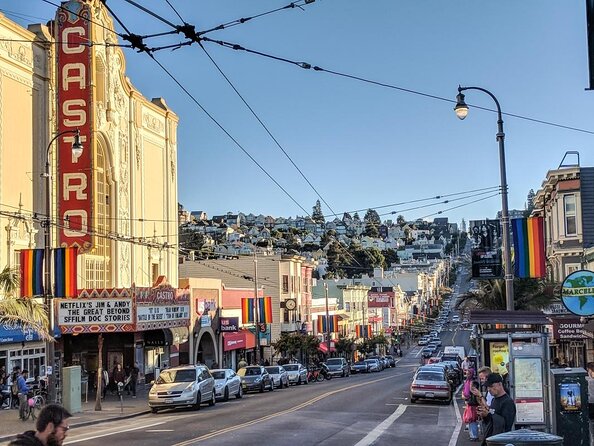
In the Castro, you’ll see how a neighborhood identity shows up in public spaces and landmarks. In the Mission, you’ll notice how art and architecture become a kind of living record. Put them together and you get contrast: community energy in the Castro, plus dense texture in the Mission, where you can feel layers of time.
And the guide makes that difference. When Ryan talks about what’s in front of you—plants, homes, building details—it stops being sightseeing and starts being understanding. That’s the kind of payoff you want from a paid walking tour.
You can also read our reviews of more tours and experiences in San Francisco.

Meeting point at Castro Street and Market: start strong, stay together
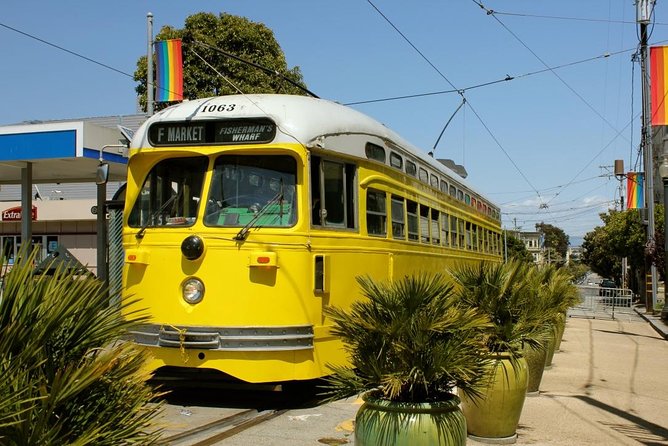
The tour starts at Castro St & Market St and ends back at the same meeting point. That matters more than it sounds. When you return to the start, you avoid the stress of figuring out how to get home while you’re already tired.
It’s also near public transportation, which is handy if you’re building the day around other plans. Plan on a prompt start and keep water handy. The walk includes hills, and you’ll feel it more if you show up unprepared.
In a small group, early cohesion matters. The limited headcount means you’re likely to move as a unit and hear instructions clearly. If you’re the type who likes to ask a quick question mid-walk, this setup is friendly.
Stop 1: Castro District and Liberty Hill (with Castro Theatre nearby)
The first stretch runs about 1 hour 30 minutes and centers on the Castro District, including the Castro Theatre area, plus Liberty Hill. The big value here is variety. You’re not stuck on one street.
You’ll get story-based context along the way: why certain landmarks matter, how the neighborhood’s character shows up in the built environment, and what to notice as you look around. One of the strongest notes from the walk is how Ryan links details you might otherwise miss—like architectural cues, street-level textures, and the way people use spaces.
Expect views and elevation. Several guides’ descriptions from past participants point to climbing hills and getting rewarding sightlines. That’s not a complaint if you pack the right expectations. Treat this first stop like a warm-up for the Mission: work up your legs now, then you’re ready to enjoy what comes next.
Also, admission is listed as free for this stop. That’s good value because it reduces the number of separate costs that can quietly pile up on walking tours.
Possible drawback at this stop: if hills slow you down, the Castro/Liberty Hill area may feel like more effort than a flatter neighborhood walk. If you’re only comfortable with gentle walking, you might want to consider whether the moderate physical fitness note matches your pace.
Stop 2: Mission District murals, Victorian architecture, and Buried Lagoon
After the Castro, the tour shifts to the Mission District for another 1 hour 30 minutes. This is where the streets look busier and the architecture feels more varied.
You’ll see major Mission touchpoints, including:
- an Alley of Murals stop
- restaurants along the way
- a stop tied to the Buried Lagoon
- Victorian architecture details
The Mission can be easy to photograph and hard to understand at first glance. This tour helps with that. Ryan’s approach is to turn visual chaos into patterns—what you’re seeing has meaning, and the neighborhoods’ history connects to the way the area looks today.
This stop also tends to deliver the wow moments. In feedback, people mention amazing views, stunning architecture, and even secret stairs and lovely residential gardens. That doesn’t mean the entire Mission is a hidden staircase museum. It means you’ll likely get nudged toward the kinds of side streets and sightlines that make a walking tour feel special.
Admission is listed as free for this stop too, so you’re getting maximum time exploring with fewer add-ons.
One practical thing to remember: the Mission is full of sidewalks, doors, and details. If you’re someone who likes to browse small shops or pause often, the pace might feel tight at first. In a small group, you can usually work in a quick look, but don’t assume you’ll have a long shopping break built into the schedule.
Ryan’s guide style: why the stories matter more than the route
What really drives the rating on this tour is the guide. Ryan comes up again and again for how he teaches the city without turning it into homework.
People describe him as very detailed, humorous, and animated. That’s not just personality—it changes how you move through the neighborhoods. When the guide points out the plants, the character of homes, or specific local lore as you walk, you stop feeling lost. You start feeling like you’re learning the city in real time.
You’ll also notice the tour has that subtle you’re-not-just-here-to-take-photos energy. It’s built to help you read what you’re seeing. That’s why this type of tour works even if you’ve already heard general info about the Castro and the Mission.
If you love city history and culture, this is a strong match. If you’re more of a casual walker, it still works because the guide’s stories ride alongside what’s physically around you. You’re not stuck listening at street corners for long stretches.






Price and value: what $65 buys you in real terms
At $65 per person for about 3 to 4 hours, this tour sits in the sweet spot for a guided neighborhood walk. You’re paying for three things you can’t easily replicate solo without extra effort:
1) a focused route that hits the right mix of landmarks and lesser-seen streets
2) context that turns pictures into understanding
3) a small-group pace that keeps the experience personal
The tour also lists all fees and taxes included, which matters. A lot of tours advertise a base rate but add costs later. Here, you can budget quickly and keep your day simple.
The free admission note for both stops also helps. It’s one less item where the bill can creep up while you’re walking around.
Is it worth it for a first-time visitor? Often yes, because the neighborhoods are iconic and you need help sorting out what matters. Is it worth it if you already live in the area? That depends, but the feedback includes locals returning for more. If you enjoy street-level storytelling, you might find it rewarding even if you’ve passed through before.
How much you’ll walk: hills, stamina, and comfort tips
This is not a sit-down, low-effort tour. It’s built for moderate physical fitness, and multiple comments point out that you’ll climb hills and walk enough to feel it.
Here’s how to think about it:
- If you can do a normal neighborhood walk with some elevation changes, you’ll be fine.
- If your pace is slow or you’re using mobility aids, you may need to slow down more often than the group prefers.
Good shoes are a must. Bring water. Start the day with the basics covered so you can spend your energy on what you came for: the architecture, the views, and the guide’s stories.
Weather matters too. The tour requires good weather, and if it gets canceled due to poor conditions, you’ll be offered a different date or a full refund. So check the forecast before you commit your day plans.
Who should book this Castro Mission Loop tour
You’ll probably love it if you:
- want a guided walk that focuses on culture and history without turning into a museum visit
- like small-group experiences where you can ask questions
- enjoy cities for their details, like architecture, murals, and street-level textures
- don’t mind hills if the reward is views and interesting side streets
It might be less ideal if you strongly prefer flat, easy walking, or if you want lots of free time to browse without moving again right after.
Overall, this works best as a morning or early afternoon plan. You’ll start fresh, enjoy the hillier parts with energy, and still have time left in the day for food and downtime.
Should you book the San Francisco Castro Mission Loop Tour?
If you want a guided neighborhood walk with a real storytelling guide and a route that connects the Castro and the Mission in a smart loop, I think it’s a good booking. The combination of a small group, free admission for the featured stops, and Ryan’s on-the-street explanations makes the $65 feel like it’s going to the right place.
Book it if you’re excited by murals, architecture, and city lore you can actually see. Skip it only if you know you struggle with hills or long walks. Otherwise, this is the kind of tour that leaves you with better bearings—and a lot more city context than you started with.
FAQ
How long is the Castro Mission Loop Tour?
The tour runs about 3 to 4 hours.
How much does the tour cost?
It costs $65.00 per person.
Where does the tour start and end?
It starts at Castro Street & Market Street and ends back at the same meeting point.
Is the tour guided in English?
Yes, it’s offered in English.
Is admission included?
Yes. The listed admission for the Castro and Mission stops is free.
What’s the group size?
The tour is limited to a small group, with a maximum noted as 8 travelers. The experience also describes a capped small group size for a personal feel.
Do I need good weather for the tour?
Yes. The experience requires good weather, and if it’s canceled due to poor weather, you’ll be offered a different date or a full refund.
Is free cancellation available?
Yes. You can cancel up to 24 hours in advance for a full refund. If you cancel less than 24 hours before the start time, the amount paid is not refunded.
Are service animals allowed?
Yes, service animals are allowed.