REVIEW · SAN FRANCISCO
San Francisco Golden Gate Seaplane Tour
Book on Viator →Operated by Seaplane Adventures · Bookable on Viator
San Francisco looks different from the water. This 30-minute seaplane tour gives you guaranteed window seats while flying a tight loop over the Golden Gate, Alcatraz, and the Marin coastline. I like the small scale here (max 6 passengers) and the pilot-led sight spotting, but the main thing to know up front is that your exact views can shift a bit with weather and route changes.
After check-in, you’ll take off from the bay, circle over landmarks, and land back in Sausalito—with time to explore on your own if you want. It’s offered in English, and the whole flight is built for wide, panoramic views through the plane’s big windows, including Tiburon, Belvedere, Sausalito, and views out toward Angel Island.
In This Review
- Key highlights
- The real thrill: seeing San Francisco from above the bay
- First steps: check-in and what the flight setup implies
- The 30-minute route: what you see and why each stop matters
- Leaving the water and flying past Stinson Beach
- Muir Woods from above: the redwood effect
- Marin Headlands and the dramatic bay edge
- The Golden Gate Bridge: the main event
- Financial District and downtown: where towers meet hills
- Pier 39 and Fisherman’s Wharf: the “coastline identity”
- Alcatraz and Angel Island: the islands that anchor the bay
- Tiburon and Belvedere: the waterfront towns perspective
- Landing back in Sausalito: wrap it up on the water
- Window seats: the best promise on the ticket
- The “small group” factor: how max 6 passengers changes everything
- Price and value: $326 for 30 minutes, and what you’re really paying for
- Weather, route changes, and what flexibility should look like
- Timing your day: where Sausalito fits into your plans
- Helpful notes: pilot style, comfort, and a few real-world gotchas
- Who should book this seaplane tour, and who might pass
- Should you book this Golden Gate Seaplane Tour?
- FAQ
- How long is the Golden Gate Seaplane Tour?
- Does everyone get a window seat?
- What landmarks will I see during the flight?
- Where do we go after the flight lands?
- Is food or drinks included?
- Is there a minimum number of people per booking?
- How many passengers are on the seaplane?
- What happens if the flight is affected by weather?
- What is the cancellation refund timeline?
Key highlights
- Every passenger gets a window seat, so you’re not stuck fighting for views
- Max 6 passengers in the seaplane, which keeps the experience personal
- A classic SF aerial route: Golden Gate, Alcatraz, Fisherman’s Wharf, and more
- You fly over big nature icons too: Muir Woods and the Marin Headlands
- Landing back in Sausalito means you can extend the trip with your own plans
- Route may vary due to weather, so flexibility helps
The real thrill: seeing San Francisco from above the bay
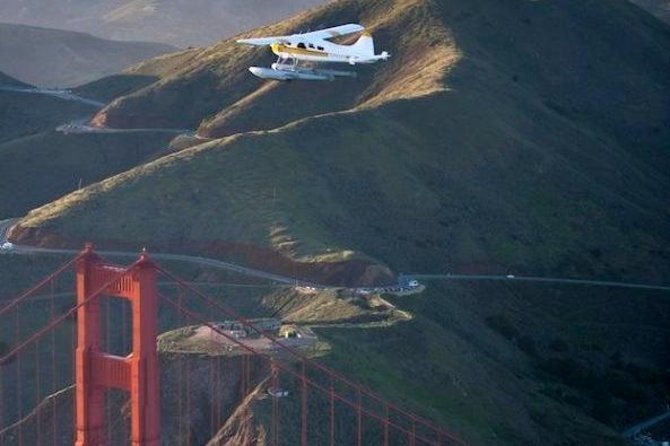
There’s a reason SF photos from boats and from the streets feel different. From the air, the city snaps into focus—the geometry of the bridges, the way neighborhoods stack up on hills, and how the bay bends around Marin. This tour is short, but it’s engineered for big “wow” in a small time window.
I love that you start with a seaplane setup: high wings, big windows, and a ride that’s naturally made for panoramic sightseeing. You don’t have to guess where to stand for the best angle like you do on a crowded viewpoint. And because this flight is only about 30 minutes, you get the aerial highlights without turning your day into a half-day project.
One practical consideration: since the flight path can vary, you can’t assume every landmark will be perfectly centered in your exact window for every seat. One review complaint (fair and useful) described getting more views on one side than the other. So pick your expectations accordingly: this is a best-of-the-region view, not a precision “sit here and see every millimeter” guarantee.
You can also read our reviews of more tours and experiences in San Francisco.


First steps: check-in and what the flight setup implies
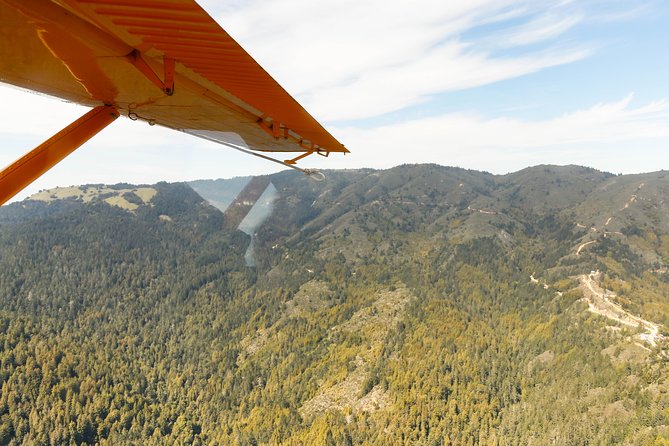
Check-in is your first stop, and the rest moves quickly from there. You’ll be on a small aircraft (max 6 passengers), which means there’s less waiting and less “tour bus energy.” You’ll also be using a mobile ticket, and the tour is in English.
A detail that matters once you’re on the water: the flight is narrated and guided by the pilot, and you’ll hear the calls through headsets. That’s great for staying oriented. Just understand that the experience is run from the cockpit; it’s not like having a conversation mid-flight. If you want to ask questions, keep them for before departure or after landing.
Also: service animals are allowed, and most travelers can participate. If you’re bringing a baby or young child, the operator notes that you should bring a child seat (if needed). That’s worth planning for because a seaplane cabin is compact.
The 30-minute route: what you see and why each stop matters
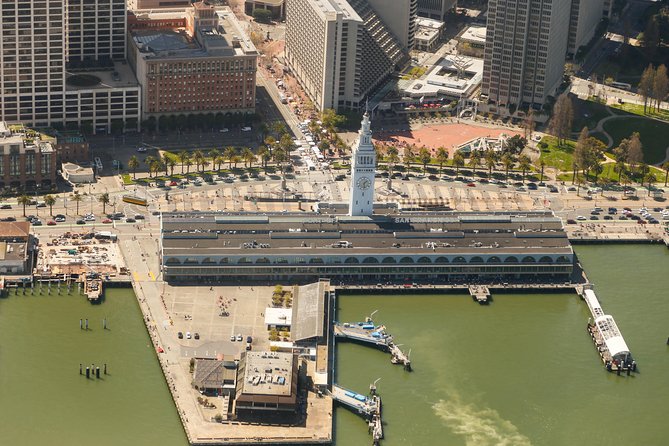
This tour is built like a greatest-hits loop. Not every minute is “flat-out sightseeing,” but the route is staged so you get a mix of city icons and bay region nature.
Leaving the water and flying past Stinson Beach
The itinerary lists Stinson Beach as an early flyover point. That matters because it gives you a sense of how quickly the Bay Area shifts from dense city to open coastline. Even if you’ve driven parts of the route on the ground, you’ll likely feel the scale more clearly from above.
This segment is also a smooth transition into the “aerial reading” of the region: shoreline first, then headlands and bay inlets.
Muir Woods from above: the redwood effect
Next up is Muir Woods National Monument. The big draw here is the old-growth redwood canopy—huge, tall trunks that create a cathedral-like feel on foot. From the air, you won’t experience the forest’s silence the same way you would on a walk, but you’ll understand the geography: the way the land rises and the forest blocks the horizon.
If you’re choosing one nature stop to justify air time, this is it. Seeing the redwoods from above is a different kind of memory than postcards. It’s also a good contrast with the hard lines of city landmarks.






Marin Headlands and the dramatic bay edge
Then comes the southermost end of Marin—the Marin Headlands. This is where the bay starts looking rugged. Headlands and peninsulas are exactly the kind of terrain that looks far more complicated from above than on roads.
This also helps with orientation. Once you understand the shape of Marin, the rest of the San Francisco skyline makes more sense.
The Golden Gate Bridge: the main event
You’ll get a bird’s-eye view of the Golden Gate Bridge. From street level, the bridge is a single icon. From the air, it becomes a piece of engineering that spans water, wind patterns, and land contours all at once.
And because it’s a seaplane flight with wide windows, you can usually get a clean look without switching locations or timing your photo around crowds.
Financial District and downtown: where towers meet hills
The tour then flies over the Financial District, followed by downtown sights. You’ll also pass major tourist and city anchors, including the Transamerica Pyramid area and the bayfront zone near sports and waterfront neighborhoods.
This is the part that helps if you’ve already toured SF on foot. You’ll connect what you saw below with what you’re looking at above: streets, density, and how neighborhoods bunch together.
Pier 39 and Fisherman’s Wharf: the “coastline identity”
The itinerary specifically calls out Pier 39 and Fisherman’s Wharf. I like this segment because it’s instantly recognizable, even from altitude. You’ll spot the waterfront activity zones quickly, which makes the whole “city-from-above” story feel complete.
It also helps if you’re the type who enjoys matching the aerial view to your ground itinerary—like, Oh, that’s where we ate / that’s the harbor we walked past.
Alcatraz and Angel Island: the islands that anchor the bay
Next comes Alcatraz—the Rock. One benefit of flying here is that Alcatraz isn’t just a destination; it’s a landmark. From above, it sits in the bay like a punctuation mark.
Then you’ll see Angel Island, described as the largest natural island in San Francisco Bay. Even if you know Angel Island as a day-trip name, the aerial view makes it feel like a living piece of the bay’s ecosystem rather than just a stop on a ferry route.
Tiburon and Belvedere: the waterfront towns perspective
The highlights mention views of Tiburon, Belvedere, and the wider Sausalito area. These towns are the kind you can understand by road maps, but you really get the “how the houses sit against the hills and water” understanding from above.
This portion is also what makes the flight feel more like a tour of the region—not only SF proper.
Landing back in Sausalito: wrap it up on the water
Finally, the plane lands back in Sausalito. The operator notes that after landing, you’re free to explore on your own if you wish. If you’d like, you can even take the ferry back to San Francisco at your own expense, and you can ask the pilot for departure times.
The landing itself is often where the memories stick. A number of reviews praised smooth, comfortable water landings—one pilot experience was described as the best water landing they’d ever felt. Even if you’ve never flown before, it helps that the ride doesn’t feel like a roller coaster.
Window seats: the best promise on the ticket
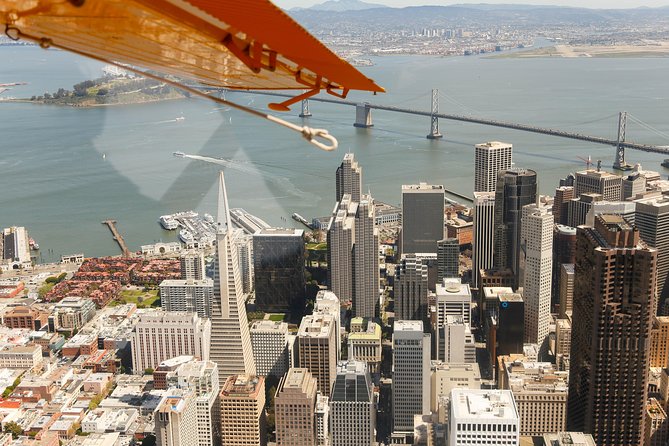
This tour guarantees a window seat for every passenger. That’s a big deal on small aircraft because it removes the “best seat lottery.” In a group of up to 6, that matters even more: you’re not sharing a view with someone whose chair blocks yours.
Here’s the practical reality: even with a guaranteed window seat, what you see most clearly can still be influenced by which side you’re on. One review issue came from a perceived imbalance—seeing most major sights on one side of the plane. You can’t control that completely, but knowing it can help you manage expectations.
If your priority is Golden Gate and Alcatraz, you’ll likely be happy no matter what. If you’re chasing a very specific photo angle, ask yourself whether you’d be better served by a ground viewpoint plus a shorter aerial glance.
The “small group” factor: how max 6 passengers changes everything
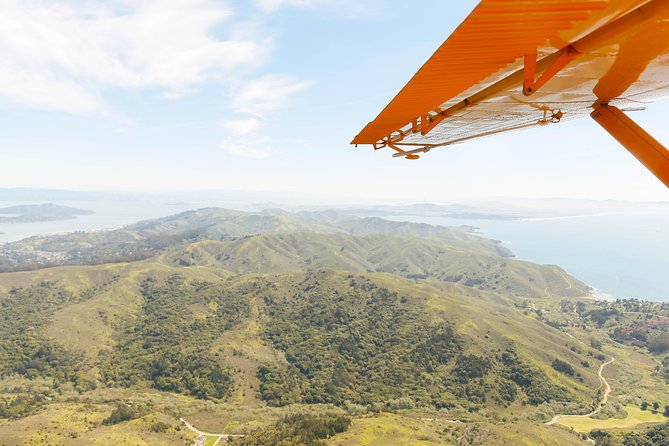
With a maximum of 6 travelers, this isn’t a crowd experience. It’s more like a guided flight where the pilot can keep things flowing without juggling a long line of passengers.
I also like the pacing. One review described a really smooth take-off and landing, and another mentioned a pilot making sure both sides of the plane got a good look. That’s the kind of small, hands-on attention you tend to get with smaller groups.
And because the itinerary includes a sequence of landmarks, you’re usually not waiting for long stretches of “nothing.” The flight stays active—shoreline, then forest, then bridge, then islands.
Price and value: $326 for 30 minutes, and what you’re really paying for
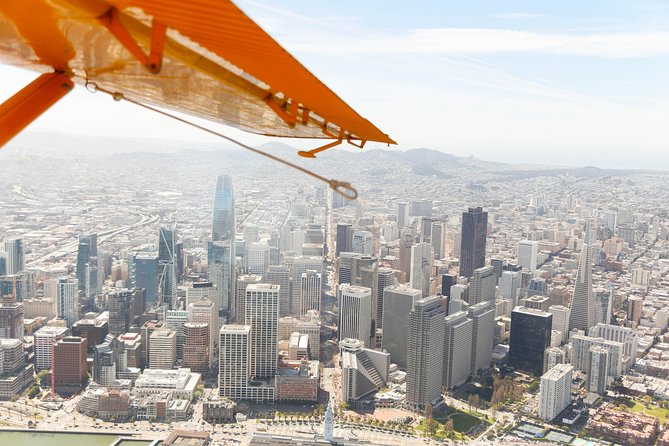
At $326 per person for about 30 minutes, this is not a budget activity. The value comes from three things:
1) You buy access. You’re paying for aerial views of landmarks that are hard to replicate from ground level.
2) You buy time efficiency. You get the highlights of San Francisco Bay plus Marin region scenery without a long day out.
3) You buy comfort and visibility. Guaranteed window seating in a tiny aircraft is a real upgrade from larger aerial tours.
Also note the minimum booking rule: the operator requires a minimum of two adults per booking. If someone books for only one passenger, they’ll be asked to pay for a second seat directly to the operator at check-in. That changes the value math. If you’re traveling solo, it’s smarter to plan on paying for two, or split the experience with a partner/friend.
If you’re deciding between a seaplane and a longer harbor cruise, here’s the honest trade: a cruise usually lasts longer and can be more relaxed, but a seaplane gives you a “helicopter view” style perspective in a compact package—bridge, city grid, islands—fast.
Weather, route changes, and what flexibility should look like
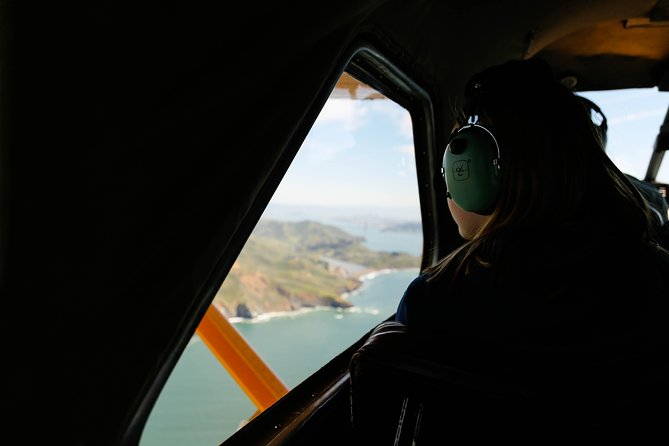
This experience requires good weather. That’s not a footnote—it’s the core of why seaplanes exist. If weather cancels, you’ll either be offered a different date or a full refund.
One thing I like about the way this tour is run is that rescheduling is part of the flow when possible. In at least one case, a flight was canceled due to bad weather and then moved to the next day.
Also remember: the flight route may vary due to weather or other factors. That’s why your best mindset is excited, not rigid. You’re buying a high-probability set of icons, not an exact “this order at this altitude every time” performance.
Timing your day: where Sausalito fits into your plans
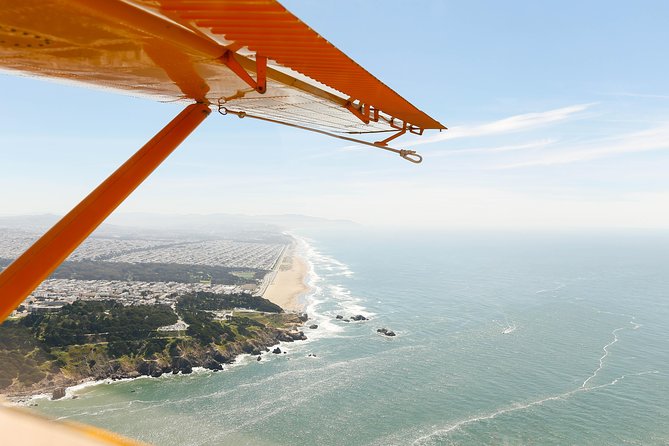
After the flight lands back in Sausalito, you have options. The tour explicitly says you’re free to explore Sausalito on your own, and you can ask the pilot for ferry departure times if you want to return by ferry.
This is a nice feature for two reasons. First, it avoids that “and then the tour ends and you’re stuck” feeling. Second, it gives you a natural way to turn a short aerial experience into a longer Bay Area day.
If you’re staying in or near San Francisco, consider building a light schedule around this. Let the flight be the anchor, then add food, strolling, or a ferry ride afterward.
Helpful notes: pilot style, comfort, and a few real-world gotchas
From reviews, the pilot experience tends to be a standout. Names like Mike and Captain Aaron show up in feedback, and several people described pilots as friendly, smooth in the air, and good at calling out what you’re seeing.
One real-world gotcha: double-check the exact meeting place instructions. In one experience, the online meeting info was wrong and there were no shuttles, so the group almost missed the flight until the operator helped them sort it out. That’s the kind of avoidable headache worth preventing with a quick confirmation.
Finally, this tour includes no food or drinks. That’s fine, but it means you should plan water and a snack if you’re sensitive to timing—especially if you’re combining the flight with other SF stops.
Who should book this seaplane tour, and who might pass
You’ll likely love this if:
- You want maximum landmark value per minute
- You care about window views and hate standing in lines for viewpoints
- You like nature + city combo days (Muir Woods, Marin, plus SF icons)
- You’re comfortable flying and want the “from-above” perspective
You might pass if:
- You want a long, unhurried outing (a seaplane is short by design)
- You’re very sensitive to weather-driven schedule changes
- You need a very specific photo plan where left-side vs right-side matters a lot
Also, if you’re deciding for a group: the small size means it’s best enjoyed with people who appreciate the idea of a concentrated tour. It can be great for couples and families, especially teens who are excited by flying.
Should you book this Golden Gate Seaplane Tour?
If your ideal SF day includes iconic sights from the sky, I’d book it—especially because every seat is a window seat and the flight focuses on the places people actually come to see: the Golden Gate Bridge, Alcatraz, Muir Woods, and the bay islands and towns around Marin.
Just do two things first: confirm your meeting details carefully, and keep your expectations flexible about route variations. If you want a fast, high-impact view that turns the bay into a map you can actually understand, this is an easy yes. If you’d rather spend more time on the water at a slower pace, pair SF planning with a longer harbor option and let the seaplane be a special add-on only if it fits your budget.
FAQ
How long is the Golden Gate Seaplane Tour?
The seaplane flight is about 30 minutes (approx.).
Does everyone get a window seat?
Yes. Every passenger is guaranteed a window seat.
What landmarks will I see during the flight?
The route includes views such as the Golden Gate Bridge, Alcatraz, Angel Island, plus flyovers around the Financial District, Pier 39, Fisherman’s Wharf, Muir Woods National Monument, Marin Headlands, and also Tiburon and Belvedere. The route may vary due to weather or other factors.
Where do we go after the flight lands?
You land back in Sausalito. Afterward, you’re free to explore Sausalito on your own. You can also take the ferry back to San Francisco at your own expense if you want, and you can ask the pilot for departure times.
Is food or drinks included?
No. Food and drinks are not included.
Is there a minimum number of people per booking?
Yes. A minimum of two people per booking is required. If only one passenger is booked, the person may be required to pay the second passenger’s price directly to the operator upon check-in.
How many passengers are on the seaplane?
The seaplane seats a maximum of 6 passengers.
What happens if the flight is affected by weather?
This experience requires good weather. If it’s canceled due to poor weather, you’ll be offered a different date or a full refund.
What is the cancellation refund timeline?
You can cancel up to 24 hours in advance for a full refund. If you cancel less than 24 hours before the experience start time, the amount paid is not refunded.