REVIEW · SAN FRANCISCO
San Francisco Half-Day Tour by Cable Car & Foot
Book on Viator →Operated by Real San Francisco Tours · Bookable on Viator
Cable cars and hills in one tidy half day. This tour strings together classic SF neighborhoods with two included cable car rides and a guide who keeps things moving at a friendly pace. I like that it’s built for small groups (max 15), so the sights feel personal instead of rushed, even though you cover a lot in about four hours. One thing to keep in mind: this is a walking tour with hills and steps, and cable car or streetcar service can change when the city has big events or technical issues.
If you hate walking uphill or need mobility support, this probably won’t feel great. Also, some parts of the story—especially in the Castro—are inseparable from Pride-era context, so expect more than neutral postcard facts when that theme is in the air.
In This Review
- Key things I’d watch for before you go
- What you’re really buying: cable cars, neighborhoods, and local context
- Meeting point on Market St: start on time, or you’ll miss it
- Ferry Building Marketplace: get your bearings fast
- Nob Hill by cable car: where the city’s top stories live
- Cable Car Museum: how the system works (and why the timing matters)
- City Hall (weekday inside): the architecture you don’t see from the sidewalk
- Hayes Valley: street art, coffee shops, and a SF feel that’s easy to love
- The Castro: LGBTQ history, Pride context, and why it can shape the talk
- Mission Dolores Park: a payoff viewpoint over downtown
- Haight-Ashbury: 60s roots and a practical end point for lunch
- Price and value: where the $100 really goes
- Group size and pace: comfortable shoes are your real ticket
- Cable car and streetcar changes: what to do when SF gets unpredictable
- Should you book this San Francisco half-day tour?
- FAQ
- What is the tour duration?
- What time does the tour start?
- Where does the tour start and end?
- How big is the group?
- Are cable car and streetcar rides guaranteed?
- Is City Hall visit inside the building?
- Is lunch included?
- Is the tour suitable for children?
- How much should I budget for tips?
Key things I’d watch for before you go
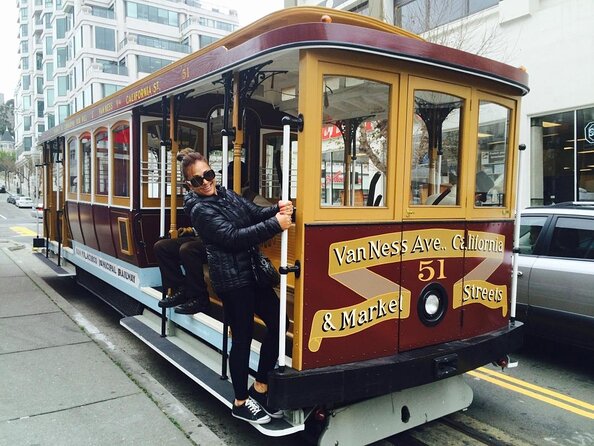
- Two cable car rides plus a historic streetcar ride (if possible), so you’re not just looking at transit—you’re riding it
- Small-group size (15 max), which helps the guide slow down for questions and makes the route feel human
- City Hall inside access on weekdays, adding a real “you’re in the place where things happened” moment
- Cable Car Museum timing matters since it’s usually only visited on weekends
- A planned stop in the Castro, where LGBTQ history and Pride context often come up
- Half-day pacing with real climbs, so comfortable shoes are not optional
What you’re really buying: cable cars, neighborhoods, and local context
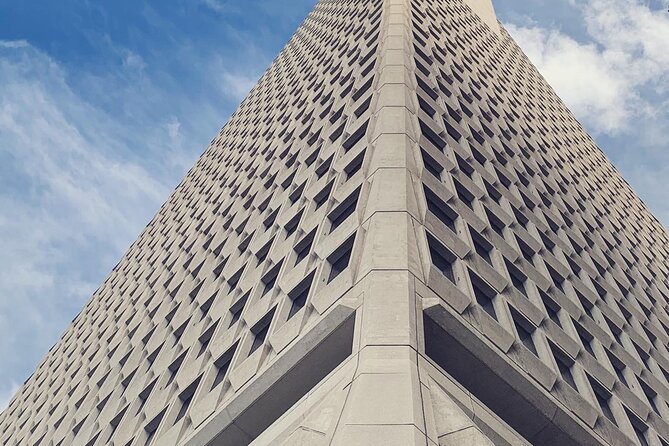
This is a half-day format that aims to do two things at once: get you onto San Francisco’s most iconic transit and lead you through the neighborhoods that explain why the city looks the way it does. At $100 per person, it’s not the cheapest way to see the highlights—but it can feel like strong value because cable car rides, transit, and key stops are folded into the experience.
The tour’s sweet spot is for first-timers and return visitors who want a guided route that makes sense without turning into a long day. You’re also not left to guess where to start: you’ll begin at a central spot downtown and end in Haight-Ashbury, which is a convenient place to grab lunch or keep exploring afterward.
And I’ll be straight with you about the “style” of the tour: the best guides on this route are the ones who connect place to story. In past groups, guides such as Mark, Jamie, Dara, and Jason have been praised for bringing San Francisco to life with architectural and cultural details—and that’s exactly the kind of tour experience you’ll get if you like context, not just checklists.
You can also read our reviews of more tours and experiences in San Francisco


Meeting point on Market St: start on time, or you’ll miss it
You start at Market St & Drumm St at 10:00 am, and the tour ends in Haight-Ashbury after about 4 hours. They specifically ask you to arrive 10–15 minutes early, because if you’re late, you can miss the tour.
This matters more than it sounds in San Francisco. Between steep streets, busy intersections, and sometimes shifting transit operations, being punctual is how you keep the half-day from turning into a scramble. Bring a charged phone for your mobile ticket, and plan to dress for fog or wind—SF can feel cooler fast, even if the morning starts mild.
Ferry Building Marketplace: get your bearings fast
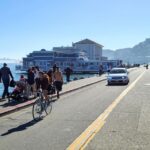
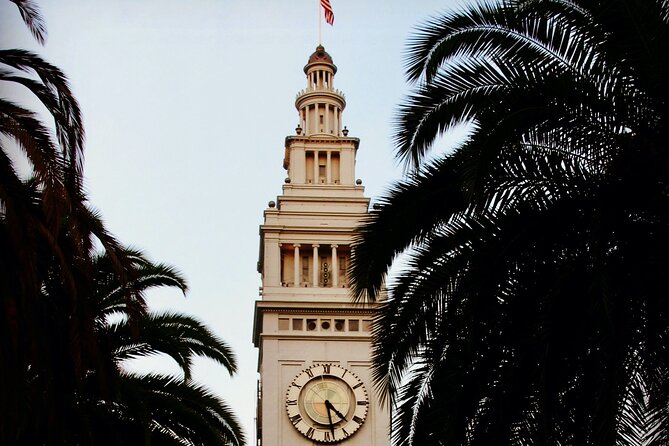
The first stop is the Ferry Building Marketplace, where your guide orients you with downtown context and background on the building and the area. Even if you’ve seen photos, standing here helps you understand how this waterfront entry point shaped the city’s early commerce—and why downtown SF concentrates power and foot traffic around it.
What I like about starting here is mental momentum. You’re not jumping straight into a steep climb or a far-off neighborhood. You’re warming up with a strong orientation point, then you move from “here’s what SF is” into “here’s where that played out.”
If you want snacks, this is also one of the better places to grab something early, since lunch isn’t included later in the tour. Just don’t get stuck browsing if the group is moving—this is a schedule-driven route.
Nob Hill by cable car: where the city’s top stories live
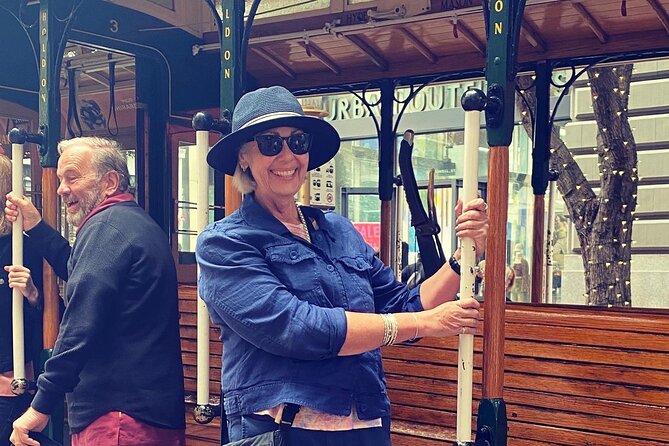
From downtown, the tour takes you up to Nob Hill by cable car. This is the moment that most people come for: a real ride up steep terrain to reach one of SF’s best-known hill-and-mansion zones.
Nob Hill is a classic SF lesson in contrast. You’re surrounded by dramatic architecture and a sense of old money power, but you’re still in a working modern city. The cable car ride is more than a thrill; it’s the whole point of SF’s geography—how movement and class map onto steep streets.
Timing here is tight (about 20 minutes), so don’t plan on long wandering. Use the ride and the stop as a “look, learn, move” experience, and you’ll enjoy it more than if you try to treat it like a museum visit.
Cable Car Museum: how the system works (and why the timing matters)
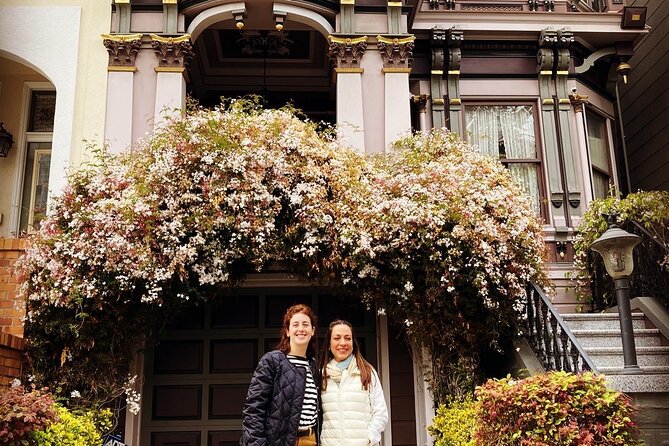
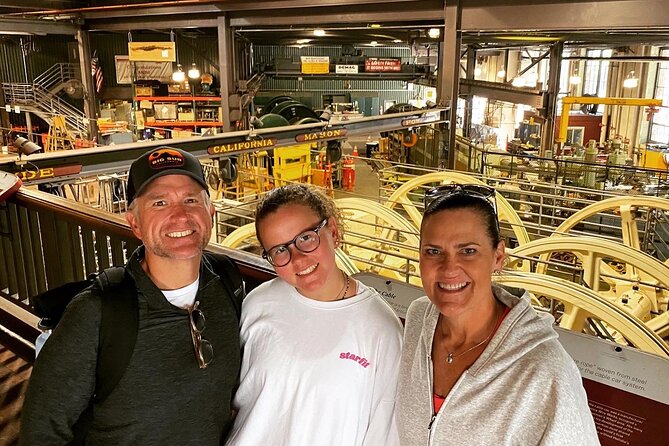
Next up is the Cable Car Museum, where you learn how San Francisco’s cable car system operates. This is a smart stop because it turns the experience from something you just ride into something you understand.
One practical note: the museum visit is usually only on weekends. If your day doesn’t include it, you might still get cable car context elsewhere on the route, but you should be ready for the possibility that this specific stop isn’t part of your departure.
If you love how machines and cities interact, this stop lands well. Even if you don’t, it helps you appreciate why these cars survived when so many cities replaced their systems with buses or subways.





City Hall (weekday inside): the architecture you don’t see from the sidewalk
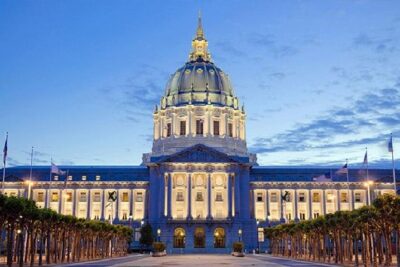
If your tour runs on a weekday, you go inside San Francisco City Hall for about 20 minutes. This is one of the rare “you actually enter the building” moments on a sightseeing loop.
City Hall gives you a different angle on SF. Instead of focusing only on neighborhoods and icons, you get a glimpse at how civic life and major decisions sit in a formal, historic setting. It’s also a nice break from open-air walking, especially when fog or wind picks up.
The key consideration is simple: weekdays are the window for the inside visit. If you’re booking around a specific date, check your day-of-week so you’re not disappointed.
Hayes Valley: street art, coffee shops, and a SF feel that’s easy to love
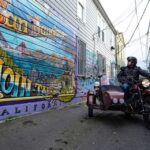
After the civic stop, you move into Hayes Valley, a neighborhood known for street art and small coffee spots. This section is designed to feel less “monument” and more “neighborhood.” You’ll see how SF mixes creative surfaces, local hangouts, and walkable blocks near the Civic Center.
What makes Hayes Valley worth your attention on a half-day route is the contrast. You’ve just been in hill-and-institutions mode, and now you get a more everyday SF scene. The stop is about 20 minutes, so think of it as a quick taste—enough to orient you, not enough to replace a longer neighborhood walk.
If you’re the type who likes photographing murals or finding a good café, use this stop to choose where you’ll return after the tour. Since lunch isn’t included, having a plan for food helps.
The Castro: LGBTQ history, Pride context, and why it can shape the talk

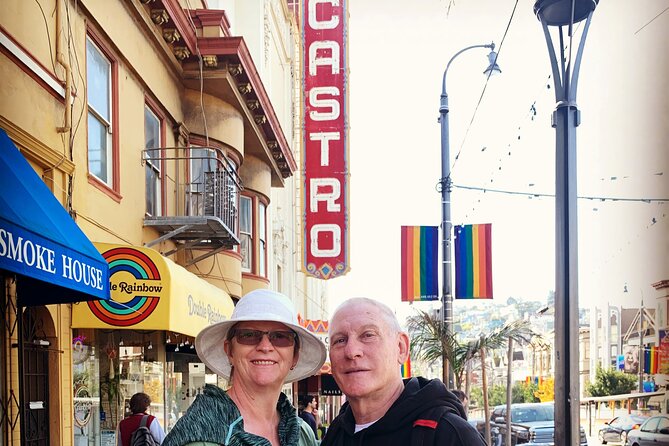
The Castro is next, and it’s a big one. You’ll spend about 20 minutes here learning why this neighborhood matters in the LGBTQ movement, and why SF often becomes a global symbol for that community.
Here’s the balanced reality: depending on timing, your guide may bring up Pride in the conversation. During Pride week, that theme isn’t a side note—it’s part of how the Castro is experienced on the ground. Some people love that context; others want more neutral “history only” facts. If you fall into the second camp, go in with the understanding that the Castro visit is inseparable from Pride-era SF energy.
Also, this is a place where architecture, storefronts, and public life all carry meaning. Even in a short stop, you’ll likely notice how the neighborhood feels different from the rest of the city—and why that’s the point of including it.
Mission Dolores Park: a payoff viewpoint over downtown
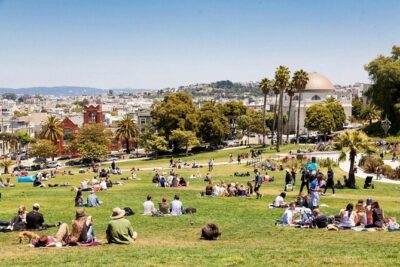
Then you head to Mission Dolores Park, one of SF’s loveliest parks with great views of downtown. Expect this stop to feel like a breath of air after more built-up and steep streets.
This is where the tour “pays you back” for walking. The view gives you scale—how the city spreads, stacks, and curves, and how hills shape what you can see. The stop is about 20 minutes, so it’s not a long park picnic. But it’s enough time to find a spot, take photos, and reset before the final big neighborhood.
If the weather is gray, Dolores Park can still be beautiful, but bring a layer. Wind up on the hills can be chilly even when the streets are warmer.
Haight-Ashbury: 60s roots and a practical end point for lunch
The last neighborhood is Haight-Ashbury, tied to the hippie and anti–Vietnam War movement that helped define 1960s SF. You’ll spend about 20 minutes there, and because the tour ends in this area, it’s a practical place to grab lunch and keep exploring on your own.
I like that the tour doesn’t end with you dumped into some random downtown corner. Haight-Ashbury is built for strolling and eating, so the end point works with your time instead of against it.
Also, since this neighborhood has a strong identity, even a short walk helps. You’ll leave with a clearer mental picture of how the city’s counterculture legacy shaped its look and reputation.
Price and value: where the $100 really goes
At $100 per person, the big question is whether you’re getting more than a standard walking tour. You are, mostly because transit and rides are included.
Here’s the value breakdown that matters:
- All Metro travel is included, listed as a $20 value
- You get 2 cable car rides plus 1 historic streetcar journey if possible
- You have a tour guide for about four hours
- Each stop includes admission as free on the tour plan
- The operator donates $1 per guest to Climate Cents
If you were doing this independently, cable car rides alone can eat up time and money, and you’d still need to figure out the best route to tie neighborhoods together efficiently. The tour’s price makes the most sense if you want a guided route with actual SF transit, not just photo stops.
Is it expensive compared to a pure walking tour? Yes. But it’s also not trying to be that. This one is built around the city’s signature transportation, plus a route that helps you connect what you see with why it exists.
Group size and pace: comfortable shoes are your real ticket
This small-group tour caps at 15 travelers, which is a big deal in San Francisco. Fewer people means your guide can keep the group moving without constant waiting, and you’re less likely to feel like you’re trapped in a line.
That said, the pace is still active. This is described as walking with several hills and steps. You should have moderate physical fitness, and the tour is not suitable for people with mobility issues.
My practical advice: wear shoes you trust on sloped sidewalks and stair steps, and avoid fragile footwear. Bring water, especially in warmer months. And if you’re someone who gets tired on hills, you’ll enjoy this more if you keep expectations realistic about the final climb and don’t treat each stop like a museum-sized detour.
Cable car and streetcar changes: what to do when SF gets unpredictable
San Francisco transit can be affected by events and technical issues beyond the tour’s control. Your itinerary includes cable car rides and a streetcar journey if possible, but operations can change.
In those cases, you might still get a version of the tour route, but the “wow” moments may come by different means. One previous departure faced crowded buses due to Fleet Week, which is exactly the kind of scenario where you should be flexible.
If your goal is specifically cable car riding, plan your trip with some slack. Don’t schedule a flight right after your tour ends, and keep the rest of your day open enough to handle a transit shuffle.
Should you book this San Francisco half-day tour?
I think you should book if you want a half-day route that combines cable car rides with real neighborhood context, and you’re okay with hills and walking. It’s also a strong pick for first-timers who want the iconic SF trifecta—cable cars, famous neighborhoods, and viewpoints—without spending the whole day stitching things together.
I wouldn’t book if you need minimal walking, can’t handle steps, or want a perfectly neutral, no-frills history lecture with zero Pride-era context in the Castro. This tour leans into place meaning, and that includes the city’s lived LGBTQ story.
If you do book, give yourself the best chance of a smooth experience: arrive early, wear grippy shoes, bring layers, and keep an open mind about transit changes.
FAQ
What is the tour duration?
The tour lasts about 4 hours.
What time does the tour start?
It starts at 10:00 am.
Where does the tour start and end?
It starts at Market St & Drumm St in San Francisco and ends in Haight-Ashbury.
How big is the group?
The tour has a maximum of 15 travelers.
Are cable car and streetcar rides guaranteed?
The tour includes 2 cable car rides and 1 historic streetcar journey if possible, but operations can be affected by events or technical issues.
Is City Hall visit inside the building?
The tour plan notes that City Hall is visited inside on weekdays.
Is lunch included?
No, lunch and snacks are not included.
Is the tour suitable for children?
It’s not recommended for children under 12.
How much should I budget for tips?
Gratuities are not included since they’re voluntary. If you enjoy the tour, the guidance is to allow 15–20%.