REVIEW · SAN FRANCISCO
San Francisco to Yosemite One-Way Transfer
Book on Viator →Operated by Extranomical Tours · Bookable on Viator
Yosemite feels close with a car-free plan. This one-way San Francisco to Yosemite transfer strings together hotel pickup, a guided drive past the Bay Bridge and through the Sierra Nevada, then a tight Yosemite Valley day with included park entry for U.S. residents.
I love the early hotel pickups that get you moving before traffic gets thick, with convenient stops at major hotels around central San Francisco. I also love the way the tour layers in facts without making it feel like a lecture, including geo-based audio guides in 8 languages.
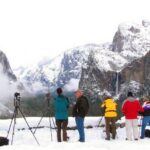
The pace is the trade-off here. It’s about 5 to 6 hours total, so each stop is short, and in cold months the Lower Yosemite Falls hike can be replaced with extra time in the Valley. If you go in winter, wear grippy, treaded shoes and expect fast weather changes.
In This Review
- Key highlights to plan around
- San Francisco to Yosemite: why this one-way transfer works
- Early pickup timing: what the 5–6 hour day feels like
- En route: Bay Bridge stops that actually make sense
- The Sierra Nevada drive: building anticipation the right way
- Yosemite Valley: your main block of time (and how to use it)
- Valley Visitor Center + Yosemite Valley Lodge
- Tunnel View to Half Dome: the cliff-and-waterfall photo circuit
- Tunnel View: quick classic, big payoff
- Bridalveil Fall and El Capitan: seeing the real scale
- Half Dome: the dome you can’t unsee
- Lower Yosemite Falls hike: short walk, misty reward
- Winter reality check: when trails swap
- Horsetail Fall timing: a seasonal moment you can’t force
- Merced River and the practical “where you are” stops
- Food on the road: what’s included and what you must handle
- What the $99 price really buys (and who gets the best value)
- Group size, comfort, and the guide factor
- Who should book this transfer (and who might want a different plan)
- Should you book this San Francisco to Yosemite transfer?
- FAQ
- How long is the San Francisco to Yosemite one-way transfer?
- What’s included for Yosemite park entry?
- Do I need to rent a car for this tour?
- Are there audio guides, and what languages are available?
- Is there any hiking on the tour?
- What about meals during the day?
- Do children need a car safety seat?
- Can I cancel and get a full refund?
Key highlights to plan around
- Hotel pickup across central San Francisco with starts beginning around 5:20 a.m.
- Park entry handled for U.S. residents, with a clear non-U.S. fee rule if needed
- 3 hours in Yosemite Valley plus classic viewpoints like Tunnel View
- A cliff-and-waterfall photo circuit: Bridalveil Fall, El Capitan, Half Dome
- Lower Yosemite Falls hike (seasonal), with a winter swap if trails are unsafe
- Small group size (up to 41) and guided commentary that helps the drive make sense
San Francisco to Yosemite: why this one-way transfer works
This is not a slow sightseeing day with an open-ended schedule. It’s built like a mission: get you from San Francisco into Yosemite Valley efficiently, then hit the sights most people actually come for—without you renting a car, navigating mountain roads, or trying to figure out park entry on the fly.
For a lot of you, the real value is mental bandwidth. You’re paying to remove the hassles: the pickup, the driving, the timing, and (for U.S. residents) the park entry fee. When you’re trying to turn a limited trip into a memorable one, that’s a solid deal.
You’ll also get a guide with commentary plus geo-based audio guides. Even if you’re not into “tour facts,” those layers help you understand what you’re seeing right as you’re seeing it, which makes the photos better and the Valley feel less random.
You can also read our reviews of more tours and experiences in San Francisco



Early pickup timing: what the 5–6 hour day feels like
Plan on an early start. Pickup runs begin around 5:20 a.m., with multiple hotel options in the core areas of San Francisco, and then the route continues to an additional stop outside the city. The tour starts from a meeting point at the Hilton San Francisco Union Square area and returns back there.
That early clock can sound intense, but it’s part of why this works. You’re not stuck in parking loops or delayed by traffic right when you’d rather be looking at El Capitan and waterfalls.
The flip side: because the day is limited to about 5 to 6 hours, you don’t get “lingering time.” You get enough time to see, take photos, and walk a bit, but not enough for long detours. If you want hours of hiking on your own schedule, you’d usually be happier adding at least one extra night in the park area. (This transfer is great, but it’s not a replacement for a full Yosemite stay.)
En route: Bay Bridge stops that actually make sense
The drive includes a stop at the San Francisco–Oakland Bay Bridge, known locally as the Bay Bridge. It’s a multi-deck structure on Interstate 80 carrying about 260,000 vehicles a day, and the scale helps you understand why this crossing is such a big deal for the Bay Area.
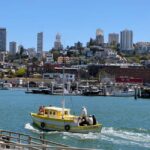
You’ll also get a stop connected to Treasure Island, an artificial island built in 1936–37 for the 1939 Golden Gate International Exposition. It’s designated as a California Historical Landmark. Even though this isn’t Yosemite, it’s a useful warm-up: the morning light over the Bay, plus the quick historical context, makes the first part of the day feel more like travel than just transport.
One practical note: these are short stops. Don’t plan on long photo marathons here. Think of them as “stretch and orient” moments.
The Sierra Nevada drive: building anticipation the right way
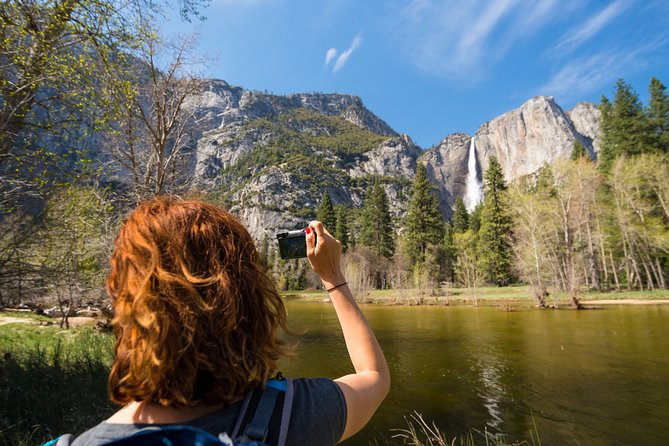
Between the Bay Area and Yosemite Valley, you’ll travel through the Sierra Nevada region, the mountain range that sits between California’s Central Valley and the Great Basin.
The best part of this segment is what the guide and audio portion can do for you: it frames what you’re about to see so Yosemite Valley doesn’t hit you as a random collection of cliffs and trees. You’ll get clearer mental geography—where the Valley sits relative to the bigger mountain system—and that makes later stops click fast.
If you’re prone to getting restless on long drives, this is where you’ll want to lean into the commentary and audio. It keeps the road time from feeling like dead time.
Yosemite Valley: your main block of time (and how to use it)
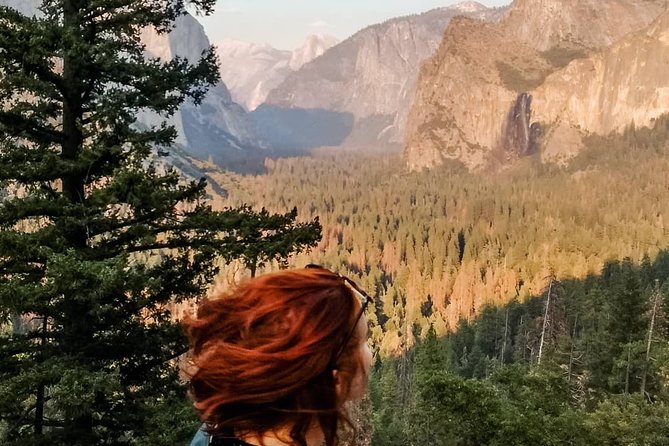
The centerpiece of the day is Yosemite Valley, with about 3 hours on-site and park entry included. Yosemite Valley is a glacial valley about 7.5 miles long and roughly 3,000–3,500 feet deep, surrounded by high granite summits such as Half Dome and El Capitan.
That depth matters. From the bus and quick viewpoints, it can feel like you’re looking at one big area. Once you’re down in the Valley, you understand it’s a carved bowl with steep walls—and that’s why waterfalls and cliffs dominate the views.
How I’d use your time:
- Start with the big, obvious sights first, so you’re not chasing them later while you’re tired.
- If you want a little flexibility, you can use the Valley time to go between viewpoints at a comfortable pace before moving into the quick stop circuit.




Valley Visitor Center + Yosemite Valley Lodge
Two places are worth knowing ahead of time:
Yosemite Valley Lodge is a popular hub, especially for families and larger groups, partly because it sits close to Yosemite Falls. Even if you’re just passing through, it helps you visualize where you’d base yourself if you were staying longer.
The Valley Visitor Center is open year-round and is one of the most practical stops during a short trip. It has natural history displays, audiovisual programs, and staff who can answer questions about current conditions. You’ll also find maps, books, and postcards—useful if you’re planning your next day in Yosemite.
If winter is in the mix, I’d treat the Visitor Center as your “conditions check” before you attempt any walking.
Tunnel View to Half Dome: the cliff-and-waterfall photo circuit
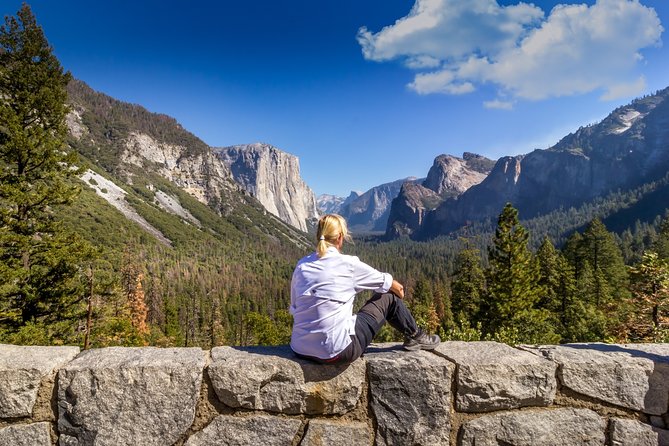
After your main Valley time, the tour shifts into a sequence of quick, high-impact stops. This is where you get the famous names—fast.
Tunnel View: quick classic, big payoff
Tunnel View is a scenic overlook on State Route 41 where people have documented the iconic Yosemite Valley view since the overlook opened in 1933. You’ll have about 15 minutes, which is enough time to frame the big view, snap key photos, and move on.
Because it’s short, come prepared with what you want to capture. This is one of those places where spending 10 minutes deciding can cost you the whole moment.
Bridalveil Fall and El Capitan: seeing the real scale
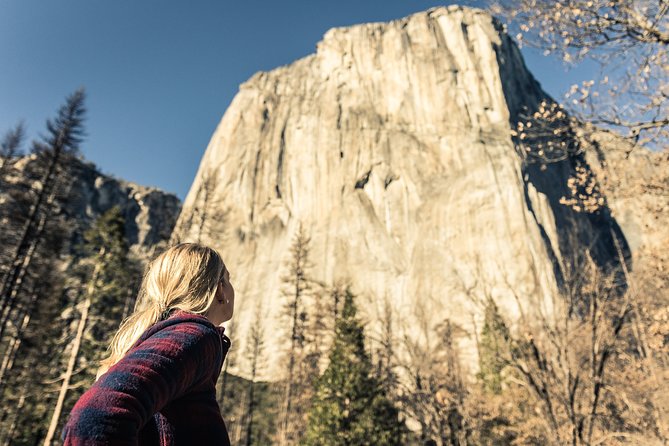
You’ll also stop at Bridalveil Fall, one of the Valley’s most prominent waterfalls. Then it’s on to El Capitan, the vertical granite rock formation on the north side of Yosemite Valley near the western end. The tallest face rises about 3,000 feet from base to summit and is a major objective for rock climbers.
If you’ve never seen El Capitan in person, it can be disorienting. Photos tend to compress distance. Up close, you feel the wall-like scale, and the whole Yosemite Valley “shape” makes more sense.
Half Dome: the dome you can’t unsee
Half Dome sits at the eastern end of Yosemite Valley and is named for its distinctive shape. Like El Capitan, it’s one of those landmarks that instantly becomes the reference point for everything else you see.
Again, these are quick stops. The value is in recognition and perspective, not in long walks.
Lower Yosemite Falls hike: short walk, misty reward
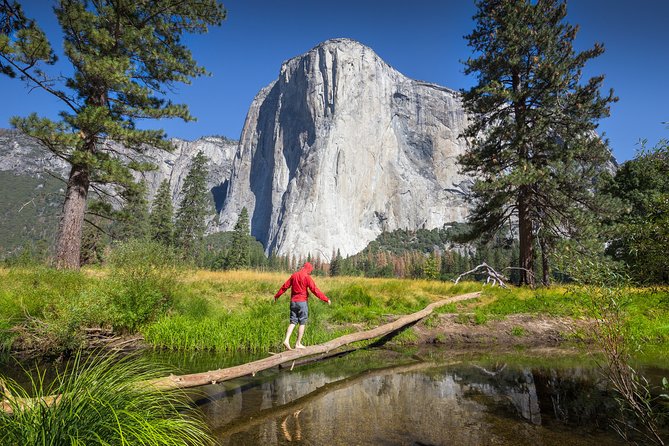
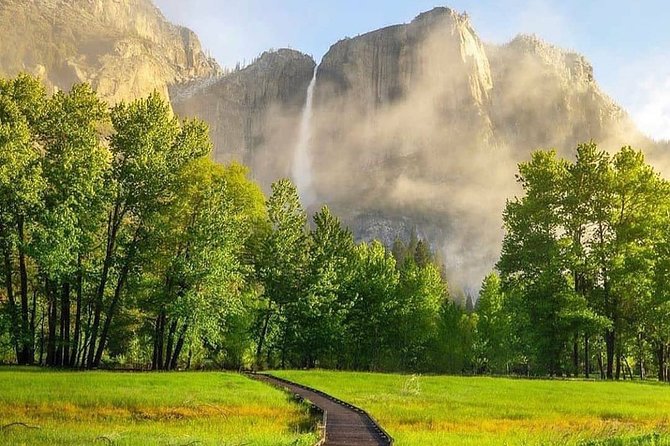
One stop is built around a more active moment: Lower Yosemite Fall Trail. You’ll walk about a quarter-mile one way, heading to a mist-blown view from the base of the 320-foot Lower Yosemite Falls. On this transfer, you’re given around 15 minutes for that experience.
This is a great option if you want “real Yosemite” without a full-day hike. It’s also a good test of whether you’re comfortable with short trail sections and changing terrain.
Winter reality check: when trails swap
Between November and March, when snow and ice make trails unsafe, the tour substitutes the hike with additional time in Yosemite Valley instead. So you still get value, but the active part may change.
If you’re traveling during winter months, this is not the time to rely on slippery sneakers. Bring shoes with rubber soles and real treads, and keep your expectations realistic.
Horsetail Fall timing: a seasonal moment you can’t force
Horsetail Fall is a seasonal waterfall on the east side of El Capitan. It flows in winter and early spring, and the famous lighting effect happens only at certain times of year. Around the second week of February, the setting sun can hit the upper portion of Horsetail Fall at the right angle.
That means two things for your planning mindset:
- You should treat it as a potential bonus, not a guarantee.
- If you’re aiming for a specific seasonal waterfall effect, you’ll want to match your travel dates carefully.
Even if Horsetail Fall isn’t doing the headline trick, you’ll still see the waterfall context inside Yosemite’s winter mood.
Merced River and the practical “where you are” stops
You’ll also spend time at the Merced River, which runs through the Yosemite area and has a total length of 145 miles (233 km). In Yosemite Valley, several creeks join it, including Tenaya, Yosemite, Bridalveil, and Pigeon Creeks.
Why this matters on a short tour: rivers are the easiest way to understand Valley water movement. In Yosemite, waterfalls aren’t isolated scenes. They tie into the flow system, and the river gives you a “big picture” anchor.
You’ll also see Yosemite Valley Lodge as part of that “you’re here” experience, not just as a place to sleep.
Food on the road: what’s included and what you must handle
Meals are not included, but the tour does make stops for breakfast and lunch, and on the trip back it includes a dinner stop. In practice, that means you should plan to budget for food and bring a little flexibility if the timing doesn’t match your usual routine.
If you’re sensitive to hunger while traveling early, I’d bring a small snack stash for the bus ride. You can also use the Visitor Center area to grab information, then time your meal stop when it makes sense for you.
What the $99 price really buys (and who gets the best value)
At $99 per person, the value mostly comes from combining three things you’d otherwise have to juggle:
- Pickup from San Francisco hotels, which removes the car rental headache and morning parking problems.
- Park entry fee included for U.S. residents for the San Francisco to Yosemite option, so you’re not scrambling for passes.
- A guided day with commentary and audio, so you’re not trying to interpret Yosemite from a phone map while you’re watching cliffs and waterfalls.
Could you do this cheaper by DIY driving? Maybe, depending on car costs and your ability to plan park entry smoothly. But if you’re thinking, I want one less thing to arrange—this is priced for that.
One important cost consideration: Non-U.S. residents aged 16 and older pay an additional $100 park entry fee per person after completing booking, collected by the tour operator via payment link or on the bus at the start of your tour. If you’re traveling on an America the Beautiful Non-Resident Pass, the policy says holders do not pay the $100 fee, and the $250 pass covers up to 4 people at the entrance.
So check your status early. That saves stress.
Group size, comfort, and the guide factor
This tour runs with a maximum of 41 travelers. That’s not tiny, but it’s small enough that the day doesn’t feel like a stampede.
The guide adds value through commentary and the audio system. You’ll get geo-based audio guides in 8 languages, which is helpful if you’re traveling with people who don’t want to rely entirely on spoken narration.
A small number of experiences have criticized guide professionalism and communication. I can’t predict how your guide will run your day, but I can say this: if you’re sensitive to safety and clarity, arrive early to your pickup so you can see how the operation flows before you’re stuck on the road.
On the brighter side, some guides have been named for being fun and interactive, including Rob and Ross. When a guide brings that energy, Yosemite feels less like a checklist and more like a guided story you actually follow.
Who should book this transfer (and who might want a different plan)
This is a strong fit if:
- You want Yosemite without renting a car.
- You only have a few hours and want the classic Valley sights covered.
- You appreciate short, high-impact stops with a little hiking.
- You’re traveling from San Francisco and want park entry sorted for U.S. residents.
It’s less ideal if:
- You want long, independent hikes at your own pace.
- You’re expecting a deep exploration of every trail.
- You’re traveling during winter and need very predictable trail access (because the Lower Yosemite Falls hike can be swapped due to ice/snow).
Should you book this San Francisco to Yosemite transfer?
If you’re weighing convenience versus control, I’d book it when convenience is the priority. The early pickup plus the guided timing plus park entry included for U.S. residents is exactly the kind of “pay to reduce stress” value that works well for Yosemite.
I’d hesitate only if you strongly prefer self-guided planning, want hours of hiking, or are traveling in peak winter conditions without flexibility for the hike swap.
If you do book: pack for cold (especially if snow is possible), bring grippy shoes, and treat each stop as a snapshot. Yosemite rewards quick focus here.
FAQ
How long is the San Francisco to Yosemite one-way transfer?
The duration is about 5 to 6 hours.
What’s included for Yosemite park entry?
For the San Francisco to Yosemite option, the park entry fee is included for U.S. residents. Non-U.S. residents aged 16 and older are charged an additional $100 park entry fee per person.
Do I need to rent a car for this tour?
No. Pickup is offered from major San Francisco hotels, and the tour provides transportation as part of the transfer.
Are there audio guides, and what languages are available?
Yes. You get unique geo-based audio guides in 8 languages, and they’re included.
Is there any hiking on the tour?
Yes. There is a stop for Lower Yosemite Fall Trail, described as about a quarter-mile one-way. Between November and March, if trails aren’t safe due to snow and ice, the hike may be substituted with additional time in Yosemite Valley.
What about meals during the day?
Meals are not included. The tour makes stops for breakfast and lunch, and on the trip back for dinner.
Do children need a car safety seat?
Yes. California law requires a car safety seat for children under 8 years and under 4′ 9″ (1.4 meters). Guests must provide it and inform the tour operator.
Can I cancel and get a full refund?
Yes. You can cancel up to 24 hours in advance for a full refund. If you cancel less than 24 hours before the start time, the amount you paid is not refunded.