REVIEW · SAN FRANCISCO
San Francisco: Vegas, Sedona, Antelope, 7-Day Tour
Book on Viator →Operated by Empire Vacations · Bookable on Viator
Seven days, no car needed, huge views ahead. I really liked the San Francisco Bay cruise under the Golden Gate and the Monument Valley jeep tour led by Navajo guides. One watch-out: the guide mix and on-bus mic time can be uneven, so if you need very clear English narration the whole way, you may have to work for it.
This is a fast, guided road-trip style tour: big icons, short stops, and lots of time on the bus. You get six nights of hotel with continental breakfast, and you end in Las Vegas (so you’ll be thinking long days, not slow travel). The route packs California coast vibes, then swings into the Mojave and the red-rock country.
If you like seeing several parts of the American West in one shot, this is a solid value. If you want lots of free time in each place, or you hate tight schedules, you’ll want to compare alternatives.
In This Review
- Key things to know before you go
- Day 1 in San Francisco: Wharf Cruise, Bridges, Twin Peaks, and Chinatown
- Monterey to Carmel and the 17-Mile Drive: Coastal California without a rental car
- Las Vegas: Outlets at Barstow, then the Strip in a single evening
- Hoover Dam: Quick context, then a free afternoon in Vegas
- Sedona and Flagstaff: Oak Creek Canyon, red-rock views, and the Chapel stop
- Horseshoe Bend and Monument Valley: the day that feels like a movie set
- Antelope Canyon and Valley of Fire: the desert finale in two very different styles
- Price and Logistics: what $1,465 buys you, and what it doesn’t
- Guide quality, language, and timing: how to avoid the common frustrations
- Who should book this San Francisco to Vegas to Arizona style tour?
- Should you book this one?
- FAQ
- Does this 7-day tour return to San Francisco at the end?
- Is hotel pickup included?
- Where does the tour start and end?
- Is WiFi available during the tour?
- What is the minimum age to join?
- How much luggage can I bring?
- Will I share my hotel room with other guests?
- How much walking is involved?
Key things to know before you go
- Bay cruise is included on Day 1, so you’re not stuck looking at it from a parking lot
- Monument Valley includes a jeep tour with Navajo guidance, not just a drive-by photo stop
- Lower Antelope Canyon tour is included, plus you’re also timed for desert scenery at Valley of Fire
- It’s one-way to Las Vegas, ending at Luxor on S Las Vegas Blvd
- Expect real walking: 1.5 miles over uneven surfaces is part of the deal
- Your group experience depends on guide language flow, since the bus can split by language
Day 1 in San Francisco: Wharf Cruise, Bridges, Twin Peaks, and Chinatown
San Francisco can be a lot in a day. The plan is built to help you get your bearings fast before you wander on your own later—except you don’t really get a solo day here, because the tour keeps moving.
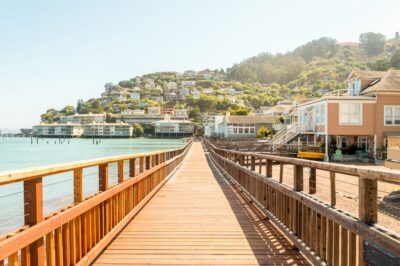
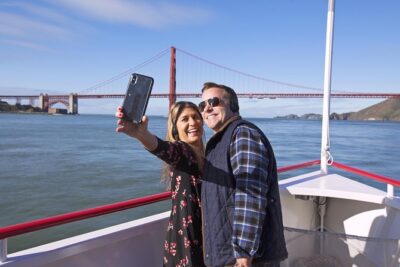
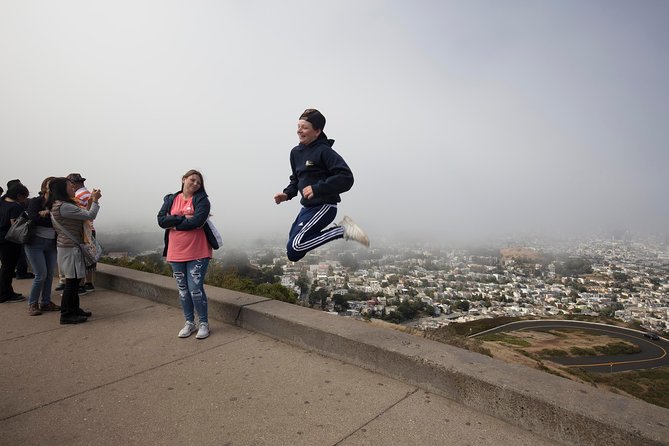
You start around Fisherman’s Wharf, then do a Bay cruise that runs under the Golden Gate Bridge and loops by Alcatraz. It’s one of those experiences where even if you’ve seen photos, the scale hits you once you’re on the water. After that, you get a look at the Bay Bridge area, plus stops that pull in iconic angles: Golden Gate Bridge viewpoints, downtown Sausalito at dusk, and Twin Peaks for a broader city overview.
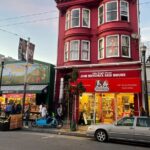
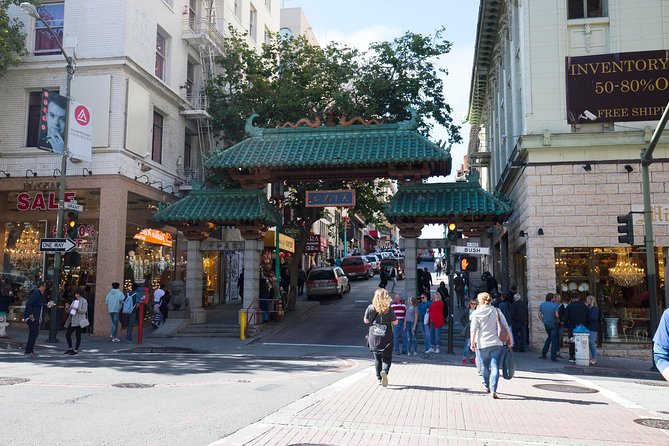
The day winds down with Chinatown and a few quick city moments. The practical side: wear shoes you can walk in right away. This day is less about lingering and more about collecting views—like building a mental map of the city before you zoom off into the next state.
You can also read our reviews of more tours and experiences in San Francisco.
Monterey to Carmel and the 17-Mile Drive: Coastal California without a rental car
Day 2 trades city angles for coastal charm. You’ll tour Monterey with a focus on the wharf area and Cannery Row—where the old industrial shoreline vibe has turned into an easy place to stroll and look around.
Then you head to Carmel-by-the-Sea, the kind of town where the main entertainment is simply walking its streets and taking in the beach-town feel. You also get a stop that’s either the 17-Mile Drive (with views from the scenic route) or a similar coastal option along Route 1, depending on bus type.
The key value here isn’t just the views. It’s that you don’t have to plan parking, routes, or who-stands-where logistics with a group. You show up, get dropped at scenic points, and move on—simple, even if you feel a little traffic-bus fatigue by mid-afternoon.
Potential drawback: because you’re moving through multiple towns in a single day, you won’t get long, slow time in any one place. If you dream in coffee-shop hours, this may feel like a highlight reel.
Las Vegas: Outlets at Barstow, then the Strip in a single evening

On Day 3 the tour shifts from coast to desert logic. You drive east through the desert and make a lunch stop at the outlets in Barstow. It’s not glamorous, but it can be useful if you’re missing basics—sunscreen, a hoodie for the bus (Vegas and desert air-conditioning can be intense), or shoes that won’t regret themselves later.
Then comes the evening: a Las Vegas Strip tour that takes you past the big-name hotels. You’ll see Caesar’s Palace, Luxor, Mirage, Paris, the Venetian, Bellagio, New York New York, Treasure Island, and more—enough to understand how the Strip became a theme-park city in the middle of nowhere.
The tour includes the Strip drive/overview, but it doesn’t force you into a specific show or casino plan. That’s your chance to do what you want—just keep expectations realistic. After a full day of driving, the “fun” time is usually best if it’s short and focused.
Hoover Dam: Quick context, then a free afternoon in Vegas
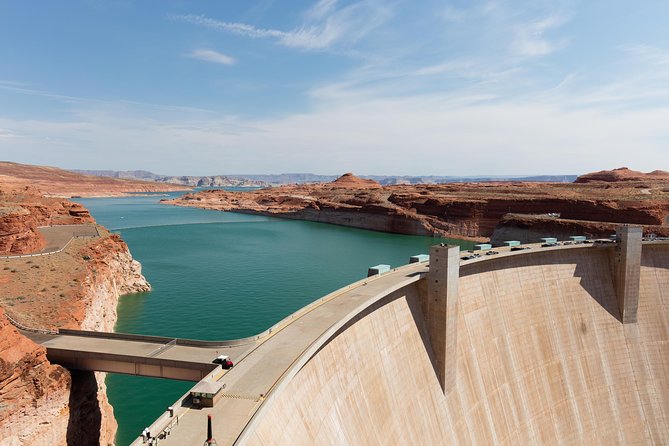
Day 4 starts with breakfast, then you head to Hoover Dam. You’ll learn how it was built and why it matters to the region. The stop is short, which is typical for a tour day, but it’s still worth it because it turns a roadside photo into something with real context.
After the visit, you return to Las Vegas with a free afternoon. This is the part of the schedule where you can reset: pool time if it’s your thing, a long walk on the Strip if you didn’t get enough earlier, or just a quiet meal away from the busiest blocks.
One small timing note that has popped up on departures: the dam stop can be tight compared with what some people expect from the morning. I’d plan your head for a short visit, not a long one.
Sedona and Flagstaff: Oak Creek Canyon, red-rock views, and the Chapel stop
Day 5 is where the West starts feeling like the West. You drive into Sedona via Oak Creek Canyon with photo stops along the way. You also pass Slide Rock State Park, and the red rock turns the whole valley into a giant natural color filter.
There’s a lunch break in Sedona with time for browsing Indian arts and crafts stores, plus boutiques and galleries. This matters because it gives you more than a scenic drive—you can actually interact with the area’s culture, even if it’s only for an hour or so.
Then you get the big photo-and-view stops: Bell Rock, Courthouse Butte, and Cathedral Rock are all part of the scenic rhythm. You also visit Chapel of the Holy Cross with a self-guided approach using a local shuttle service. That’s a good setup if you want flexible time for photos and fewer microphone interruptions—just remember you may need to move with the group pace.
You end the day in the Flagstaff area for overnight. The practical side: desert weather can swing, so bring a layer. The air can feel chilly early morning and warm fast after sunrise.


Horseshoe Bend and Monument Valley: the day that feels like a movie set
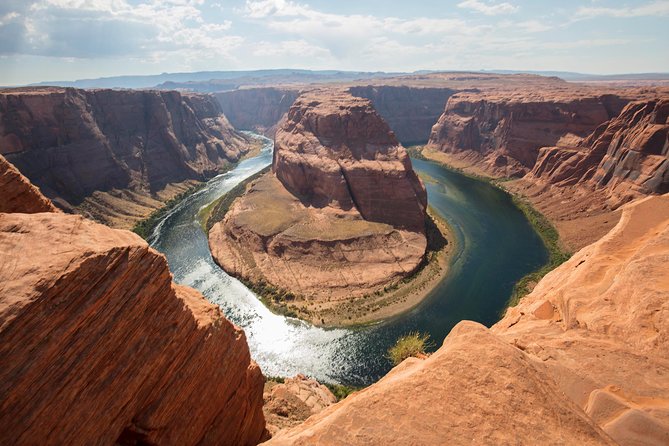
Day 6 starts with Horseshoe Bend, a dramatic bend in the Colorado River that’s hard to forget once you’re standing there. You get about an hour, which is enough to walk to a viewing spot, take photos, and watch light change on the water.
Then you head to Monument Valley on Highway 163 for the classic red-rock panorama. This is where the tour leans into the “authentic western experience” angle with a jeep tour. The ride is led by Navajo Indians, and you’ll go down into the valley rather than just circling the edge.
Why this matters: a jeep tour changes what you see because you’re moving through the shapes and shadows, not just looking at them from one height. The region is big in scale, and being in it helps you understand why people photograph it from every possible angle.
Tip from hard-earned logic: bring a camera strap you trust and keep your hands free. This is the kind of ride where you’ll want both stability and quick reach for photos.
Antelope Canyon and Valley of Fire: the desert finale in two very different styles
Day 7 is a double feature. First is Lower Antelope Canyon, where the formations look like they’re made of wind-sculpted stone. You also see the dunes shaped by wind, water, and sand. The tour includes the canyon visit and enough time to enjoy how the light moves across the rock walls.
Then it’s off to Valley of Fire State Park. This is where the timing can feel special: it’s named for the red sandstone formations that can look like they’re on fire when the sun hits them. Weather affects outcomes, but the goal is to see that intense color effect.
The day ends with an early evening return in Las Vegas. That timing is helpful because it means you’re not arriving at midnight with tomorrow plans. Still, it’s another full day, so don’t book anything fancy right after you get dropped off.
Price and Logistics: what $1,465 buys you, and what it doesn’t
At $1,465 per person for about a 7-day run, you’re paying for a bundle: guide time, transport, six nights of lodging with continental breakfast, plus several paid-in attractions (like the Bay cruise and key tours).
Here’s how I think about the value:
- Your biggest “cost” savings is not driving and parking across multiple states.
- Lodging is already handled for six nights, and breakfast is included.
- Several major experiences are folded in, so you’re not scrambling to book them later.
But there are limits and tradeoffs. Hotel pickup is not included, so you need to get yourself to the start point at 100 Larkin St, San Francisco. Luggage is also limited to one piece plus one small carry-on per person. And you’ll spend a lot of time in transit—this is a route tour, not a slow-and-compare tour.
Also note the tour operates in all weather. Dress for rain or dust, and bring shoes that work on uneven ground. Your feet will be the deciding factor between enjoying the canyon stops and feeling grumpy later.
Guide quality, language, and timing: how to avoid the common frustrations
Here’s the honest part: the success of a tour like this can hinge on the guide’s language delivery and how well the group is managed.
On some departures, English narration has been hard to follow due to pronunciation issues. Even when guides were swapped mid-trip, the mic delivery didn’t fully improve. The company response points out multilingual operation and that groups may split by language needs, so you may hear more or less depending on how your section is handled.
Timing can also feel tight. There have been cases where the group waited for a passenger in Sedona and then left later than expected. Another departure issue involved a shorter-than-anticipated Hoover Dam visit and a different-than-planned Vegas afternoon window.
What you can do to protect your experience:
- Ask questions early if you care about a stop’s context.
- Don’t assume you’ll get the full “morning block” at each fixed attraction; think short windows.
- Pack snacks and water if you’re picky about meals, since breakfast details in Vegas can vary from what you might expect from the phrase breakfast included.
One practical note from real-world experiences: some people received a breakfast allowance rather than a full breakfast spread in Vegas. That can cover basic food, but it won’t replace a full sit-down breakfast if you want coffee plus pastry plus more options. I’d plan as if you may need to buy at least part of your morning.
Who should book this San Francisco to Vegas to Arizona style tour?
This tour is a good fit if:
- you want a guided route with major icons across California, Nevada, and Arizona,
- you’re okay with early starts and short site windows,
- you like both the famous viewpoints (Golden Gate, Strip) and the nature stops (Horseshoe Bend, Antelope Canyon),
- you value included lodging plus key tours enough to trade flexibility for convenience.
It may not be your best match if:
- you need consistent, crystal-clear English narration the whole time,
- you hate group pacing and prefer longer stays,
- you’re sensitive to bus comfort details like A/C temperature, charging availability, or crowding.
If you’re the type who likes to “stack highlights” and move, you’ll probably love the momentum.
Should you book this one?
If your dream version of the American West is a checklist of big-name sights with minimal planning, this tour is worth serious consideration—especially for the included Bay cruise, the Monument Valley jeep tour, and the Lower Antelope Canyon stop.
I’d book it if you’re flexible about guide delivery and you’re comfortable with tight timing. I’d skip it if you’re expecting a slow travel pace, long time at each spot, or guaranteed breakfast comfort in every city. For the right person, the route gives you a lot of Arizona and desert magic with the work removed.
FAQ
Does this 7-day tour return to San Francisco at the end?
No. The tour is a one-way trip and concludes in Las Vegas.
Is hotel pickup included?
No. You’ll need to make your own way to the meeting point.
Where does the tour start and end?
It starts at 100 Larkin St, San Francisco, CA 94102, and ends at 3900 S Las Vegas Blvd, Las Vegas, NV 89119 (Luxor Hotel area).
Is WiFi available during the tour?
WiFi is available on full-size coaches only. Mobile WiFi is not designed for streaming services.
What is the minimum age to join?
The minimum age is 7 years old.
How much luggage can I bring?
Luggage is limited to 1 piece and 1 small carry-on per person.
Will I share my hotel room with other guests?
Your hotel room is booked for your reservation. You can have up to 3 people per reservation, and sharing would only involve others on your booking.
How much walking is involved?
You must be able to walk about 1.5 miles (2.5 km) over uneven surfaces to participate.