REVIEW · SAN FRANCISCO
Wharf to Golden Gate Bridge – GoRide Electric Scooter Rentals
Book on Viator →Operated by San Francisco Electric Tour Co - GPS Guided E-Scooter Rentals · Bookable on Viator
A scooter makes the Golden Gate feel personal. I like that GoRide is GPS-guided from Fisherman’s Wharf to the bridge, and I like having onboard audio storytelling that explains what you’re seeing. One thing to plan for: scooters aren’t allowed on the bridge, so you’ll walk part of the route.
You get helmets (required), and you don’t need prior scooter experience to join in. The whole experience runs about 1.5 hours and operates as a private outing for your group, in English, starting and ending at Umbrella Alley.
The ride is straightforward, but hills matter in San Francisco. With the fat-tire scooter you may need a little kick for momentum, while the E-trike uses pedal assist that helps on slopes but isn’t magic for heavier riders. Bring a moderate fitness level and dress for wind.
In This Review
- Key Points Before You Go
- Why the Wharf-to-Golden-Gate Route Works So Well on Two Wheels
- Choosing Your Ride: Fat Tire Scooter vs E-Trike for Real SF Hills
- Fat Tire Scooter (1 seat)
- E-Trike (2 seats)
- Which should you choose?
- The Start at Umbrella Alley: Quick Setup, Helmet On, Then Go
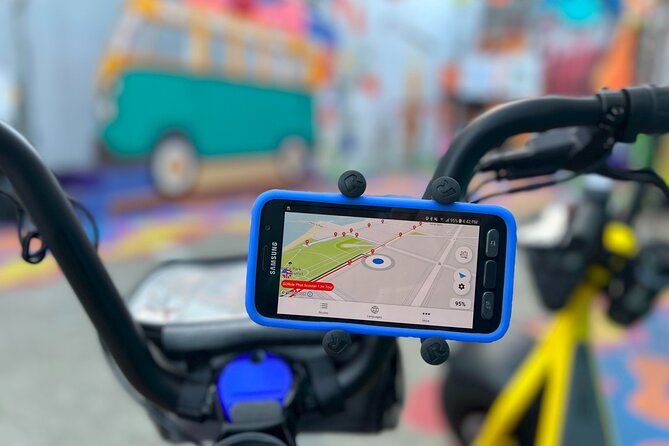
- Fisherman’s Wharf to the Golden Gate: Using GPS + Audio Without Thinking
- The Golden Gate Bridge Rule: Riding Stops, Walking Fits
- Hills, Timing, and Weather: Small Choices That Matter in SF
- Price and Value: It’s Rental Cost, Not Per-Person
- How Suitable Is This for Your Group?
- Great fit for
- Use extra caution if
- Should You Book This GoRide Tour from the Wharf to the Golden Gate?
- FAQ
- Where does the tour start?
- How long is the experience?
- What language is the tour in?
- Are helmets provided?
- Is there an onboard guide during the ride?
- Can I ride the electric scooter on the Golden Gate Bridge?
- What ride options are available?
- What are the weight limits?
- How old do riders need to be?
- Is the price per person?
- Is cancellation free?
Key Points Before You Go

- GPS takes the stress out of navigation while you focus on views and photos.
- Onboard audio guide adds context with history, culture, and plenty of landmarks along the way.
- Two ride options match your group: 1-person fat-tire scooters or 2-seat E-trikes for families and friends.
- Golden Gate Bridge has a no-scooter rule: riding ends, walking is allowed.
- Hill power is different by scooter type: expect a push on fat-tire models and use pedal assist on the E-trike.
- Helmets are provided and required for both comfort and safety.
Why the Wharf-to-Golden-Gate Route Works So Well on Two Wheels
San Francisco is one of those cities where the best memories usually happen fast, because the clock keeps moving and the fog keeps changing. This GoRide experience is designed for that reality. You’re not trying to stitch together transit, parking, and bike lanes on your own. Instead, you get a GPS-guided electric scooter rental that runs the key line of sight from Fisherman’s Wharf to the Golden Gate Bridge and back.
The big value for me is time. In about 1 hour 30 minutes, you’re positioned to see the bridge from a different angle without spending your entire day in logistics. I also like how the tour treats the city like a story, not a checklist. The scooter includes an onboard audio tour, so as you roll along, you get narration about landmarks and what you’re looking at—plus extra cultural context.
The main “gotcha” is the bridge itself. Electric scooters aren’t allowed on the Golden Gate Bridge. Walking is okay, so you’re still going to experience it, but you’ll switch modes. If you hate the idea of getting off and walking for a bit, this might feel like an awkward trade. If you’re okay with that, it’s a very manageable one.
You can also read our reviews of more tours and experiences in San Francisco
Choosing Your Ride: Fat Tire Scooter vs E-Trike for Real SF Hills
GoRide offers two different ways to roll, and choosing the right one makes the whole experience smoother.
Fat Tire Scooter (1 seat)
This option is for solo riders. It’s a fat-tire scooter with a seat for 1 guest, with a maximum weight limit of 300 lbs (126 kg). On some San Francisco hills, the system may require a little “kick” to maintain momentum. The electric motor helps, but the tour instructions are honest: on steeper stretches, the motor support may not be enough for heavier riders. So think of it as assisted riding, not fully effortless.
If you’re traveling solo, this is the simplest choice. You’ll be hands-on with the scooter, and you’ll probably feel the terrain more. That can be fun, as long as you’re comfortable doing a small push when needed.
E-Trike (2 seats)
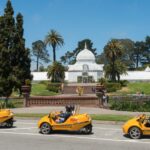
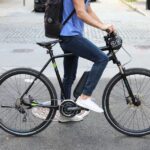
The E-trike is the pick for couples, friends, and families who want to ride together. It’s pedal assist and can accommodate 2 guests, again capped at 300 lbs total. The pedal assist makes hills easier than a purely motor-only experience, but the guidance still warns that motors might not be strong enough for heavier guests on some slopes. In those moments, you’ll pedal more actively.
The E-trike is also more forgiving if you have a younger rider. The single passenger on the E-trike can be age 5+, while scooter drivers must be 18 and up.
Which should you choose?
If you want maximum control and a more direct ride feel, choose the fat-tire scooter. If you want a more social setup and pedal support for hills, choose the E-trike. Either way, the instruction about weight limits and hill power is worth taking seriously. San Francisco grades don’t care about good intentions.






The Start at Umbrella Alley: Quick Setup, Helmet On, Then Go
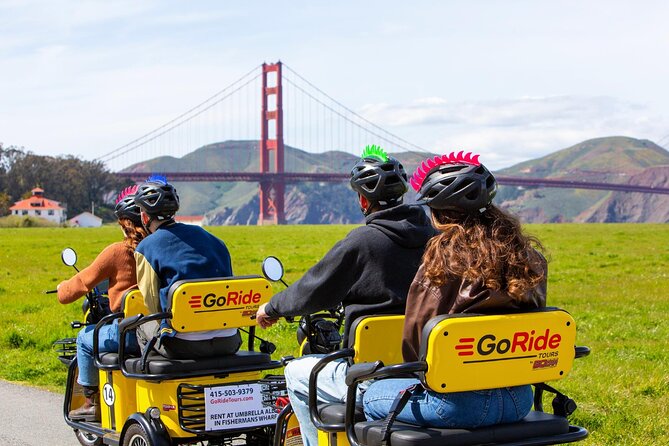
Your meeting point is Umbrella Alley, 366 Jefferson St, San Francisco, CA 94133. This matters because it’s not buried in a random side street. It’s a central place to locate, and the tour is also noted as being near public transportation—helpful if you’re combining it with the rest of your day.
Once you meet up, you’ll be issued a helmet. Helmets are provided and required, so plan to wear one the entire time. You’ll also sign a guest liability waiver. This is normal for scooter rentals, but it’s still a step you should expect before riding.
The tour is private, meaning only your group participates. That’s a quiet advantage. You’re not being shuffled around with strangers, and you can keep your attention where it belongs: listening to the audio tour and adjusting to the bike-scooter feel.
One more practical note: the experience is listed as in English and suitable for people with a moderate physical fitness level. That doesn’t mean you need to be an athlete. It does mean you should be comfortable standing, balancing, and handling small adjustments on hills.
Fisherman’s Wharf to the Golden Gate: Using GPS + Audio Without Thinking
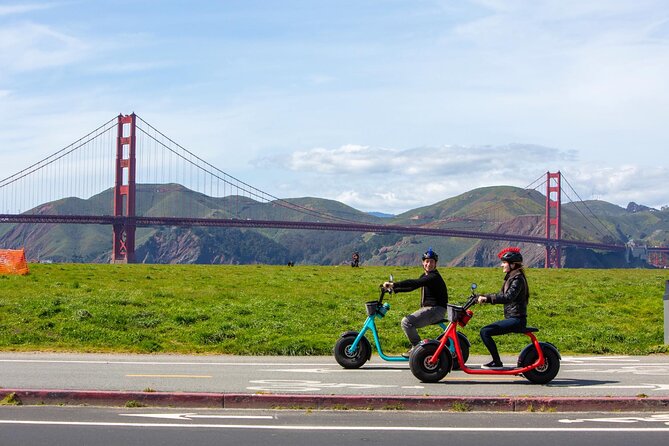
The core loop is simple: you ride from Fisherman’s Wharf toward the Golden Gate Bridge and then back. The tour is GPS-guided, so you’re not left with a map app and hope. For me, that’s the difference between a fun ride and a stressful one. You get to look at the water, the neighborhoods, and the bridge approach while the route keeps you pointed in the right direction.
While you ride, each scooter has an onboard storytelling guided tour. You’ll hear about history, culture, and landmarks as you go. One of the strongest themes from the experience feedback is that the ride includes ample descriptions of historical monuments while you’re moving. That’s important because the best “learning time” in San Francisco often happens when you’re actually watching things unfold, not when you’re stuck reading a plaque.
Also, the tour description promises more than the basics: it includes city “secrets,” plus context that makes the scenery feel less random. Even if you’ve been to San Francisco before, that kind of running commentary can help you connect the dots quickly.
What I suggest: treat the first portion as your calibration stage. In the early minutes, focus on comfort—how the scooter responds, how your speed feels, and how the terrain changes. Then let the audio guide sink in once you’re steady.
The Golden Gate Bridge Rule: Riding Stops, Walking Fits
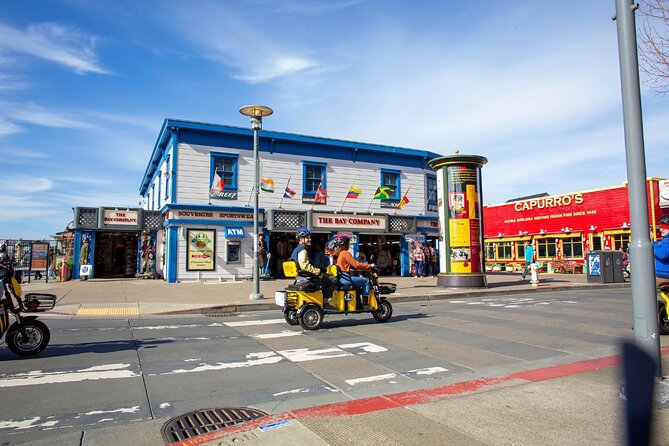
Here’s the most important reality check: electric scooters are not allowed on the Golden Gate Bridge. Walking on the bridge is OK. That means the experience is built around reaching the bridge area, then switching to walking mode for the bridge itself.
This is one of those rules that can sound annoying until you think about why it exists. It’s likely about safety and traffic management, and it also keeps the bridge experience more controlled for pedestrians. The practical takeaway for you is planning: wear shoes that work for walking, and don’t assume the ride will carry you all the way across.
How long you’ll walk isn’t specified in the provided details, but you can count on at least some walking component. If you’re traveling with stiff knees, mobility limits, or you hate walking—even short walks—this might be the single reason to reconsider.
That said, the route still earns its name. You’ll be close enough to experience the bridge from a very “SF” angle, and the audio narration helps connect what you see to the city around it.
Hills, Timing, and Weather: Small Choices That Matter in SF
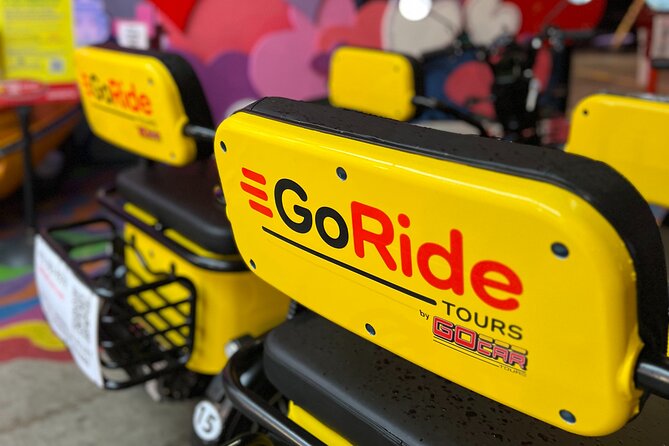
San Francisco hills are famous for a reason. This tour even sets expectations upfront:
- Fat-tire scooters may require a bit of “kick” to maintain momentum on some hills.
- E-trikes are pedal assist, which helps, but the motors are not strong enough to propel heavier guests up some slopes on their own.
Translation into plain English: if you’re heading into this expecting effortless power in all conditions, you’ll feel the difference in steep areas. If you treat the ride like assisted cruising where you may need to push or pedal, it becomes much more relaxing.
Timing matters too. One piece of advice from the experience feedback is clear: go during daylight. Night riding can feel scary. If you’re not used to urban riding in dim conditions, daylight gives you more control and more confidence.
Weather matters as well. The tour is described as requiring good weather, and if it’s canceled due to poor weather, you’re offered a different date or a full refund. San Francisco wind can also turn a “short ride” chilly fast, especially in cooler seasons.
If you’re doing this in winter, I’d follow that same practical guidance: bring warm layers, and consider wearing gloves. Even a light chill can make you grip tighter, which makes steering feel less natural.
Price and Value: It’s Rental Cost, Not Per-Person
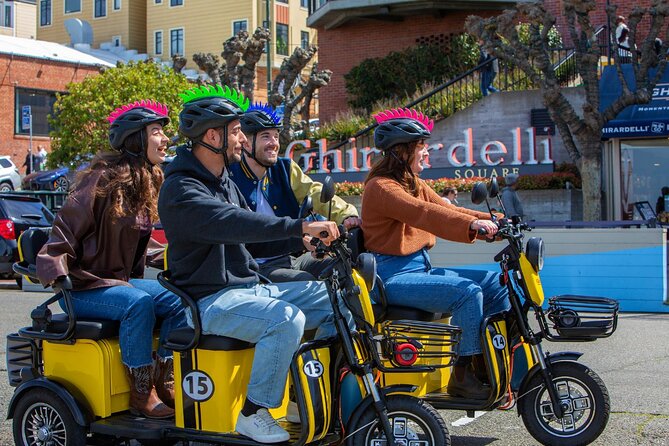
One thing you need to read carefully: the listed price is the rental cost per scooter/trike, not per person. In the simplest terms:
- 1 person = 1 E-scooter or 1 E-trike rental
- If you choose a ride that seats more people, you get more riders within that same unit (within the weight limits and age rules).
That changes value a lot depending on your group. If you’re solo, you’re essentially paying for one unit, but you get a lot of route time plus audio guidance. If you’re traveling as a pair or with kids, the E-trike’s shared setup can be the better financial choice because you’re combining multiple riders in one vehicle.
You also get a few essentials included:
- Helmet (required)
- Onboard audio guided tour
- The scooter itself (either fat-tire or E-trike)
Not included are food and drinks, so plan snacks and water on your own.
And don’t skip the “value of not thinking” factor. GPS routing and a built-in commentary system mean you’re paying not just for wheels, but for reduced stress and faster sightseeing flow.
How Suitable Is This for Your Group?
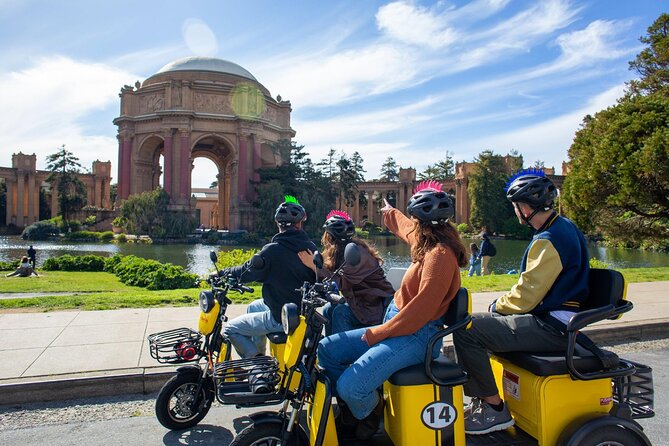
This is a good match when you want action without chaos. Here’s how I’d place it:
Great fit for
- First-time SF visitors who want a direct route to the bridge
- People who like learning while moving (the audio does the work)
- Solo riders who want a simple fat-tire scooter setup
- Couples and small families who want to ride together on the E-trike
Use extra caution if
- You don’t want to walk a portion of the Golden Gate Bridge
- You’re uncomfortable with hills, or you’re not sure you can handle short bursts of “kick” or active pedaling
- You’re booking at night (daylight is strongly preferred for comfort)
Age rules are also part of your planning:
- Scooter drivers must be 18 and up
- Single passenger on E-trike is age 5+
- Single passenger on fat-tire scooter is not described as child-friendly in the data, so if kids are involved, the E-trike setup is the clearer option.
Should You Book This GoRide Tour from the Wharf to the Golden Gate?
If you want a time-efficient San Francisco experience that feels like real movement—not a long bus ride—this is worth booking. The combination of GPS-guided routing, onboard audio storytelling, and a focused loop from Fisherman’s Wharf to the Golden Gate area and back makes it easy to feel like you used your time well.
I’d book it if:
- you’re okay with walking on the Golden Gate Bridge
- you can manage moderate riding effort on hills
- you want guidance that keeps you from guessing your way through the city
I’d skip it if:
- you need a fully seated ride all the way across the bridge
- you’re hoping for fully effortless hill climbing with no kicking or pedaling at all
- you’re planning to ride late at night and don’t feel comfortable in darker traffic conditions
If you can plan around daylight and choose the right scooter type for your group, this is one of the more practical ways to connect the Wharf to the Golden Gate without turning your day into logistics.
FAQ
Where does the tour start?
It starts at Umbrella Alley, 366 Jefferson St, San Francisco, CA 94133.
How long is the experience?
It lasts about 1 hour 30 minutes.
What language is the tour in?
The experience is offered in English.
Are helmets provided?
Yes. Helmets are provided and required.
Is there an onboard guide during the ride?
Yes. Each scooter includes an onboard storytelling guided tour.
Can I ride the electric scooter on the Golden Gate Bridge?
Electric scooters are not allowed on the Golden Gate Bridge. Walking on the bridge is allowed.
What ride options are available?
You can choose either a fat-tire scooter (seats 1 guest) or an E-trike (seats 2 guests).
What are the weight limits?
The maximum weight capacity is 300 lbs (126 kg) for either scooter type.
How old do riders need to be?
Scooter drivers must be age 18 and up. The single passenger on the E-trike is age 5+.
Is the price per person?
No. The price is the rental cost per E-scooter or E-trike rental. One person equals one scooter rental.
Is cancellation free?
Cancellation is free, and you can cancel up to 24 hours in advance for a full refund. If it’s canceled due to poor weather, you’ll be offered another date or a full refund.