REVIEW · SAN FRANCISCO
California Academy of Sciences General Admission Ticket
Book on Viator →Operated by California Academy of Sciences · Bookable on Viator
One roof, four worlds of science. The California Academy of Sciences stacks a natural history museum, aquarium, planetarium, and rainforest together, and the instant-access mobile ticket helps you skip the extra voucher step. I love that you can meet living animals in multiple ways—like the African penguin colony—without needing separate admissions. One drawback to keep in mind: it’s popular, so expect a bit of crowd pressure when you’re trying to see everything in one go.
You’ll also like that the day isn’t just static exhibits. There are hands-on displays and daily public programs like animal feedings and pop-up demonstrations, so you get more than museum-walking. Do wear plan-for-wet-weather shoes, too—the rainforest exhibit runs hot and humid, and you’ll be moving.
This isn’t a formal guided tour. It’s admission that starts at 55 Music Concourse Dr in Golden Gate Park, with about 3 to 5 hours as a realistic “see the big things” window (or longer if you stop for programs).
In This Review
- Key things to know before you go
- California Academy of Sciences: What makes it worth $49
- Price and logistics: what’s included, what costs extra
- Getting in fast: the mobile ticket and your first-hour plan
- Stop 1: Natural history halls, penguins, and the geology collection
- Steinhart Aquarium: 60,000 animals, plus the Venom and Twilight Zone moments
- Morrison Planetarium: how to reserve shows and what kids can expect
- Osher Rainforest: the four-story walk-through with free-flying animals
- Golden Gate Park time: how the location shapes your day
- Food, comfort, and crowd reality checks
- Who should book this ticket (and who should not)
- Should you book the California Academy of Sciences general admission?
- FAQ
- How long should I plan for the Academy?
- Is the planetarium included with admission?
- Do I need a formal tour guide?
- Are there age limits for planetarium shows?
- Where does the experience start?
- Can I cancel for a refund?
Key things to know before you go
- Instant entry with a mobile ticket: skip a separate kiosk-style voucher redemption and get moving faster.
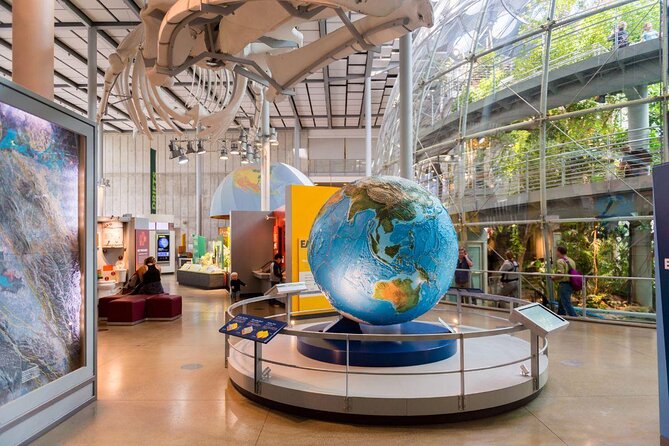
- One ticket opens multiple buildings: aquarium, planetarium, rainforest, and natural history are all part of the same visit.
- Animal-heavy priorities: plan your time around the African penguins and the 60,000-animal aquarium.
- Planetarium needs a timed pass: shows are included, but you reserve by scanning a QR code when you arrive (first-come).
- Rainforest comfort tip: the Osher Rainforest is warm and humid—dress for it, not for SF weather.
- Small-group format: maximum group size is 9, but you’re still mostly self-paced.
California Academy of Sciences: What makes it worth $49
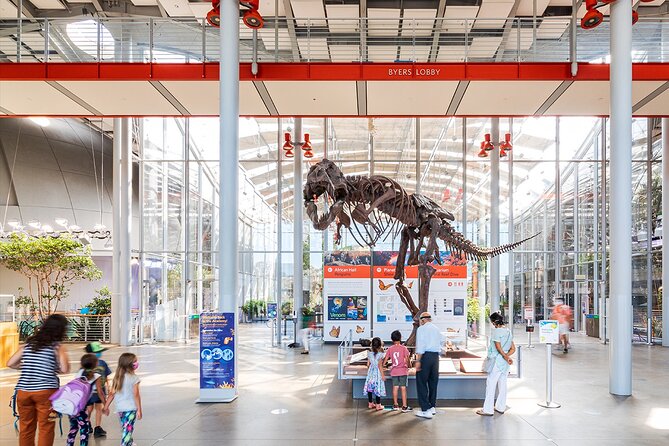
If you like science that feels alive—literally—you’ll get your money’s worth here. This is the only place on Earth where an aquarium, planetarium, rainforest, and natural history museum sit under one living roof. That matters because you’re not hopping between distant attractions or paying again and again just to change themes.
The $49 general admission price is also easier to justify than you might expect because much of the “big ticket” content is baked into the visit: the Steinhart Aquarium, Morrison Planetarium (with free passes), and the Osher Rainforest are all included when you have admission. In other words, you pay once for access, then you decide how hard you want to go on each section.
One smart thing to do: treat your visit like a route with a few must-sees, not like a full-day marathon of everything. The museum layout makes it easy to feel like you’re always “between sections,” but that also means you can lose time if you don’t pick your priorities early.
You can also read our reviews of more tours and experiences in San Francisco

Price and logistics: what’s included, what costs extra
Here’s the practical breakdown.
Included with your ticket:
- Instant-access admission to the Academy
- Entry to the aquarium, rainforest, and planetarium areas as part of your admission
Planetarium detail to know:
- Planetarium show passes are free, but you reserve a showtime after you arrive by scanning the QR code in the lobby.
- Shows can vary by day, and some shows may not be appropriate for children under 7. Children under 4 are not permitted.
Not included (so budget for it):
- Formal tour
- Hotel pickup/drop-off
- Food and drinks (you’ll buy these on site)
- Gratuities (not required)
Extra costs to plan for:
- If you’re driving, parking is not included. One common complaint is that parking plus food can make the day feel pricier than the ticket alone.
The value play here is simple: if you’re the type who will actually see the aquarium and rainforest (not just stand in a gift shop line), the $49 admission is a solid deal for a big chunk of a museum day.
Getting in fast: the mobile ticket and your first-hour plan
The biggest “save time” feature is the instant-access ticket. Instead of lining up to redeem a voucher at a separate kiosk, you get a quicker entry flow—so you can spend your energy on animals and exhibits instead of waiting.
Also, you’ll want to think about timing around the planetarium. Passes are free but first-come, so once you’re inside:
- Scan the QR code posted in the lobby
- Reserve a showtime that fits your day
- Double-check whether it fits your kids’ ages and needs
If you show up and then spend 45 minutes deciding whether you want the planetarium, you risk losing the showtime you wanted. The planetarium is a highlight for a reason: that 75-foot dome screen turns the room into a different kind of classroom.
Stop 1: Natural history halls, penguins, and the geology collection
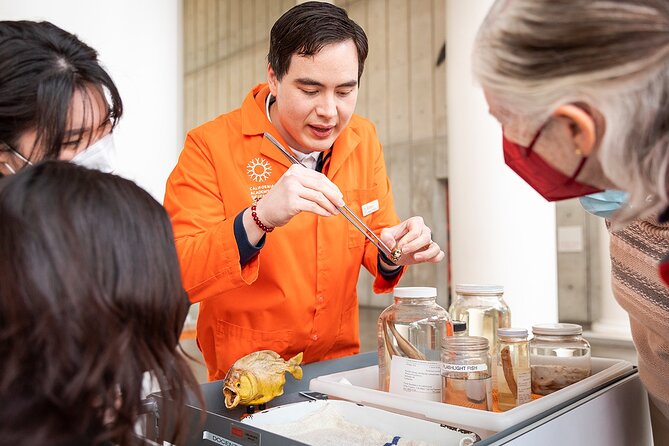
Start where it makes the most sense: the Academy’s natural history side. This is where you get that “big science” feeling—large-format displays, plus hands-on elements that don’t require you to be a PhD to enjoy them.
What you should look for:
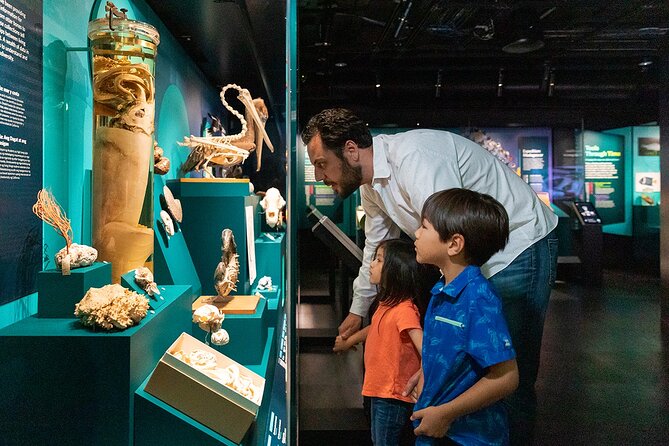
- You’ll walk beneath the bones of some of the planet’s largest inhabitants.
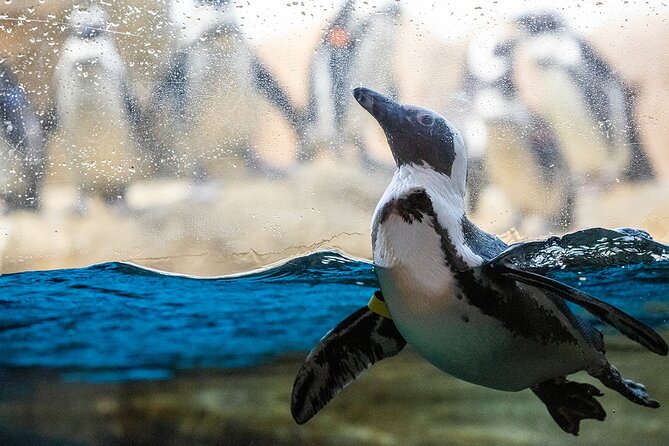
- The African penguin colony is a top draw, and you can catch a biologist feeding them and answering questions.
- There’s also a geology collection with nearly 400 specimens, so this isn’t only about animals.
One reason this first stop works well for families: it gives kids something to point at immediately (penguins and big skeleton displays) while adults can hang their interest on geology and California-focused science.
A newer exhibit theme also helps connect the dots: California: State of Nature explores how California’s species, places, and people connect through four ecosystems. If you like your museum experiences with a clear narrative thread, this is one of the best places to start building it.
Possible drawback: it’s easy to get “stuck” here because there’s so much to see fast. If you truly want the aquarium and rainforest too, set a loose time boundary—enough time to enjoy, not enough time to forget the rest of the building.
Steinhart Aquarium: 60,000 animals, plus the Venom and Twilight Zone moments
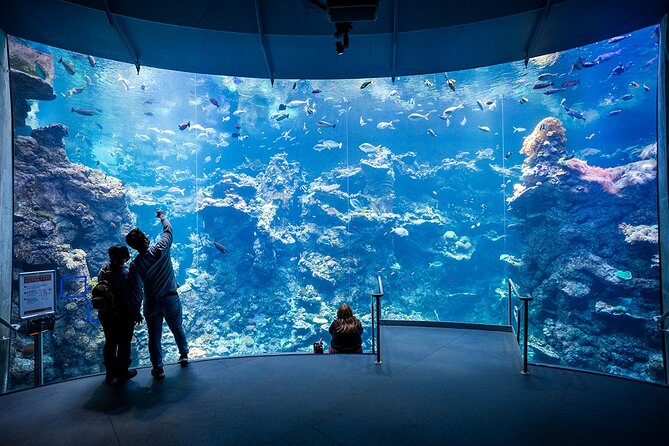
The Steinhart Aquarium is one of the main reasons people plan their SF days around the Academy. The scale is huge: nearly 60,000 live animals representing more than 1,000 species.
You’ll feel the difference right away because this aquarium isn’t only about a few tanks lined up neatly. It’s built to keep you moving and noticing different ecosystems.
Three aquarium highlights to aim for:
- The world’s deepest living indoor coral reef experience
- The Venom exhibit, featuring over a dozen species
- The “Twilight Zone,” a pitch-black area meant to help you learn about marine life that lives in low-light conditions
This is also a good spot to slow down. Aquarium viewing rewards patience—you’ll catch more as you let your eyes adjust and re-check what’s around you. If you’re with kids, it’s also a place where they can get excited about very specific things: strange body shapes, unusual colors, and “how is that alive?” questions that turn into real learning.
Time tip: give yourself enough room here that you’re not racing. If you rush, you’ll miss the tank transitions and the best moments of the aquarium storytelling.






Morrison Planetarium: how to reserve shows and what kids can expect
The Morrison Planetarium is the Academy’s “big screen” experience. The dome is huge—75 feet—and it’s designed for cutting-edge visualizations and hyper-realistic virtual environments. You can zoom from faraway galaxies to how our own planet works.
You’ll also have multiple show options during the day, and the shows themselves are a key part of the admission experience. But here’s the planning detail you can’t ignore: show passes are reserved at the planetarium pass pick-up desk across from the planetarium entrance, and you reserve using the QR code in the lobby when you arrive.
Child notes you should know up front:
- Shows may not be appropriate for children under 7.
- Children under 4 are not permitted.
If you’re bringing a mixed-age group, pick a showtime that matches the kid age rules and your family’s attention span. If you have teens or adults who love science visuals, choose a show that feels more “space and scale” than “quick facts.”
Also, keep a little flexibility. Some people have arrived expecting specific operations and found closures on a particular day, so I’d treat the planetarium show as a must-do—but not a single-point-of-failure.
Osher Rainforest: the four-story walk-through with free-flying animals
Then comes the one that can catch you by surprise: the Osher Rainforest. It’s a glass dome that functions like its own environment, with four stories of rainforest life.
You’ll see:
- Over 1,600 plants and animals
- Free-flying birds and butterflies
- Reptiles, golden-silk orb weaver spiders
- Enormous Amazonian fish
The rainforest isn’t just a view; it’s structured in stages, and each stage puts you closer to animals that fit that part of the habitat. That’s a great way to keep kids engaged, because the experience changes as you move up and through the dome.
Comfort note matters here. The rainforest exhibit runs hot and humid. If you show up in light layers, you’ll be happier. If you wear heavy outerwear, plan for sticky clothes and a quicker need to cool down.
Give yourself at least 30 minutes, and if you’re traveling with kids who love bugs and butterflies, you might want more.
Golden Gate Park time: how the location shapes your day
The Academy sits in Golden Gate Park, which is a huge advantage. Even if your plan stays fully inside, the park setting helps the day feel like an actual outing instead of a pure indoor grind.
Practically, this also affects pacing:
- You can plan to arrive ready to explore and not worry about finding a meal nearby.
- If the weather turns, you can still keep your day moving because your main activity is indoors and weather-proof.
The smart move is to use the park location for convenience, not to overstuff the schedule. If you try to add too much outside sightseeing, you’ll start cutting into the planetarium and rainforest time, which are what make this visit special.
Food, comfort, and crowd reality checks
You’re going to walk. The museum experience covers multiple zones, and reviews often flag that comfortable shoes help a lot. The rainforest humidity adds to the “you’ll move more than you expect” factor.
Food is available on site:
- Grab-and-go options are sold at the Academy Café and the Terrace Restaurant.
This isn’t included in your ticket price, so treat it as a budgeting item. One downside people bring up is that food plus parking can make the full day feel more expensive than the $49 entry price suggests. Still, having food available onsite is a win for families because you don’t have to exit the building mid-visit.
Crowds: yes, it can get full. When it gets crowded, you’ll want to use a simple strategy:
- Make your must-sees first
- Take breaks that match the building zones (aquarium viewing and rainforest sections are easier to pause in)
- Don’t spend 60 minutes reading every label in one room if you also want penguins, planetarium, and rainforest
Cleanliness: one review mentioned concerns about smudges and how some surfaces were being cleaned. That doesn’t mean you should assume the worst, but it’s a good reminder to bring hand sanitizer and keep personal comfort in mind.
Who should book this ticket (and who should not)
This is one of those experiences that works for a wide range of ages, especially if you want a single location with multiple science “flavors.”
You’ll love it if:
- You’re traveling with kids who get excited by animals and hands-on exhibits
- You want an aquarium and planetarium day without extra separate admissions
- You like science that’s visual and physical, not only text-based
- You want a memorable SF stop that still feels like a learning day
You might think twice if:
- You’re only interested in a single part of the Academy (like only a quick aquarium walk)
- You’re expecting a formal guided tour style experience (this is admission, not a guided narrative tour)
- You prefer super-quiet museums where you can linger without any crowd pressure
Also, if you’re the type who needs maximum control over showtimes, your best bet is to reserve the planetarium show as soon as you can.
Should you book the California Academy of Sciences general admission?
Yes, if you want value and variety in one day. For $49, the Academy gives you multiple major attractions under one roof—plus free planetarium passes reserved on site and an outdoor-adjacent location in Golden Gate Park. It’s the sort of ticket that pays off because you can choose your mix: penguins plus geology first, aquarium second, planetarium show when the timing works, then rainforest as your “wow” closer.
Book it if you’re ready for a full-feeling museum outing. Bring comfortable shoes, dress for humidity in the rainforest, and don’t treat the planetarium as something you’ll casually fit in later.
Skip the rush decision if you hate crowds or you only want one exhibit type. In that case, you’d be paying for access to parts you won’t use.
FAQ
How long should I plan for the Academy?
Plan for about 3 to 5 hours. That’s a good window to see the major sections without feeling like you’re sprinting the whole time.
Is the planetarium included with admission?
Yes. Planetarium show passes are included, and they’re free to reserve. You reserve a showtime by scanning a QR code in the lobby.
Do I need a formal tour guide?
No. This is general admission with instant-access entry. It’s not listed as a formal guided tour.
Are there age limits for planetarium shows?
Planetarium shows may not be appropriate for children under 7, and children under 4 are not permitted.
Where does the experience start?
It starts at 55 Music Concourse Dr, San Francisco, CA 94118. The activity ends back at the meeting point.
Can I cancel for a refund?
Yes, free cancellation is available up to 24 hours in advance for a full refund. If you cancel less than 24 hours before the start time, the amount paid is not refunded.