REVIEW · SAN FRANCISCO
Silicon Valley Tour from San Francisco Private
Book on Viator →Operated by A Taste of SF Tours · Bookable on Viator
Tech stops, timed to a story. This private Silicon Valley tour strings together big-name campuses, classic tech landmarks, and one very worth-your-time museum stop, all starting from San Francisco. I like how it mixes iconic buildings with real context, so the day feels like more than photos—think business moves, branding details, and how ideas actually spread.
Two things I especially like: the private, up-to-6-person format (so you’re not stuck watching from behind strangers) and the Computer History Museum with included admission. One consideration: the schedule is full and lunch isn’t included, so you’ll want to budget time and money for the Palo Alto break.
In This Review
- Key points that make this tour click
- Silicon Valley, Mapped Like a One-Day Story
- Price and what you’re really paying for (up to 6 people)
- Your day plan: how the 8 to 10 hours usually feels
- Oracle Headquarters in Redwood Shores: Ellison’s Americas Cup story
- Meta in Menlo Park: two campuses and a logo easter egg
- Googleplex and the Gradient Canopy Visitor Experience
- Computer History Museum: the one-hour stop that makes the rest click
- NASA Ames Visitor Center: quick pass with a gift shop option
- Apple Park Visitor Center: observation deck views plus the store
- Steve Jobs Home pass-by and Hewlett-Packard Garage photos
- Palo Alto lunch break on University Avenue
- Stanford University: icons, gardens, and tech buildings
- Who this tour suits best
- Guides make the difference (when you get a strong storyteller)
- Should you book this Silicon Valley Private tour?
- FAQ
- How many people are in the private group?
- Where does the tour pick you up from?
- What time does the tour start, and how long is it?
- What’s included in the price?
- Which stops have admission tickets included or listed as free?
- Is lunch included?
- When is the Computer History Museum open?
- Is the tour offered in English?
- Can I cancel for a full refund?
Key points that make this tour click
- Private group size (up to 6) with a guide who can answer questions as you go
- Hotel pickup and drop-off from San Francisco and areas between SF and Silicon Valley
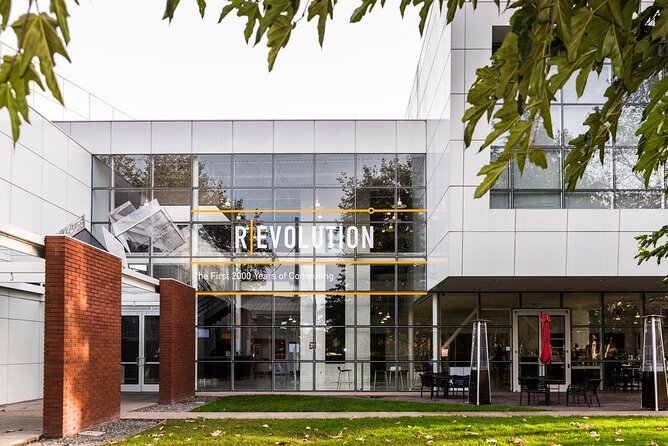
- Computer History Museum stop with included admission, open Wed–Sun
- Oracle, Meta, Google, Apple, and Stanford in one long day without the logistics headache
- Photo moments built into the route, from famous garages to major visitor centers
- Shopping time at Apple Park Visitor Center and the Google Visitor Experience Center
Silicon Valley, Mapped Like a One-Day Story
Silicon Valley can feel like a highlight reel when you visit on your own. This tour keeps you moving, but it also keeps you oriented. The guide ties each stop to the next chapter: early experimentation, the boom years, and what today’s tech giants are trying to control—attention, talent, and brand.
Because it’s private and capped at six people, you get a calmer pace. You can ask why a sign is placed a certain way, why a company’s early campus matters, or what the famous names have in common. And since you’re getting round-trip transfers, you avoid the “Which parking lot is the right one?” routine.
The strongest part is the mix: you’ll see the modern campuses, then you’ll hit the Computer History Museum, where you can connect the hardware story to the companies you just saw outside.
You can also read our reviews of more private tours in San Francisco



Price and what you’re really paying for (up to 6 people)
At $1,099 per group (up to 6), this is not a budget bus tour. But it can be good value if your group includes multiple people who want flexibility and a guide who can shape the day.
Here’s what you’re paying for, in practical terms:
- Private routing plus round-trip hotel pickup/drop-off
- Water in the vehicle
- Included Stanford tour
- Computer History Museum admission
- Mostly free admission for the other listed stops
If you’re traveling with friends or family who all want the same day’s plan, the per-person math gets easier. If you’re a solo traveler, it’s still doable—just recognize you’re paying for privacy and convenience, not just access to landmarks.
Also note the tour is in English and uses a mobile ticket. That matters on a day when you’ll be bouncing between different visitor centers and campuses.
Your day plan: how the 8 to 10 hours usually feels
This tour runs about 8 to 10 hours, starting at 9:00 am. The stops are short at several tech campuses, and longer where you can actually walk around—especially the museum and Stanford.
A useful way to think about it: you’re buying time and perspective, not trying to win a marathon of sightseeing. You’ll get enough time for photos and orientation, then you’ll get one or two deeper moments where it actually makes sense to slow down.
Dress code is smart casual. Wear comfortable shoes anyway. Even when visits are “only” 10–40 minutes, you’ll still be walking, stepping in and out of vehicles, and handling the outdoor-to-indoor changes.
Oracle Headquarters in Redwood Shores: Ellison’s Americas Cup story
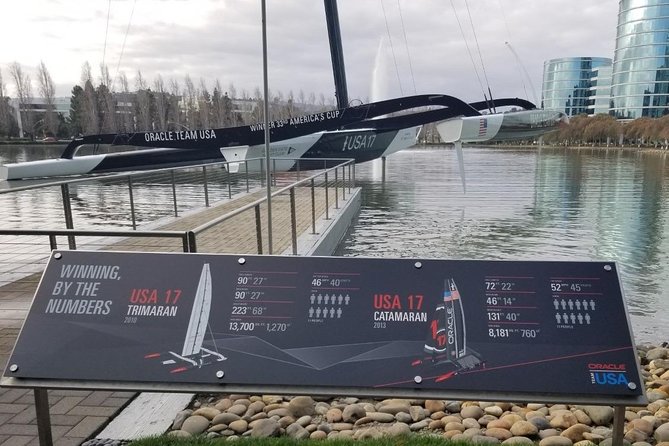
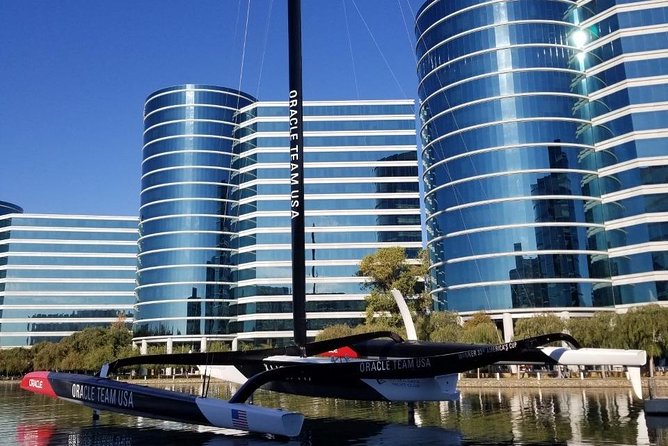
Stop one is at 500 Oracle Pkwy in Redwood Shores, where you’ll see Oracle Headquarters. The tour focuses on the people and the plotline, including the story about Larry Ellison and how he brought the Americas Cup back home after 15 years.
You’ll also hear about the nickname Emerald city and the famous trimaran connected to Ellison’s return-the-cup narrative. That’s a clever way to connect a tech company to a broader American obsession: competition, engineering, and publicity.
Time on site is about 15 minutes and admission is listed as free. That’s enough for a good look and photos, but don’t plan on lingering. If you want a longer wander, you’d need a separate visit later.
Meta in Menlo Park: two campuses and a logo easter egg
Next comes Meta in Menlo Park, where you’ll see two Facebook campuses: the newer MPK20 and the older campus that used to be the Sun Microsystems site. One of the fun details is the tour’s attention to why the old Sun logo is visible—so you’re not just snapping a picture, you’re noticing the “before” under the “now.”
There’s about 20 minutes here, with admission listed as free. The likely vibe is fast orientation: quick stops for photos, then a little explanation to help it make sense.
If you love corporate history and branding details, this is a good stop. If you’re mostly after interiors or guided building access, temper expectations: this is an outside-and-context day.






Googleplex and the Gradient Canopy Visitor Experience
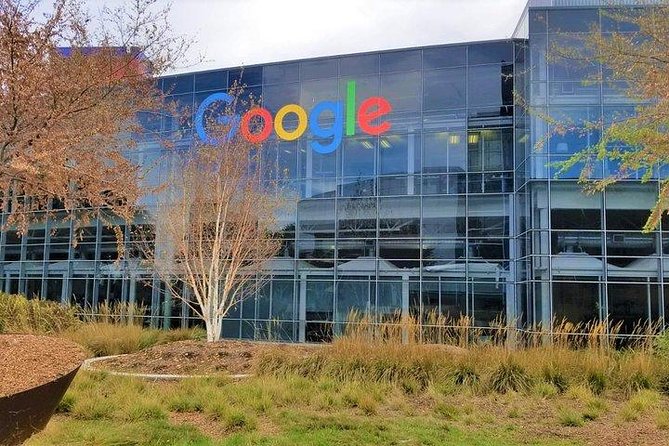
At Googleplex, you’ll visit the Google campus area and take photos with recognizable props and icons, including Androids, a Dinosaur, and Google signs. Then you’ll have time at the new Google Visitor Experience Center in the Gradient Canopy building.
This is where the tour becomes more than sightseeing. You’ll also have time to shop for Pixel, Nest products, phones, tablets, watches, speakers, and Google merch. It’s the kind of stop where you might leave with a souvenir—or at least come away understanding what the company wants to sell as its everyday tech.
You’ll get about 40 minutes total for this stop, and admission is listed as free. The only drawback: if you’re not interested in shopping, use the time for photos and for asking the guide what changed in Google’s approach over the years.
Computer History Museum: the one-hour stop that makes the rest click
The Computer History Museum is the tour’s clearest “slow down and learn” moment. You’ll have about 1 hour, with admission included.
This is the stop that tends to land hardest because it shifts you from buildings to artifacts. You’ll be able to see how computing has changed over time, and you’ll be able to spot technology you might remember from earlier decades. The value here is connection: after seeing the big tech campuses outside, you finally get the timeline you can’t easily get from photos.
The museum is open Wednesday to Sunday, 10:00 am to 5:00 pm. Because your tour includes this stop, it’s a strong sign your day should be in the right window—but it’s still worth keeping in mind if you’re planning your trip around specific weekdays.
If you have kids, this is also the stop that usually turns the gears in their heads. Even adults who only came for the campuses often find themselves enjoying the exhibits once they’re inside.
NASA Ames Visitor Center: quick pass with a gift shop option
After Google and the museum, you get a change of pace. You’ll pass by NASA Ames Research Center and stop briefly at the NASA Ames Visitor Center area.
You’ll have about 15 minutes. Admission is listed as free, and you’ll have a chance to visit the gift shop. One practical note: the gift shop is listed as open Monday to Friday. If your tour day falls on a weekend, you might still enjoy the visit area, but don’t count on shop hours being available.
This stop is short, but it works as a reminder: innovation doesn’t start with a garage story alone. It also starts with research culture, long timelines, and government-backed problem solving.
Apple Park Visitor Center: observation deck views plus the store
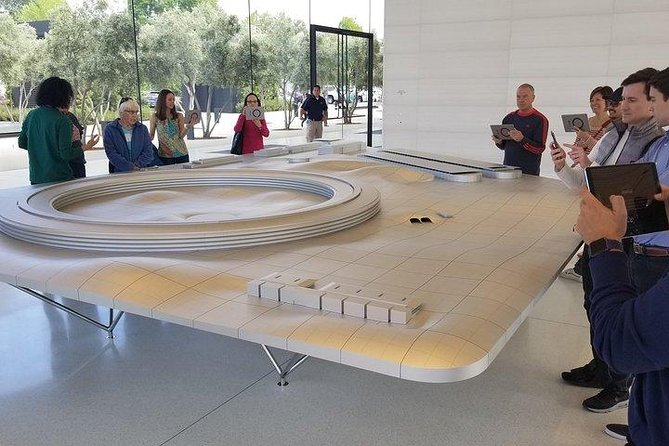
Apple Park is next, and you’ll go to the Apple Park Visitor Center. You can visit the new Apple Park store, and you’ll be able to shop for Apple products and souvenirs sold only there. There’s also time that feels built for a small break—coffee time—and of course, photos.
You’ll also head to the observation deck to view the New Apple Headquarters. That’s the payoff for many people: it’s not just “another campus,” it’s a designed place that looks like it was made to be photographed.
You get about 30 minutes for this stop, admission is listed as free, and it includes plenty of flexibility to walk, look, and browse.
One thing to consider: Apple stores can turn into “quick in, long out” experiences if you’re tempted by gadgets. If you don’t want to lose time, set a personal limit before you start browsing.
Steve Jobs Home pass-by and Hewlett-Packard Garage photos
The tour includes two classic “you’ve heard the name” stops.
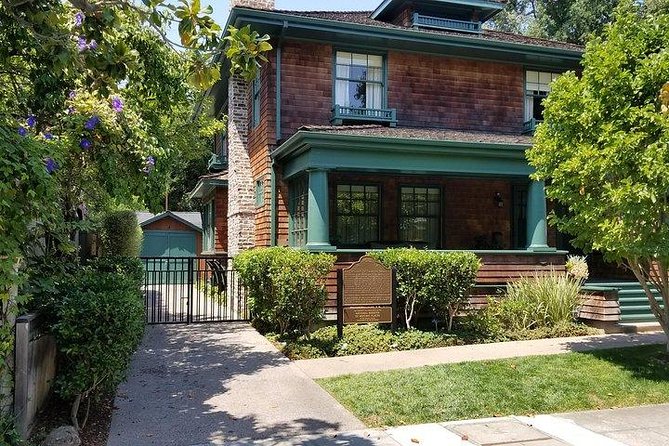
You’ll pass by the home of Steve Jobs and hear the story, which helps put Apple’s timeline into a more human frame. It’s not a long visit, but the narration is the point.
Then you’ll make a short stop at the Hewlett Packard Garage, where Hewlett and Packard created their first oscillograph. The tour describes this as the birthplace of Silicon Valley, which is a useful framing for why this area matters: invention didn’t happen in a boardroom. It started with hands-on tinkering and instruments that could measure what they were building.
Time is about 10 minutes, admission listed as free, so treat this as a photo-and-story moment, not a lingering site.
Palo Alto lunch break on University Avenue
For lunch, you’ll head to Palo Alto. The plan is 45 minutes in the area of University Avenue.
Lunch is not included, so this is where you’ll spend your budget. The upside is flexibility—you can pick something quick or a sit-down meal depending on your appetite and energy level.
Because the tour already provides water in the vehicle, you can go lighter on hydration planning. Still, bring a little “day stamina” mindset. This is a long schedule, and Palo Alto is your chance to reset.
Stanford University: icons, gardens, and tech buildings
After lunch, you’ll spend about 2 hours at Stanford University with a focus on the main landmarks and academic center.
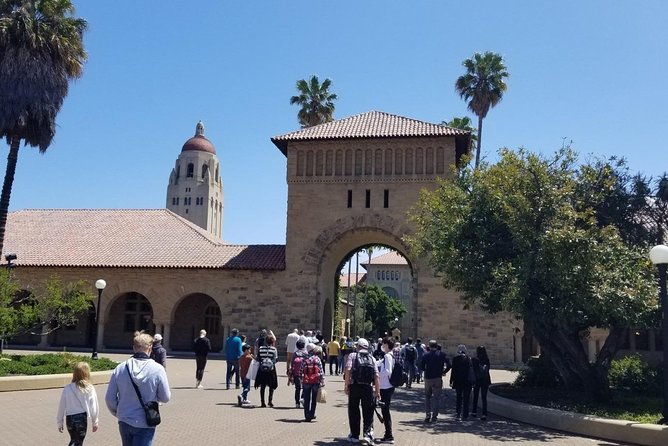
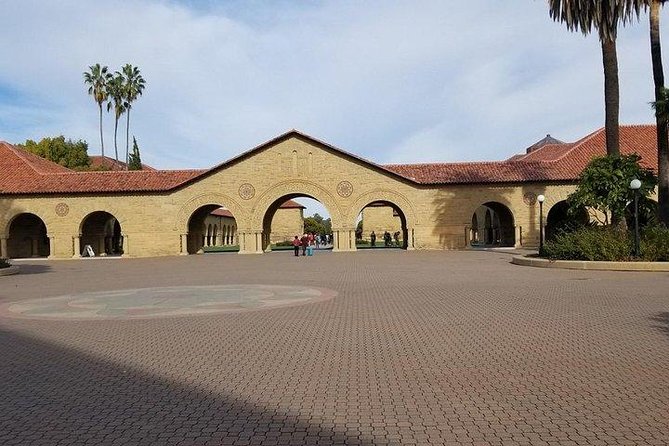
You’ll see the Main Quad, the Memorial Church of All Religions, and tech-adjacent buildings such as the William Gates Computer Science Building and the David Packard Electrical Engineering Building. The tour also includes athletic facilities, the Rodin Sculpture Garden, and the Cantor Arts Center.
There’s also time for books and souvenirs, which is handy if you want a different kind of memory than the big-brand merch stops.
Stanford is a place where it’s easy to get caught staring at details—stonework, layout, and the way different campuses tie together. Two hours is enough to get oriented without turning it into a full campus day trip.
Who this tour suits best
This is a strong match if you:
- Like technology but also want the why behind it, not just the where
- Want a smooth day from San Francisco with pickup and drop-off
- Prefer a private format, especially with kids or mixed ages
- Care about the story from early experimentation to modern-day branding and visitor experiences
It’s also a smart choice for families. The day includes hands-on-feeling stops, campus walking, and a museum that tends to keep attention.
If you’re the type who wants deep time in one place—like spending half a day inside a museum or doing an in-depth campus walkthrough—this tour may feel tightly scheduled. In that case, you could use this as the orientation day, then return to one favorite spot later on your own.
Guides make the difference (when you get a strong storyteller)
The quality of a tech tour often comes down to the guide’s ability to connect dots. I’ve seen this tour praised for guides who pack the ride with clear stories and context.
For example, guides such as Randy have been highlighted for giving lots of information during the drive, and guides like Kirill Sobolev have been praised for communicating in a way that makes Silicon Valley’s history, social changes, and technology synergies feel understandable rather than intimidating.
You won’t get value from a tour like this if it turns into a list of photo stops. The best version is when the guide helps you see patterns: what companies borrowed from each other, how branding tells a story, and why certain places became symbolic.
Should you book this Silicon Valley Private tour?
I’d book it if you want a single day that covers the major names plus the one stop that explains the tech story: the Computer History Museum. The private size and hotel pickup also make it easier to enjoy instead of stressing.
I would skip it or pair it with a follow-up day if you’re laser-focused on interiors, long museum time, or a very slow travel pace. Since lunch isn’t included and many stops are short by design, you’ll do best if you like structure.
If you’re deciding between doing this DIY or going private, this tour is built for people who want fewer logistics headaches and more “what this means” explanation. It’s Silicon Valley in one clean arc: from famous campuses to classic artifacts to Stanford’s academic legacy.
FAQ
How many people are in the private group?
The tour is priced for a group of up to six people, and it is private, meaning only your group participates.
Where does the tour pick you up from?
Pickup is available from any hotel or other place of residence in San Francisco, or any other place between San Francisco and Silicon Valley.
What time does the tour start, and how long is it?
The start time is 9:00 am, and the duration is about 8 to 10 hours.
What’s included in the price?
The price includes round-trip hotel pickup and drop-off, water in the vehicle, a free Stanford tour, and admission for the Computer History Museum.
Which stops have admission tickets included or listed as free?
Admission is listed as free for the Oracle, Meta, Google, NASA Ames Visitor Center, Apple Park Visitor Center, Hewlett Packard Garage, and Stanford stops. Computer History Museum admission is included.
Is lunch included?
No. Lunch is not included, and you’ll have time for lunch in Palo Alto on University Avenue.
When is the Computer History Museum open?
The Computer History Museum is open Wednesday to Sunday, 10:00 am to 5:00 pm.
Is the tour offered in English?
Yes. The tour is offered in English.
Can I cancel for a full refund?
Yes. You can cancel up to 24 hours in advance for a full refund. If you cancel less than 24 hours before the start time, you do not get a refund.