REVIEW · SAN FRANCISCO
Learn to Catch and Cook Crab under Golden Gate Bridge SF
Book on Viator →Operated by DURASNARE - Fishing and Crabbing Guide · Bookable on Viator
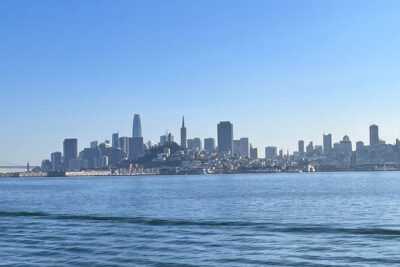
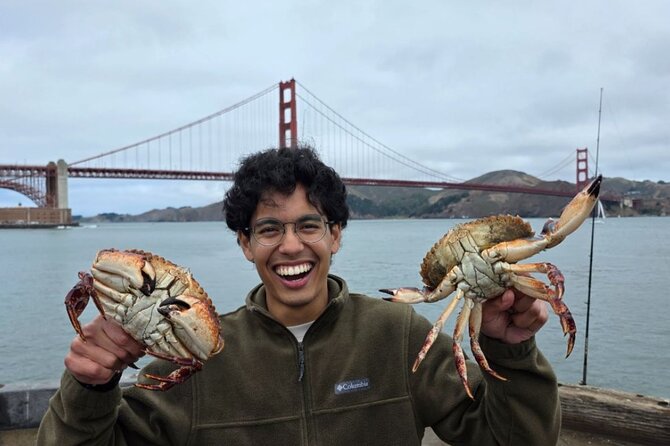
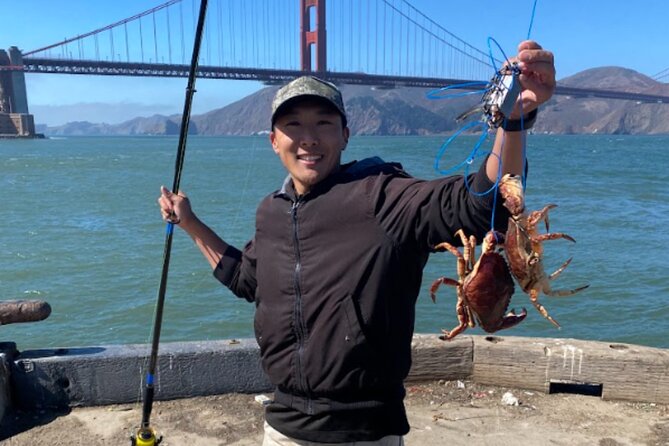
Crab from the pier, with the Bridge overhead.
This 3.5-hour, small-group lesson lets you learn how to catch Dungeness and Rock crabs using a fishing rod and Durasnare crab snares, then cook them on-site right there by the water.
Two things I’d highlight: you don’t need a license, and you also don’t need experience. Equipment is provided, and the guide’s job is to get you casting and snaring with confidence, not just point at the water.
The one thing to think about is the physical piece: the trip asks for moderate physical fitness, so plan for standing, moving on the pier, and handling gear for a few hours.
In This Review
- Key Highlights Before You Go
- Crabbing by the Golden Gate: The Big Idea
- Meeting at Torpedo Wharf: A Start That Feels Easy
- The 3.5-Hour Plan: What Happens During the Session
- How You Catch Crabs: Rods, Durasnare Snares, and Technique
- The Golden Gate Stop: Why the Location Makes This Worth It
- Cooking On-Site: Turning Catch into Dinner
- Who This Trip Suits Best (And Who Might Skip It)
- Price and Value: Is $150 Worth It?
- The Guide Factor: Lawrence’s Teaching Style
- Logistics You Can Plan Around (Without Overthinking)
- Should You Book This Learn-to-Catch-and-Cook Crab Trip?
- FAQ
- What crabs will I catch on this tour?
- Do I need a fishing license?
- How long is the crab catching and cooking experience?
- Where do I meet for the tour?
- Is equipment provided?
- What language is the tour offered in?
- Is there a cancellation option if my plans change?
Key Highlights Before You Go
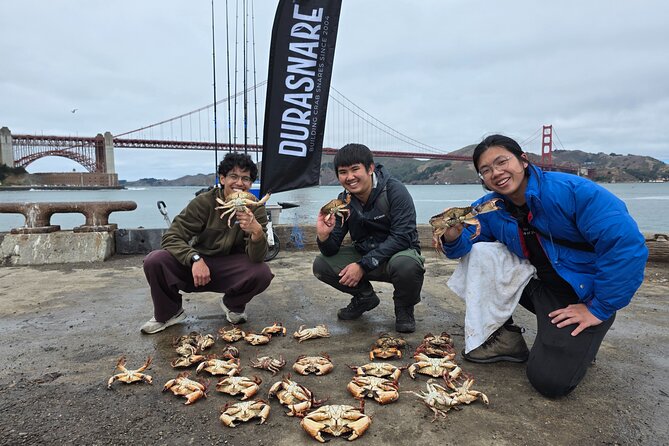
- Catch Dungeness and Rock crabs right from the pier
- No fishing license needed, so this is quick to start
- All gear provided, including the fishing rod and Durasnare snares
- On-site cooking means you eat your catch while it’s fresh
- Small group size (max 8) keeps the coaching personal
- Guide Lawrence focuses on technique, not just luck
Crabbing by the Golden Gate: The Big Idea
This tour is built around one satisfying goal: catch crabs, then cook and eat them, with the Golden Gate Bridge as your backdrop. You’re not trying to figure everything out on your own. You’re learning a repeatable method with an instructor who stays engaged throughout.
What makes it especially fun is the mix of skills and payoff. You learn the basics of getting your gear out and working it effectively, then you get the reward immediately. There’s no “someday” with this one. You’ll be watching crabs coming up and then turning around to eat them.
Also, the setting matters. Being at the water’s edge beneath the Bridge gives the whole experience a sense of place. It’s educational, but it never feels like school.
You can also read our reviews of more tours and experiences in San Francisco.

Meeting at Torpedo Wharf: A Start That Feels Easy
You start at Torpedo Wharf Long Ave, San Francisco, CA 94129, and the experience ends back at the same meeting point. That simple “in and out” route helps a lot in a city where time can slip away fast.
The area is also described as near public transportation, which is helpful if you don’t want to fight parking or schedule around traffic. And with a small group size, the start time tends to feel organized rather than chaotic.
Since you’ll be on a pier, it helps to show up ready for outdoor conditions. Bring layers, and wear footwear you trust on wet surfaces. You’ll appreciate it once you’re standing, casting, and resetting your gear.
The 3.5-Hour Plan: What Happens During the Session
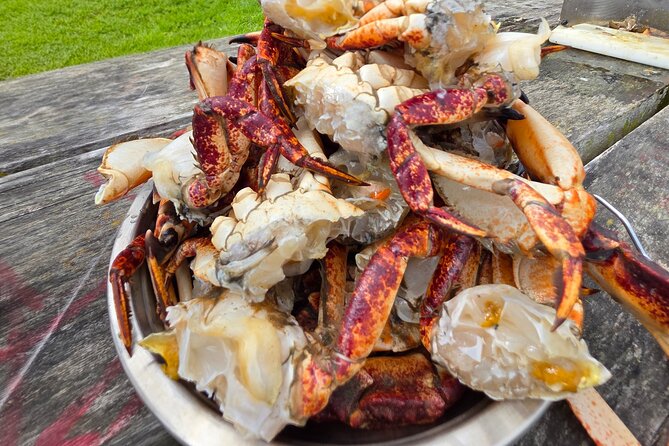
The trip runs about 3 hours 30 minutes (approx.). You’ll spend that time learning, catching, and then cooking your crab on-site. Even if you’ve never touched crab fishing gear before, the structure is meant to guide you step by step.
Here’s the flow you should expect in plain terms:
You’ll begin with instruction on how to use the fishing rod and the Durasnare crab snares. Then you’ll put that instruction into practice while you wait for action. Once you’ve caught what you’re meant to catch, the cooking part happens on-site so you can eat without long delays.
The most important practical point: this is a guided class, not a drop-off. The best moments come when the guide is working with your technique—especially if you want to understand why something works or doesn’t.
How You Catch Crabs: Rods, Durasnare Snares, and Technique
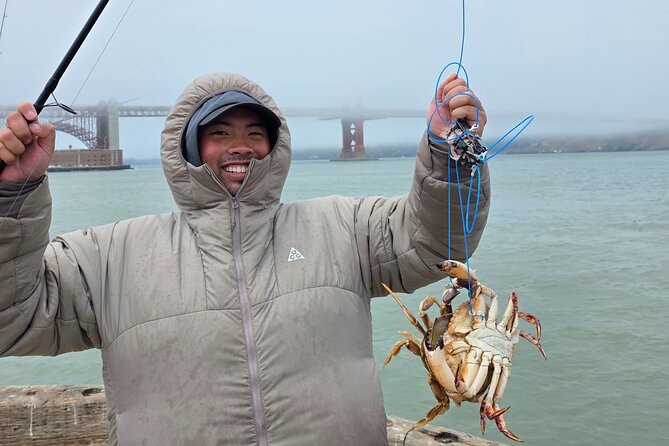
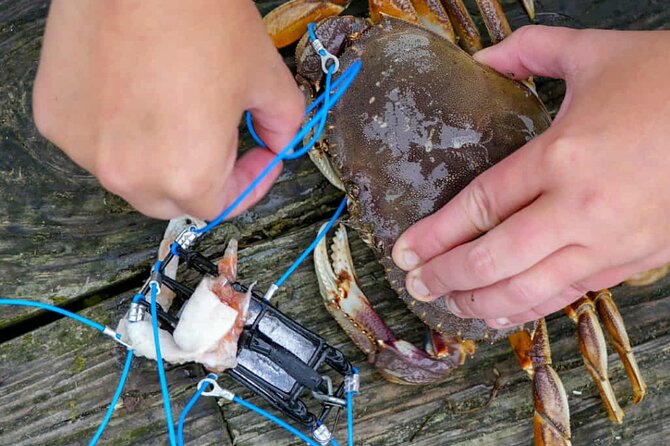
This is the heart of the experience. You’ll learn how to catch Dungeness and Rock crabs using a fishing rod and Durasnare crab snares. The value here isn’t just that you’ll try it. It’s that you’re taught how to do it well.
In the reviews, the strongest praise centers on the guide’s hands-on coaching. One review specifically called out Lawrence’s ability to help people improve casting technique over the course of the trip—going from beginner steps to looking and working like you know what you’re doing. That progression is exactly what you want from a paid activity like this.
In other words, you’re not paying for a tourist experience where everyone does the same thing for the same amount of time. You’re paying for instruction plus gear plus a chance to actually catch crabs.
And yes, the goal is to catch plenty. One review said you can expect a lot of success, along with the chance to land a huge crab. That kind of outcome usually comes from having someone prepared enough to teach you the right habits early.
The Golden Gate Stop: Why the Location Makes This Worth It
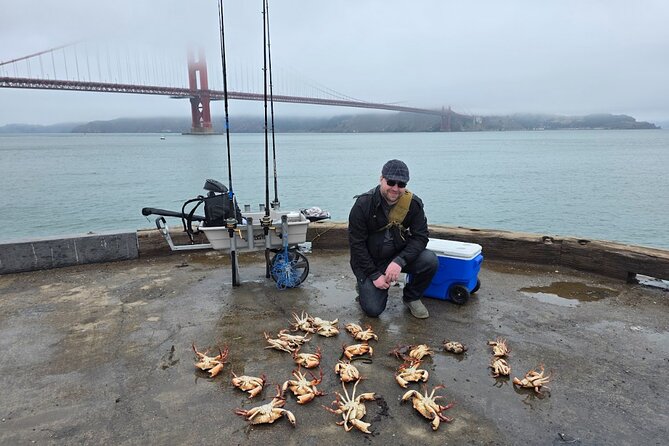
The experience focuses on the Golden Gate Bridge area, with crabbing from the pier. That’s not a small detail. The location keeps the trip feeling special even during the waiting part.
When you’re learning a hands-on outdoor activity, the setting affects your mood. The Bridge gives you an easy landmark, and you’re surrounded by the working-water vibe that makes San Francisco feel real instead of staged.
One review specifically mentioned the combination of SF’s background and the Golden Gate views while catching crab. If you care about scenery that’s actually near where you’re standing, you’ll probably enjoy this.






Cooking On-Site: Turning Catch into Dinner
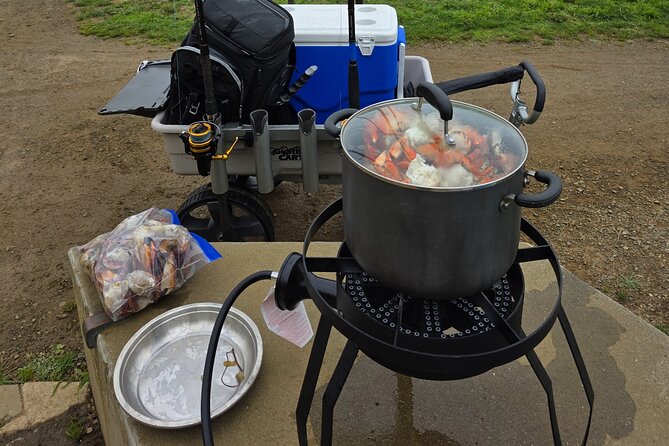
After catching, you’ll cook your crab right on-site. That part is a big reason this tour can feel different from other fishing tours that treat the catch like a souvenir.
Freshness is the practical advantage. When cooking happens soon after the catch, you get a much more immediate reward. You’re not waiting hours to taste what you worked for.
The other advantage is simplicity. You learn how the process works as part of the experience, and you end up eating without having to plan additional meals around logistics. For many first-timers, that removes most of the guesswork.
Also, cooking right there fits the family-friendly tone. It gives younger participants a clear, exciting arc: try it, catch it, and then see it become food. One review mentioned the son being fascinated throughout.
Who This Trip Suits Best (And Who Might Skip It)
This tour is designed for families, beginners, and experienced anglers alike. That’s not just marketing language. Because the group is small and the guide provides gear, beginners are supported, and anyone who already fishes still benefits from technique coaching.
You’ll likely be happiest here if:
- You want a hands-on activity with real payoff
- You enjoy outdoors time but still want a structured plan
- You’d rather eat what you catch than simply watch others catch it
- You like learning skills you can repeat later
You might consider skipping if:
- You hate being on your feet for a few hours
- You’re expecting a quiet, lounge-like experience
- You want an activity with no physical component at all
The tour asks for moderate physical fitness, so be honest about your comfort level with standing and moving on a pier.
Price and Value: Is $150 Worth It?
At $150 per person for about 3 hours 30 minutes, this isn’t a bargain-basement activity. It’s priced like a small-group guided class with equipment and on-site cooking included.
Here’s why it can still feel like good value. You’re paying for:
- A guide (not just a rental setup)
- Gear provided (rod and Durasnare snares)
- Instruction that aims to improve your casting and technique
- The big finish: crab cooked on-site so you eat what you catch
If you’ve ever tried to DIY a fishing or crabbing outing, you know how much time and trial-and-error it can take to get the basics right. The guide’s coaching and the provided equipment help compress that learning curve.
And the reviews strongly suggest the coaching works. Lawrence is described as prepared, knowledgeable, approachable, and fun to be around. One review even said the experience felt educational without losing the fun vibe, which is exactly what you want at this price point.
One more point: small-group size (max 8 travelers). When groups stay tight, you usually get more attention. That can be the difference between learning something useful and just doing the motions.
The Guide Factor: Lawrence’s Teaching Style
The reviews come back to one name: Lawrence. People praised him for being knowledgeable and approachable, explaining things clearly, answering questions, and showing obvious passion for the activity.
What I think matters most for your experience is how that teaching shows up in real time. One review described watching how casting and technique improved from the start to the end. That’s a sign the trip isn’t leaving beginners behind.
Another review highlighted that Lawrence had all the equipment and was prepared. Prepared guides tend to run smoother trips, and smoother trips mean less downtime and more time learning and catching.
If you want a guide who keeps the tone positive while also getting you to a better outcome, this seems like a strong fit.
Logistics You Can Plan Around (Without Overthinking)
You get a mobile ticket, and confirmation is received at booking. The experience is offered in English.
Service animals are allowed, and the tour is near public transportation. Those details matter more than people think, especially in a busy city where you don’t want last-minute stress.
Also, the experience is capped at 8 travelers. That smaller headcount usually leads to less waiting, more hands-on help, and more chances to ask questions when something doesn’t click.
And a practical scheduling note: it’s commonly booked about 12 days in advance on average. If you’re aiming for a specific time window during a trip, I’d book earlier rather than later.
Should You Book This Learn-to-Catch-and-Cook Crab Trip?
Book it if you want a high-reward, hands-on San Francisco experience. You get real instruction, you catch Dungeness and Rock crabs, and you cook and eat them on-site—all under the Golden Gate Bridge.
Skip it if you’re not comfortable with outdoor pier time or you’re looking for something passive. This is work in the fun sense: gear in hand, learning in motion, and dinner at the end.
My take: for the price, the value comes from the full package. It’s guided catching plus gear plus cooking, with a guide like Lawrence who focuses on technique and keeps the vibe friendly.
FAQ
What crabs will I catch on this tour?
You’ll learn to catch Dungeness and Rock crabs.
Do I need a fishing license?
No. The experience is described as not requiring a fishing license.
How long is the crab catching and cooking experience?
It runs about 3 hours 30 minutes (approx.).
Where do I meet for the tour?
You meet at Torpedo Wharf Long Ave, San Francisco, CA 94129.
Is equipment provided?
Yes. The tour provides the equipment, including a fishing rod and Durasnare crab snares.
What language is the tour offered in?
The experience is offered in English.
Is there a cancellation option if my plans change?
Yes. Free cancellation is available up to 24 hours in advance for a full refund. Canceling less than 24 hours before start time isn’t refundable.