REVIEW · SAN FRANCISCO
San Francisco Chinatown Food Tour
Book on Viator →Operated by Sidewalk Food Tours · Bookable on Viator
Chinatown smells like lunch on a mission. This small-group walking food tour connects iconic spots like Tin How Temple and Old St. Mary’s with five tastings that add up to a real meal. You also get a guided route that helps you understand what you’re seeing, not just what you’re eating.
I especially like two things: the guide-led storytelling and the fact that you’re eating at working neighborhood places. Guides such as Jinny P., Michael, or Spud can translate Chinatown’s layout, traditions, and food origins into plain, practical context while staying friendly to your pace and preferences.
The only real catch is food volume. This is a food-heavy route, so you’ll want to go in hungry but also plan for slowing down later stops, and temple access can be limited depending on current rules.
In This Review
- Key Highlights
- Price and Value: Why This $99 Tour Works (If You Like Food)
- The 3-Hour Route: What the Timing Feels Like on the Ground
- Portsmouth Square: A Tiny Park That Sets the Tone
- Old St. Mary’s Cathedral Corner: Architecture Meets Neighborhood Life
- Tin How Temple: Taoist Tradition and What to Expect Inside
- Golden Gate Fortune Cookies Co: The Smell of Fresh Dough and Luck
- New Hollywood Bakery: The Cha Siu Pork Bun Stop That Everyone Talks About
- Xian House of Dumplings: Noodles, Dumplings, and Real Craft
- House of Dim Sum and Grant Place Restaurant: Two Approaches to the Same Idea
- AA Bakery & Cafe: Hong Kong-Style Egg Tarts as the Sweet Finale
- Bottled Water, Maps, and Small-Group Pacing: The Practical Stuff That Matters
- Vegetarian and Food Sensitivity: How to Set Yourself Up for an Easy Tour
- Who This Tour Fits Best (and Who Should Skip It)
- Should You Book This Chinatown Food Tour?
- FAQ
- How long is the San Francisco Chinatown Food Tour?
- What’s included in the $99 price?
- Where does the tour start and end?
- What time does the tour begin?
- Is a vegetarian option available?
- How big is the group?
- Is the tour offered in English?
- Can I cancel for a full refund?
Key Highlights

- Five tastings that feel like a full meal, not a few crumbs
- Small group size (max 12) for better pacing and easier questions
- Tin How Temple and Old St. Mary’s as hands-on history stops you can’t guess from a guidebook
- Homemade fortune cookies made in a tiny open kitchen, plus sampling
- Cha siu pork buns, dumplings, dim sum, and egg tarts built into the walk
- City map and bottled water included to keep you comfortable between bites
Price and Value: Why This $99 Tour Works (If You Like Food)
For $99 per person and about 3 hours, this tour is designed around one idea: you should leave satisfied. You’re not just paying for a walk and a lecture. You’re paying for a guided route, a real guide, bottled water, a map, and enough tastings that you can treat it like lunch.
The math feels fair because the tastings aren’t positioned as tiny “check-the-box” samples. The tour includes five tastings plus food that’s meant to be enough to eat like a meal, which matters in a pricey city like San Francisco.
If you’re the type who likes eating and learning, this is a strong deal. If you hate walking, or you prefer grazing at your own pace, you may find the route a bit intense.
You can also read our reviews of more food & drink experiences in San Francisco
The 3-Hour Route: What the Timing Feels Like on the Ground
The tour starts at 10:00 am at 1066 Grant Ave and ends at 1068 Stockton St. Expect around 15 minutes per stop, which means you’ll be moving often and still have time to listen, look around, and eat without rushing.
You should also plan for the fact that the end point is not where you started. That’s usually fine in Chinatown, where you can keep exploring nearby, but you’ll want to map out how you’ll return to your next plan.
Group size is kept small, with a maximum of 12 travelers, so the walk doesn’t feel like cattle-line tourism. You’ll typically get more attention, and it’s easier to ask your guide questions about food, buildings, or what to order next time.
Portsmouth Square: A Tiny Park That Sets the Tone
Your walk begins at Portsmouth Square, a one-block park in Chinatown. It’s bounded by Kearny Street, Washington Street, Clay Street, and Walter Lum Place—basically a compact landmark that makes a good starting point because it’s easy to orient yourself.
This stop may sound simple on paper, but it matters because it gives you the neighborhood’s “shape.” Chinatown can feel busy and layered, so starting with a central reference point helps everything after it make more sense.
A possible downside here is that, for some people, the first stop can feel like the “warm-up” before the food. If you’re very hungry, you might want to hold back on extra snacks before the tour so the first tastings feel satisfying.
Old St. Mary’s Cathedral Corner: Architecture Meets Neighborhood Life
Next up is Old Saint Mary’s Cathedral at 660 California Street, on the corner of Grant Avenue. This is a proto-cathedral and parish of the Roman Catholic Church, and it sits right inside the Chinatown neighborhood.
What I like about this stop is that it reminds you Chinatown isn’t isolated. It’s part of a city with older institutions and overlapping communities, and the architecture gives you a visual marker that you can’t easily “taste” your way to.
If you’re not big on churches, this could feel like more sight-seeing than you expected. Still, it’s a valuable reset between food stops and it helps you read the neighborhood streets like a story.
Tin How Temple: Taoist Tradition and What to Expect Inside
Then you reach Tin How Temple, described as the oldest extant Taoist temple in San Francisco’s Chinatown. It’s dedicated to Mazu, the sea goddess—called Tin How in Cantonese—and the meaning of the temple comes through quickly once your guide frames it.
One practical consideration: temple access can be limited. The tour information includes admission, but current public entry rules may restrict interior access, depending on what’s allowed. You can still expect a meaningful stop, especially for learning what you’re looking at outside and how it connects to the community.
If you’re visiting specifically for a calm, respectful indoor experience, plan mentally for the possibility that you’ll mainly view and learn from outside. That helps you avoid feeling let down if entry isn’t permitted that day.
You can also read our reviews of more tours and experiences in San Francisco


Golden Gate Fortune Cookies Co: The Smell of Fresh Dough and Luck
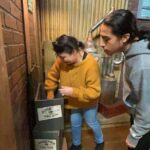
At Golden Gate Fortune Cookies Co, you’ll see fortune cookies prepared in a tiny open kitchen. Even if you’ve had fortune cookies before, this stop changes the vibe because it’s about making—watching dough and batter work their way into something iconic.
The tour includes an admission ticket here, and the company also offers free tours in general. Practically, that means you get both the snack and the context: how something that feels mass-produced actually starts small.
This is also one of the stops where timing matters. Fortune cookies are best when they’re fresh and warm, so it’s nice that your route is built to keep you moving to the next bite on schedule.
New Hollywood Bakery: The Cha Siu Pork Bun Stop That Everyone Talks About
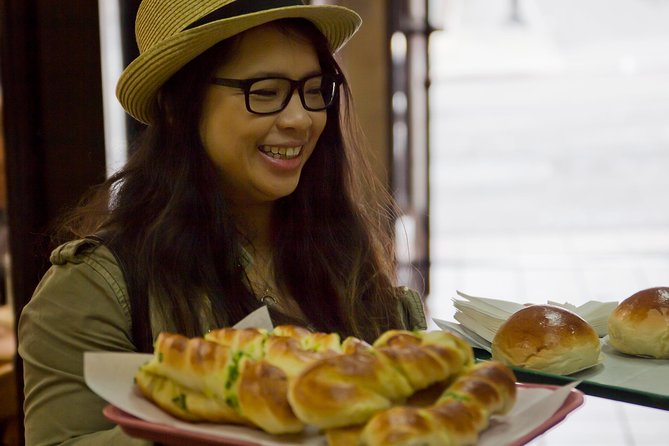
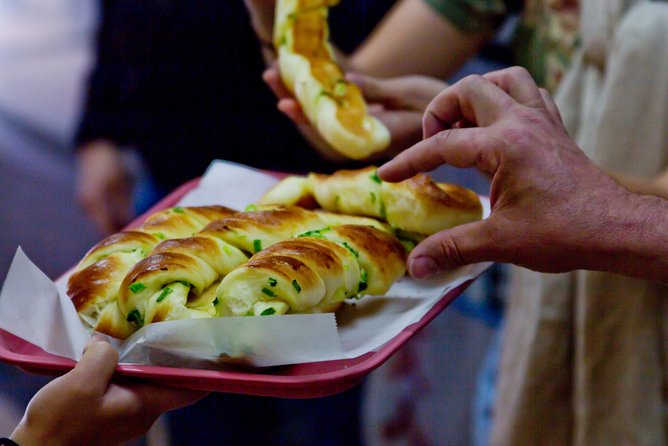
If you want a single “I get it now” food moment in Chinatown, it’s likely the New Hollywood Bakery stop. The bakery is known for its light, buttery buns filled with barbecue-flavored cha siu pork, and it’s a choice that’s easy to love even if you’re picky about strong flavors.
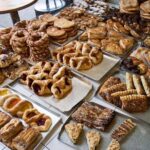
This is where the tour’s eating strategy shines: you’re not only sampling different categories (buns, noodles, dumplings). You’re also sampling different textures. Soft bun exterior, savory filling, and that just-made feel.
Downside: by the time you get here, you may already be full from earlier tastings. If you’re prone to getting stuffed early, slow down, take smaller bites, and save half for later if the option is practical for you.
Xian House of Dumplings: Noodles, Dumplings, and Real Craft
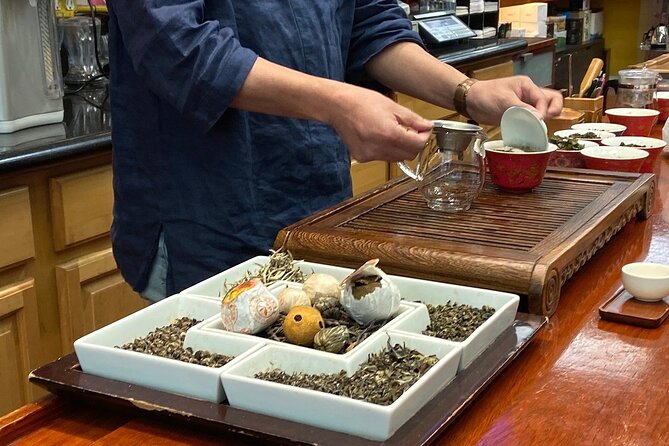
Next comes House of Xian Dumpling (Xian House of Dumplings), focused on handmade noodles and dumplings in the Chinese tradition. This is a stop where the tour shifts from street-level snacks to more “made-from-scratch” food energy.
What I like here is that the tour doesn’t treat dumplings as a single item. It gives you a sense of the craft behind wheat dough, noodle work, and dumpling filling styles.
For anyone who loves savory comfort food, this is often a highlight. If you’re not a fan of dumplings or you’re eating lightly, you’ll want to pay attention to the guide’s recommendations so you don’t end up with a bite you don’t enjoy.
House of Dim Sum and Grant Place Restaurant: Two Approaches to the Same Idea
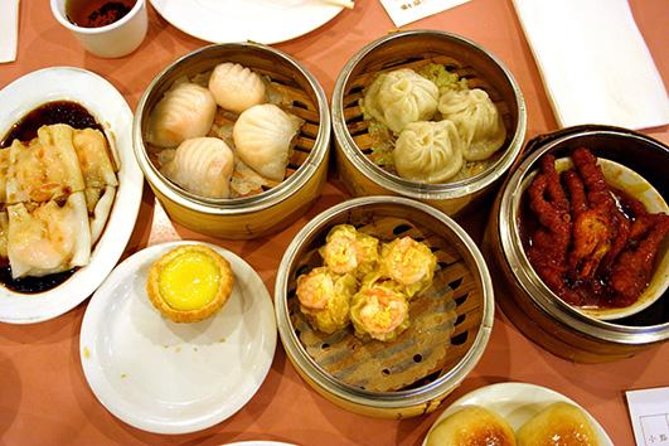
The tour includes two dim sum–oriented stops: House of Dim Sum and later Grant Place Restaurant. One is positioned as offering some of the best dim sum options in Chinatown, while the other is known for Hong Kong-style dim sum and Chinese specialties.
Why this works: dim sum is not one dish. It’s a system—different dumplings, different textures, different sauces. Two stops help you compare and taste the range.
At the same time, this is where the tour can feel like it’s “more of the same” if you’re already overloaded. If you tend to get tired of eating halfway through a food tour, be ready to pace yourself. Ask your guide for which items are most different from each other so you’re not just repeating the same flavor family.
AA Bakery & Cafe: Hong Kong-Style Egg Tarts as the Sweet Finale
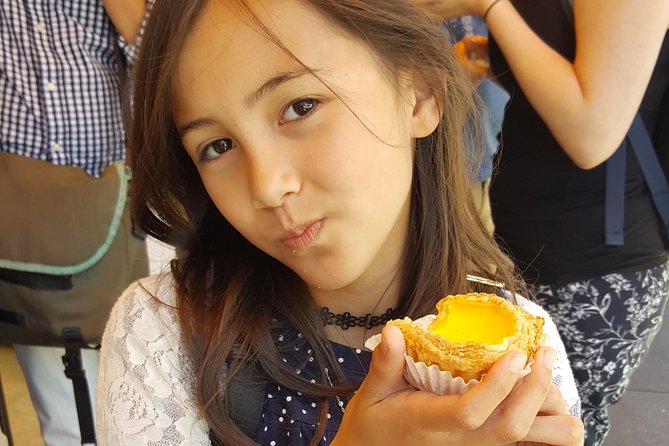
The last food stop is AA Bakery & Cafe, known for Hong Kong-style egg tarts. The egg tarts are described as cooked into a smooth, flan-like center with a buttery flaky crust, and it’s a fitting closing bite because it feels lighter than many savory items.
Egg tarts are also the kind of dessert you can share without it turning into a sugar overload. Still, multiple stops earlier can make dessert tough. Some people finish the tour already feeling full, so it helps to take slow bites and treat it as a final souvenir of flavor rather than a second meal.
This is also a good stop to buy extra if you like the taste. The tour structure gives you enough time to finish without rushing, which makes the sweet ending feel thoughtful.
Bottled Water, Maps, and Small-Group Pacing: The Practical Stuff That Matters
Included items are simple but useful: local guide, city map, bottled water, and a mobile ticket. Having water on the route is a big deal because Chinatown walking plus eating adds up faster than you think.
The map is also underrated. After the tour, you’ll want to keep exploring. A printed or provided map helps you turn the tour route into a plan for the rest of your day, instead of feeling like you only saw a blur.
You’ll also appreciate the small group size. With a cap of 12 travelers, the guide can adjust. And if you have a food preference or need an allergy-aware approach, guides in this group format are usually able to be more considerate.
If you’re the kind of person who likes to carry a tiny backup plan, bring a small bag for leftovers or any extra purchases. Some folks suggested bringing something to take food home, which is smart given how filling the portions can be.
Vegetarian and Food Sensitivity: How to Set Yourself Up for an Easy Tour
A vegetarian option is available, but you need to request it when you book. That matters because this tour is built around specific tastings at specific places.
If you’re vegetarian, ask yourself if you want to avoid any chance of meat-based broths or sauces. The tour data confirms a vegetarian option exists, but it doesn’t list exactly what changes at each stop. Booking ahead ensures the guide can plan the route and tastings around your needs.
If you have allergies, you’ll want to communicate clearly before the tour. One of the strengths people reported about certain guides was how considerate they were about preferences and allergies, which is exactly what you want from a food tour guide.
Who This Tour Fits Best (and Who Should Skip It)
This is a great fit if you want a mix of history and food in a compact time window. It’s also excellent for visitors who don’t want to guess where to go or what to order. The guide turns the neighborhood from a list of restaurants into a path with meaning.
It’s also a solid option for locals who haven’t paid attention to Chinatown’s temples or landmark corners. A well-run guide can make familiar streets feel new without turning the tour into a lecture.
Who might not love it:
- People who get full fast and prefer lighter tasting
- Anyone who strongly dislikes walking and crowd environments
- Travelers who require guaranteed temple interior access (rules can change)
Should You Book This Chinatown Food Tour?
Book it if you want a guided Chinatown meal with landmark stops, and you like learning while you eat. The value stacks up because you’re paying for more than food: you get route structure, a knowledgeable guide, tastings that add up, and practical extras like map and bottled water.
Skip it or consider another option if you’re sensitive to long food routes or you know you won’t enjoy several savory bites before dessert. This tour is generous, and the timing is designed to feed you, not to let you graze.
If you do book, arrive hungry, wear comfortable walking shoes, and use the guide. The best part of these tours is that you can ask questions right there—what to order, what you’re looking at, and what to try next.
FAQ
How long is the San Francisco Chinatown Food Tour?
It’s about 3 hours long.
What’s included in the $99 price?
The tour includes a local guide, city map, bottled water, and food tastings (five tastings are included).
Where does the tour start and end?
The meeting point is 1066 Grant Ave, San Francisco. The tour ends at 1068 Stockton St, San Francisco.
What time does the tour begin?
The start time listed is 10:00 am.
Is a vegetarian option available?
Yes. A vegetarian option is available, and you should advise the provider at booking if you need it.
How big is the group?
The tour has a maximum group size of 12 travelers.
Is the tour offered in English?
Yes, it’s offered in English.
Can I cancel for a full refund?
Yes, there is free cancellation. You can cancel up to 24 hours in advance for a full refund.