REVIEW · SAN FRANCISCO
Food, History, and Resistance: A Self-Guided Audio Tour
Book on Viator →Operated by VoiceMap Audio Tours · Bookable on Viator
Japantown holds more stories than you expect. This self-guided audio walk is a smart way to connect food with resistance and street-level history in about an hour, using VoiceMap with offline support so you can keep moving without hunting signals.
Two things I really like: you get offline access to audio, maps, and geodata, and the route spotlights standouts like Benkyodo’s rare manju craft and the jazz mythology tied to Bop City on Fillmore. One consideration: you need your own smartphone, and the tour does not include food, drinks, or museum tickets along the way.
In This Review
- Key Highlights You’ll Actually Feel on the Walk
- How This Self-Guided Japantown Audio Tour Works
- Osakaya Restaurant to Stories Beyond Ramen and Sushi
- Benkyodo Manju: Why This Traditional Sweet Feels Like Time Travel
- Bop City on Fillmore: Jazz After-Hours and the Harlem of the West
- Resistance Isn’t Always a Protest Sign
- Timing: 50 Minutes to 1 Hour That Doesn’t Feel Rushed
- Price and Value: $11.99 for a Lifetime Audio Walk
- Route Logistics: Start at Post St, Finish Near Geary
- Who Should Book This?
- Should You Book This Food, History, and Resistance Audio Tour?
- FAQ
- How long is the audio tour?
- How much does it cost?
- Is it self-guided or do I meet a guide?
- What language is the tour in?
- What do I need to use the tour?
- Is food or drinks included?
- What’s included with the purchase?
Key Highlights You’ll Actually Feel on the Walk
- Benkyodo’s surviving manju-making legacy: one of only three traditional Japanese manju makers still operating in the US
- Bop City on Fillmore: a nightlife hub tied to legends like Coltrane, Billie Holiday, Miles Davis, and Duke Ellington
- Japantown beyond ramen and sushi: you’ll hear stories that many people miss
- Resistance as everyday memory: the tour’s themes include internment-era family history you may recognize in your own research
- Offline-first VoiceMap experience: audio plus maps you can use without data
How This Self-Guided Japantown Audio Tour Works
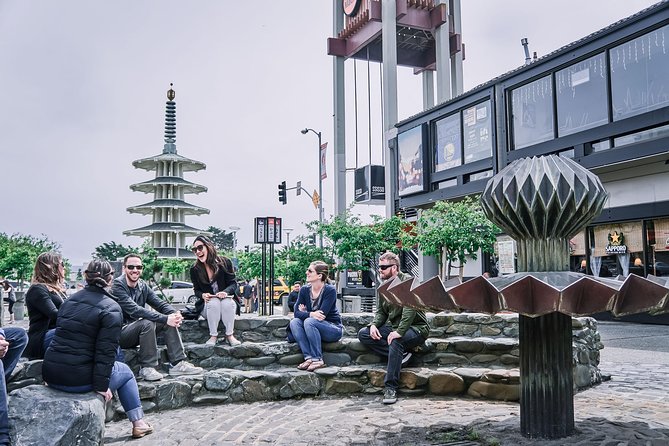
This is a VoiceMap self-guided tour you can run on your schedule, with lifetime access to the audio. You start at Osakaya Restaurant (1737 Post St) and finish at 1010 Geary Blvd, and the active listening time lands around 50 minutes to 1 hour.
Because it’s self-guided, you’re not stuck following a group that moves fast or slow. You can pause, look at storefronts, read plaques if there are any, and then resume. That matters here, because the point isn’t just to see one pretty building—it’s to connect the dots between culture, food craft, community life, and the pressure points in San Francisco history.
You’ll be using the VoiceMap application, and the big practical win is offline access to audio, maps, and geodata. Download before you go if you can. Then you’re free to focus on streets, not screens.
You can also read our reviews of more food & drink experiences in San Francisco

Osakaya Restaurant to Stories Beyond Ramen and Sushi
Your route kicks off at Osakaya Restaurant at 1737 Post St. From the start, the tone is clear: Japantown is more than the obvious hits. Yes, you’ll still pass by the kind of places people think of first, but the audio track pushes you to look at what’s underneath the surface.
This opening stretch is where the tour’s theme clicks for me. It isn’t about dropping random facts. It’s about why communities keep telling their stories, even when the world tries to erase them. If you care about Japanese American history, the audio’s focus on what people may have lived through after WWII can feel personal even if you’re just walking as a visitor.
One detail that stands out from what’s included in the storytelling: you’ll hear about a gate near the Japanese Language School, and how that kind of place functioned when people were reporting for internment. I can’t verify which exact moment or gate any one family had in their own story, but the inclusion of that location gives you a concrete place to stand and think. And that’s the strength of this tour: it anchors big history in actual blocks you can stand on.
Practical tip: On this first stretch, keep your phone in use mode but don’t rush it. Let the audio run, then take 30 seconds to scan the street around you. That’s where the story turns from words into place.
Benkyodo Manju: Why This Traditional Sweet Feels Like Time Travel
Next, the audio brings you to Benkyodo, highlighted as one of only three traditional Japanese manju makers still operating in the US. The other two remaining makers are in the Japantowns of Los Angeles and San Jose—so this stop isn’t just a food stop. It’s a marker of how cultural traditions survive, change, and sometimes disappear.
The tour also gives you the background you need to understand what you’re seeing. Manju are traditional Japanese confections. Traditionally, they’re filled with sweet bean paste, then wrapped with mochi—a glutinous rice that gets pounded down into that sticky, gooey texture people associate with the best of this style of sweet.
If you’ve only had modern convenience versions, this is the part where you’ll likely recalibrate your expectations. You’re not just tasting sugar and calling it dessert. You’re seeing craft. And craft is a form of resistance too—keeping something alive even when the surrounding city and generations move on.
What to watch for: even if you’re not buying anything, pay attention to the sense of continuity. A shop like this doesn’t feel like an Instagram stop. It feels like a living process.
One note for your plans: the tour itself doesn’t include food or drinks. If you want to sample manju, you’ll need to handle it separately, like any other traveler. That said, the audio context makes any purchase (or decision not to buy) more meaningful.
Bop City on Fillmore: Jazz After-Hours and the Harlem of the West
The next stop takes a sharp left into music history, with the story of Bop City at 1712 Fillmore Street. This place is framed as a late-night hub, the kind of spot where people went when the regular evening scene ended and the serious sound started.
The audio doesn’t treat jazz as abstract. It names the heavy hitters connected to the scene—John Coltrane, Billie Holiday, Miles Davis, and Duke Ellington. Hearing those names while standing on Fillmore is a reminder that history isn’t only in museums. It’s in the streets that hosted the sound, the community, and the argument that art belongs to everyone who keeps showing up.
There’s also a social history angle that helps you understand why Fillmore earned its comparison to Harlem. In the 1940s, San Francisco’s Black community grew significantly, and Fillmore Street gained the nickname Harlem of the West. This is one of the places where I find the tour’s theme most practical: it’s about how cities change when communities grow, and how music often tracks those shifts.
Practical tip: If you’re visiting on a busier day, give this stop extra time. The street is where you’ll want a slow glance—because the audio has big names, but the lesson is local.
Resistance Isn’t Always a Protest Sign
The tour’s title points toward resistance, and the way it’s handled here is street-level, not dramatic. You’re not watching a reenactment. You’re listening to how communities hold onto identity and memory through food craft, language, music, and the insistence that stories won’t vanish quietly.
That shows up in two different ways:
- Cultural continuity, like the survival of traditional manju-making at Benkyodo when only a few makers remain.
- Historical memory, like the internment-era reporting context tied to locations near community institutions such as the Japanese Language School.
When you connect those dots, resistance starts to mean something more useful for travelers. It means noticing what a place refuses to lose, and how that refusal can be woven into everyday life—what people sell, which songs get played, and how a neighborhood keeps its names and rituals intact.
This is also where the best parts of the experience can land emotionally. One of the reviews I read mentioned family ties to San Francisco before internment, including time at Tanforan horse track and later Topaz, Utah. Hearing that kind of personal connection makes the tour feel less like a “topic” and more like a place you can honor someone’s story through your attention.
That won’t happen to every person in the same way. But if your family history intersects with the WWII-era Japanese American experience, or if you just like history that feels human and specific, you’ll likely feel this tour work on you.
You can also read our reviews of more tours and experiences in San Francisco



Timing: 50 Minutes to 1 Hour That Doesn’t Feel Rushed
The audio experience runs about 50 minutes to 1 hour, which is a sweet spot for self-guided walking. It’s long enough to absorb the theme and meaningful enough stops to stay engaged, but short enough that you’re not stuck all afternoon or evening.
Because it’s self-guided, you can manage your own pace:
- If you like reading and looking, pause when the audio points to a specific spot.
- If you’re an efficient walker, keep the pace steady so you don’t end up sprinting between stops.
Also, you’re not committing to anything with tickets or paid entries. The audio includes the experience, while museums or attractions would be on you if you decide to add them.
Price and Value: $11.99 for a Lifetime Audio Walk
At $11.99 per person, this isn’t priced like a full guided tour with staffing. You’re paying for the storytelling package: the audio track itself plus VoiceMap access and offline download capability.
What makes it feel like good value is the combination of:
- Lifetime access to the tour, so you can come back and re-walk it later
- Offline audio, maps, and geodata, which can be a big deal in neighborhoods where reception is unpredictable
- A focused route that mixes food craft with historical and cultural themes
It’s also worth noting what’s not included: no smartphone, no transportation, no food/drinks, and no museum or attraction tickets. That’s not a flaw—just a heads-up to budget like a normal city visitor. You’re buying an hour of guided storytelling, not a packaged meal plan or museum pass.
If you want to spend time in Japantown anyway, the audio fee turns your wandering into something purposeful without costing much more than a casual meal.
Route Logistics: Start at Post St, Finish Near Geary
Your start point is Osakaya Restaurant at 1737 Post St. Your finish is 1010 Geary Blvd. The start address also lists hours as 12:00 AM to 11:59 PM, which suggests you can access the pickup point around the clock, though you should still use common sense based on the actual street and neighborhood conditions at the time you’re walking.
The tour is near public transportation, so you can build it into a day without relying on a car.
One more small practical detail: the tour is offered in English, and it lists most travelers as able to participate. There’s also a maximum of 10 travelers, which matters if you’re someone who likes calmer experiences and quieter logistics.
Finally, bring your own comfort basics. This is a walking experience, and you’ll be outside. Wear shoes you like for pavement, and charge your phone.
Who Should Book This?
This is a great match if you:
- Want Japantown beyond the usual food clichés
- Love food history as much as you love food itself
- Appreciate music history tied to real places, not just album liner notes
- Have personal or family connections to the Japanese American WWII story, or want to listen with care
- Prefer self-guided pacing over group tours
You might skip it if you want a fully escorted experience, guided conversations with a live human, or a tour that includes meals and admissions.
Should You Book This Food, History, and Resistance Audio Tour?
I think you should book it if you want an hour that changes how you see a neighborhood. The price is low enough to feel low-risk, but the content is specific: Benkyodo’s rare manju-making legacy, Bop City’s jazz connections on Fillmore, and Japantown stories that go past the usual surface-level stops.
If you’re the type who enjoys walking and listening, and you’ll actually use offline downloads, it’s a smart way to get more out of the city you’re already visiting. Just don’t plan on it feeding you or granting entry to museums—plan on it being a guided story on the street, with you in charge of the rest.
FAQ
How long is the audio tour?
It takes about 50 minutes to 1 hour.
How much does it cost?
It costs $11.99 per person.
Is it self-guided or do I meet a guide?
It’s a self-guided audio tour using the VoiceMap application.
What language is the tour in?
The tour is offered in English.
What do I need to use the tour?
You need a smartphone, since the VoiceMap app is included but smartphones are not.
Is food or drinks included?
No, food and drinks are not included.
What’s included with the purchase?
You get lifetime access to the Food, History and Resistance in Japantown tour, plus the VoiceMap application and offline access to audio, maps, and geodata.