Secret stairways change how you see San Francisco. This 2-hour, small-group walk takes you past mosaic stairways and into spots with 360° viewpoints over the Golden Gate, Golden Gate Park, and downtown. The one heads-up: it’s leisurely, but you still climb plenty of steps and hills, and strollers aren’t a good fit.
What makes it feel special is the way Gregory McQuaid (Greg) ties each pause into city culture and neighborhood stories. The pace stays comfortable, and the group is capped at 10, so you get questions answered and time to look around.
In This Review
- Key points I’d highlight before you go
- What Hidden Stairways gets right: art, views, and stories in one walk
- Price and value: why $37 can work out well here
- Timing, pace, and the “stairs reality” you should plan for
- From 800 Judah St: how the route keeps earning its wow moments
- Golden Gate Bridge and Golden Gate Park: your first big orientation
- Downtown SF, Salesforce Tower, and the Inner Sunset: learning the city by angle
- Golden Gate Heights to de Young and the California Academy of Sciences
- Hidden Garden Steps and Lincoln Park Steps: the mosaic moments that make the walk worth it
- The final stretch: 16 Avenue tiled steps and how to use what you learned
- Practical tips: shoes, fog, and getting good photos on a stair route
- Who should book this (and who might want a different plan)
- Should you book Hidden Stairways of San Francisco?
- FAQ
- How long is the Hidden Stairways of San Francisco walk?
- How strenuous is it?
- Where does the tour start?
- What group size should I expect?
- Is the tour stroller-friendly?
- What happens if the weather is bad?
Key points I’d highlight before you go
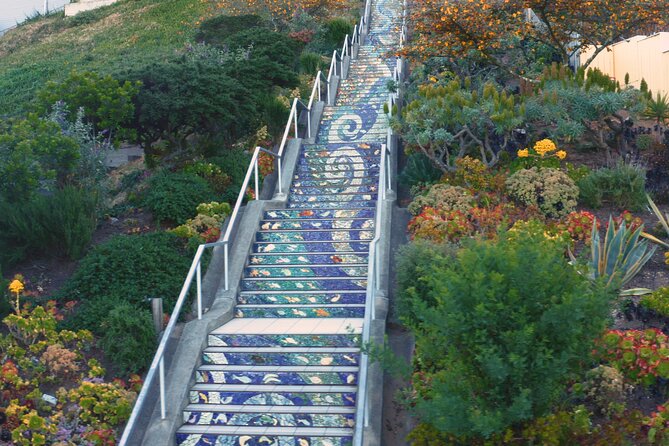
- Mosaic tiled steps plus real neighborhood gardens, not a bus-stop checklist
- Hilltop views that show you San Francisco’s layout from multiple angles
- Small group of up to 10, so the guide can actually talk with you
- Greg’s stories and photos, including past neighborhood images that help it click
- A manageable 2-mile walk with stairs (not a rugged hike)
What Hidden Stairways gets right: art, views, and stories in one walk
San Francisco’s stairs are famous, but most people only see the big-ticket viewpoints. This experience reroutes you through the back streets and hillside corners where stairs function like public art and community wayfinding.
I love that it’s not just step-counting. You’re walking about 2 miles total, at a relaxed tempo, and you’re repeatedly pulled into “stop and look” moments. The payoff is practical: you start to understand the city’s geography—where the hills push you upward, where the fog might sit, and how the Golden Gate and downtown line up when you catch the right angle.
You’ll also get the human side. Greg shares context about what shaped these neighborhoods and the cultural texture behind the stairways, so the route feels like a living San Francisco lesson, not a lecture.
You can also read our reviews of more walking tours in San Francisco



Price and value: why $37 can work out well here
At $37 per person for about two hours, this is priced like a bite-sized experience. The value is in three things: time, small group size, and interpretation.
Two hours is long enough to get real views and see more than one “wow” moment. The group cap at 10 keeps it personal—useful when you want photo time, when you need to wait for a safe crossing around hills, or when your group has questions.
And Greg’s approach matters. Many city walks give you a route and a few facts. This one leans more into storytelling and place context, with plenty of stops where you can slow down, scan the city from above, and connect the visual to the history.
Timing, pace, and the “stairs reality” you should plan for
This walk is built for a leisurely pace. It’s specifically described as not strenuous. Still, you’re doing hills plus stairs, and that’s not nothing in San Francisco.
So here’s the truth you can plan around:
- Expect stairs and short climbs throughout the route.
- Wear walking shoes you trust on uneven surfaces.
- If you use a stroller, you should rethink it—strollers aren’t suitable on this route, and small children must be carried.
Weather can also be a deciding factor. SF is generally dry from May to October, with fog more common in the morning. Temps usually stay in a comfortable band (roughly 50–70°F / 10–21°C), but rain can cancel the walk. If you’re visiting in a rain-prone window, build in flexibility.
The walk starts at 1:00 pm and ends back at the meeting point, so you can treat the rest of your day like a clean slate.
From 800 Judah St: how the route keeps earning its wow moments
The tour begins at 800 Judah St. From there, it’s a gradual build: first major views, then neighborhood texture, then more stair-and-garden moments where the art becomes the main event.
The route is designed around seeing San Francisco in layers. You move from a big-picture skyline view into park-adjacent scenery, then up into hillside neighborhoods where you can frame the city differently. That rhythm is why it feels more rewarding than a single “lookout stop.”
Also, the route includes well-known landmarks, but you’re not doing the sightseeing version where you rush past everything. You’re using those anchors to orient your sense of direction—where you are, what direction the hills pull you, and how downtown sits in relation to the Bay.
Golden Gate Bridge and Golden Gate Park: your first big orientation
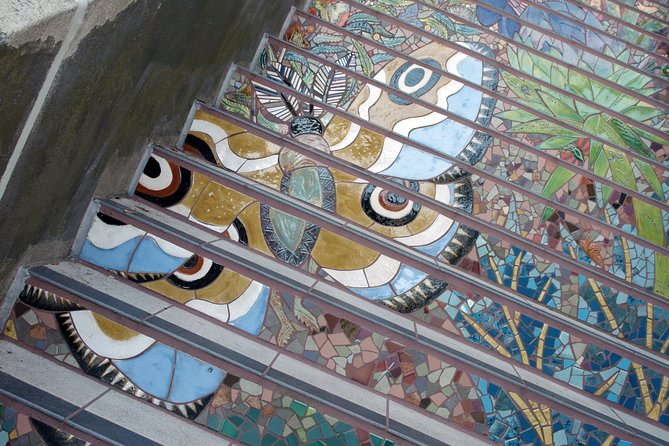
The early stops focus on “get your bearings fast” sightlines. You’ll see major views that make the city feel suddenly clearer—Golden Gate Bridge views to one side, Golden Gate Park to another, and downtown out in the distance when conditions are right.
This is a strong start for two reasons:
- You’re easing into the physical side without losing the visual reward.
- You’ll carry those skyline images with you for the rest of the walk, so later stair viewpoints feel connected instead of random.
Golden Gate Park also sets the tone for the garden theme that shows up later. Even if you’ve been to the park before, this approach helps you see how the surrounding neighborhoods wrap around it.






Downtown SF, Salesforce Tower, and the Inner Sunset: learning the city by angle
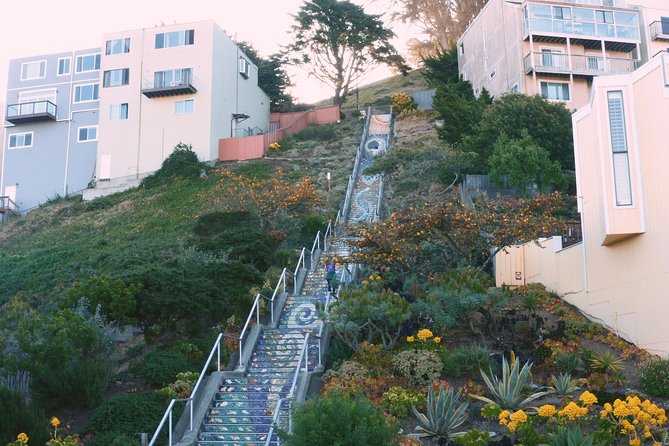
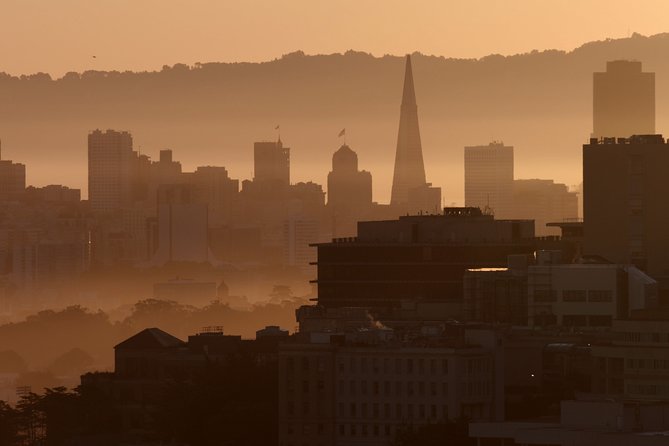
As the walk heads toward downtown directions, you’ll get chances to view the skyline from hillside viewpoints. Salesforce Tower appears as a landmark stop, useful as a mental anchor: it helps you place downtown in your head while you’re climbing and stepping around quieter streets.
Then the route shifts through the Inner Sunset and toward higher areas like Golden Gate Heights. That change matters. When you move from park-adjacent scenery to hillside neighborhood streets, your brain registers SF’s core truth: the city is vertical. Streets don’t just connect. They climb.
These middle parts of the walk are great if you like photography that tells a story. You’re not just capturing buildings. You’re capturing how the city’s layers stack—ridge lines, distant downtown, and the Bay showing through when the air clears.
Golden Gate Heights to de Young and the California Academy of Sciences
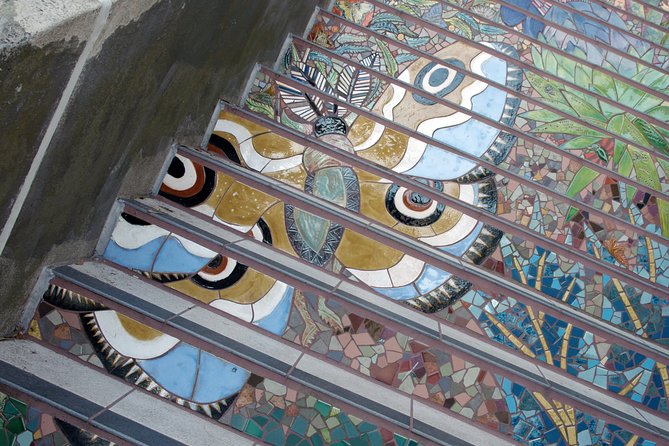
The itinerary includes stops around the de Young Museum and the California Academy of Sciences area. Think of these not just as famous names, but as geographic landmarks that help you interpret the views you’re seeing while you walk.
What you’ll likely enjoy most here is the contrast:
- Big-city institutions near park space
- Hills that shift your perspective every few minutes
- Views that make downtown feel both near and oddly distant
If you’re the type who gets bored on historical walks, this section helps. It keeps switching between scenery, stair art, and viewpoint breaks, so the time doesn’t feel like one long climb with no payoff.
Hidden Garden Steps and Lincoln Park Steps: the mosaic moments that make the walk worth it
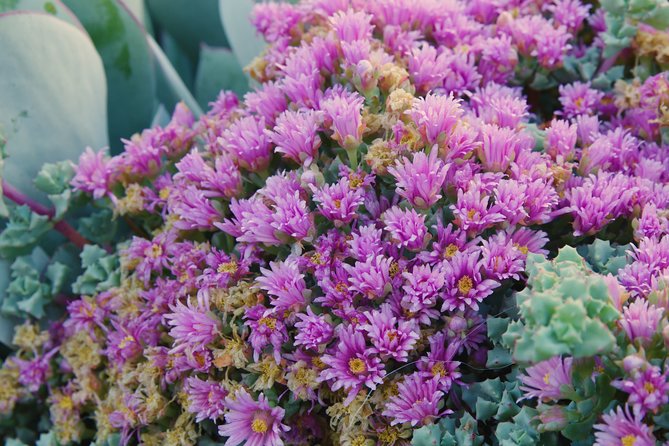
This is the heart of the experience: the stair-and-garden stops where the tiled details become the main character.
The route includes Hidden Garden Steps more than once, and it also includes Lincoln Park Steps. Those repeated stops aren’t random. They support the theme: you’re seeing how stairways become local art and how gardens transform “just a climb” into a calm, scenic pause.
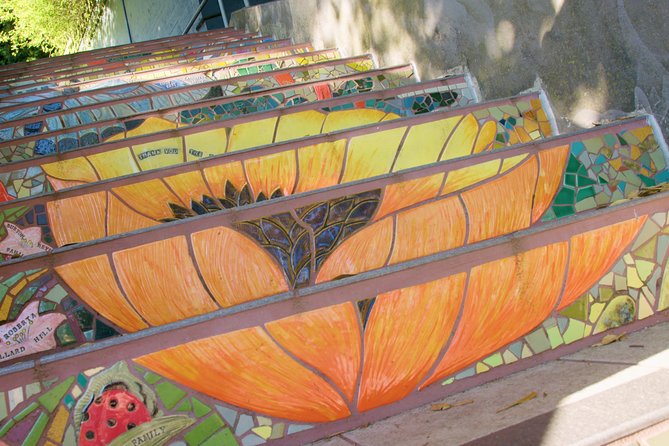
When you reach these step sections, the guide’s storytelling is part of what makes it click. You’re looking at mosaic tile work, and then you’re hearing the context behind it—how these stairways fit into the neighborhood and why they were built the way they were. That combination turns pretty stairs into a sense of place.
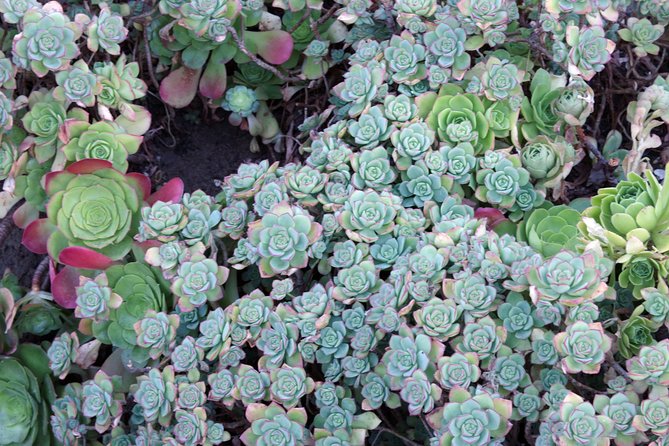
Also, there’s a fun chance element baked in: you might even come away with a succulent. That’s the kind of small, neighborhood-friendly souvenir that feels different from typical tourist merchandise.
The final stretch: 16 Avenue tiled steps and how to use what you learned
The walk finishes back at the meeting point, with the route culminating at 16 Avenue Tiled Steps. By this time, you’ll be noticing details faster: tile patterns, garden edges, and the way stairs funnel your sightlines toward the Bay and downtown.
This ending works well because it doesn’t just say the walk is over. It helps you carry a new way of looking at San Francisco forward. After this, you’re more likely to notice stairways around the city and interpret them as neighborhood infrastructure, not just quirky architecture.
When you’re done, you’ll have two useful options:
- If you’re museum-minded, you’ll know what area you were circling and why the views looked the way they did.
- If you’re food-and-drinks minded, you’ll have a clearer mental map for finding your next stop.
If you want extra inspiration before you go, the tour’s Instagram handle @hiddenstairssf is there for more photos and visual cues.
Practical tips: shoes, fog, and getting good photos on a stair route
You don’t need to be an athlete for this. But you do need to be comfortable moving on hills and stairs.
Bring:
- Walking shoes with solid grip
- A light layer, since SF mornings and fog can cool things off
- A phone camera strap or secure grip device if you’re switching between steps and viewpoints
Plan around weather:
- May through October is usually dry, but fog in the morning is common.
- Temps often hover between about 50–70°F (10–21°C).
- Rain can cancel the walk, so keep an eye on forecasts and be ready to reschedule.
Photo timing can be surprisingly good on this kind of route because the guide builds in pauses. Also, Greg takes photos along the way. I like that approach for a practical reason: it keeps you from juggling camera settings while you’re trying to climb safely and enjoy the view.
If you want a repeatable self-guided option afterward, at least some groups have received a GPS-style route video from the guide. Even if you don’t get that every time, the mental map you build during the walk is usually enough to help you find similar stair viewpoints on your own.
Who should book this (and who might want a different plan)
This walk is a great fit if you want:
- Scenic SF views without the standard tourist rush
- A small group experience instead of a big bus
- Stair art and gardens as the main event
- A guide who explains what you’re seeing, not just where to stand
It’s also family-friendly in a specific way. An 8-year-old can participate and stay engaged, and the tour includes ways to involve kids. Just remember the stroller limitation and the stairs.
You may want a different experience if:
- Mobility limits make stairs difficult for you or your party.
- You rely on strollers and don’t want the extra carrying involved.
- Rain ruins your schedule and you can’t flex plans if the walk is canceled.
Should you book Hidden Stairways of San Francisco?
Book it if you want a 2-hour, off-the-usual-path view of San Francisco that mixes mosaic artistry, gardens, and hilltop skyline angles. The $37 price feels fair because you get more than scenery—you get place context from Greg and lots of natural pause points for photos.
Skip or swap if stairs are a real barrier for your group. This is not a flat stroll, even if it’s paced casually.
FAQ
How long is the Hidden Stairways of San Francisco walk?
It runs about 2 hours.
How strenuous is it?
It is not described as strenuous. There are stairs and hills, but the pace is leisurely and meant to be suitable for almost everyone.
Where does the tour start?
The meeting point is 800 Judah St, San Francisco, CA 94122.
What group size should I expect?
The tour is capped at 10 travelers.
Is the tour stroller-friendly?
No. Strollers aren’t suitable on this route, and small children need to be carried.
What happens if the weather is bad?
It requires good weather. If it’s canceled due to poor weather, you’ll be offered a different date or a full refund.