REVIEW · SAN FRANCISCO
San Francisco: Downtown Architecture & Public Art Tour
Book on GetYourGuide →Operated by igniTours · Bookable on GetYourGuide
San Francisco can feel like a movie set, but this tour shows you the props. I especially like how it strings together downtown growth eras and pairs them with the art and plazas that came with each wave. You’ll also get real, on-the-ground context for why these buildings and public works matter, from the 1906 rebuilding story to the tech-era skyline. One thing to consider: this is a moderate walking experience, so comfy shoes matter more than style.
I also love the guide-led pace. The tour is built to feel like an outdoor museum walk through Central Business District public spaces, not a lecture in front of a single landmark. The best part is the mix: big-name architecture and name-brand artists, plus spaces you’ll want to return to on your own.
In This Review
- Quick hits before you start
- Where this tour fits in your San Francisco plan
- Meeting at 488 Market St and starting the way locals do
- Financial District architecture: from 1906 rebuilding to art deco swagger
- International Style and the tech-era skyline: what modern towers are actually doing
- Public art as an outdoor gallery: the 1% budget rule you’ll feel in every block
- Salesforce Transit Center park: the rooftop park with bus-powered fountains
- The SFMOMA finish: using modern art to wrap the day
- Price and value: what $44 buys you in real experience
- Comfort, timing, and how to get the most out of the walking
- Who will love this tour most?
- Should you book this Downtown Architecture & Public Art Tour?
- FAQ
- How long is the San Francisco Downtown Architecture & Public Art Tour?
- Where do I meet the guide?
- What’s included in the tour price?
- What can I see during the tour?
- Does the tour include a museum stop?
- Is there any parking included?
- What kind of walking should I expect?
- Is the tour wheelchair accessible?
Quick hits before you start
- Architecture across eras: from rebuilding after the 1906 earthquake to modern skyline growth
- Public art as everyday design: downtown office buildings set aside 1% for public art for decades
- Hands-on urban spaces: you’ll see plazas and outdoor gallery-like art placements tied to city life
- Salesforce Transit Center park views: elevated greenery with a fountain that reacts to buses below
- Modern art finish: the walk ends at SFMOMA, one of the world’s major modern art museums
Where this tour fits in your San Francisco plan
If you’re doing only a couple neighborhood days, this one is a strong way to get oriented fast. Downtown can be confusing at street level—towers, plazas, and private-looking courtyards that are still public. This tour gives you a route that makes that complexity feel friendly, with stops chosen for both design and public-space usefulness.
It also works well if you already plan to see SFMOMA. Finishing at the museum means you’re not shuffling your schedule at the end of the day. Instead, you’ll arrive with an architecture-and-art lens already turned on, which helps you enjoy what you see on the museum exterior and inside.
The route is mostly about Central Business District edges and connectors—places you can’t always find on your own unless you know where to look and what to notice.
You can also read our reviews of more tours and experiences in San Francisco.
Meeting at 488 Market St and starting the way locals do
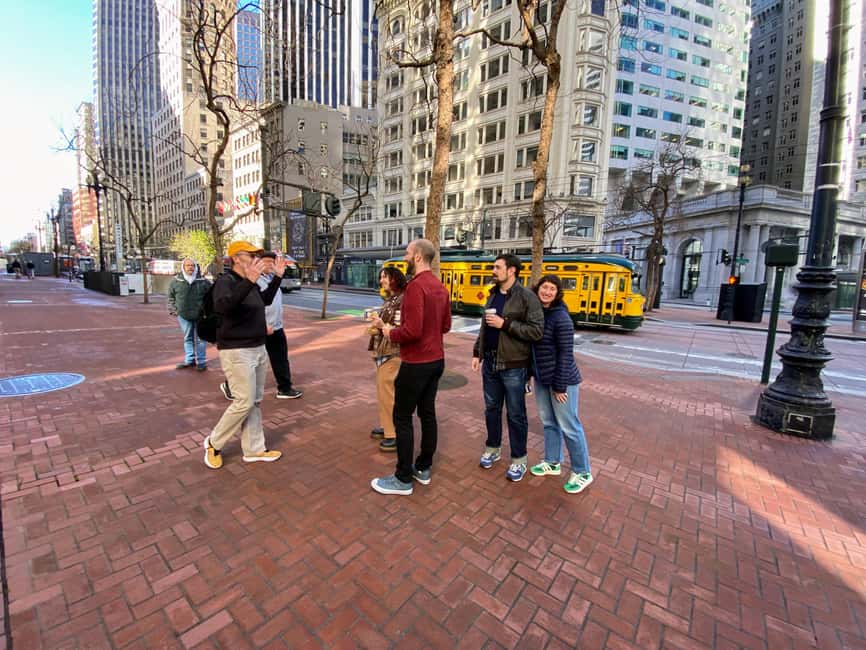
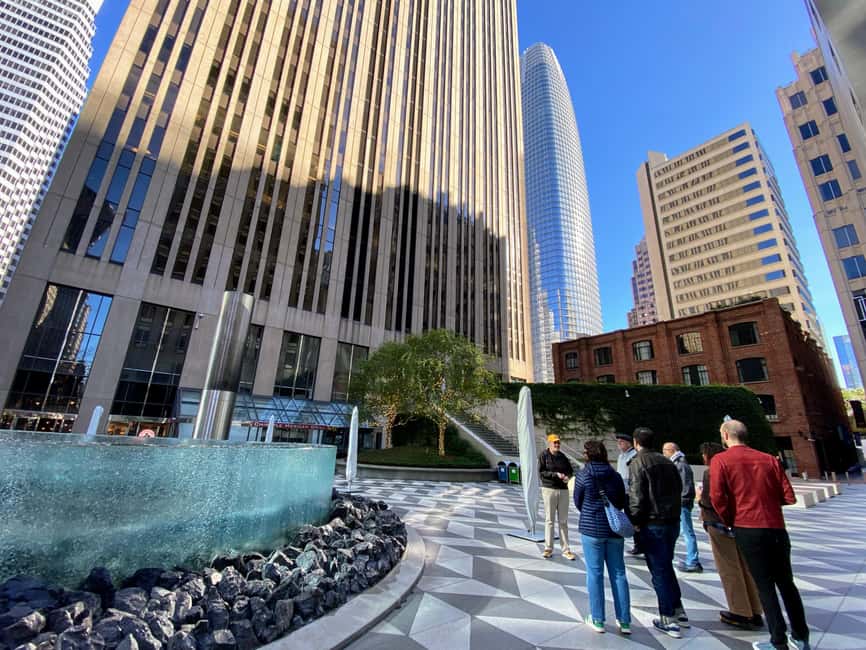
You meet your guide in front of the Mechanics Monument Plaza at 488 Market Street. That spot is a practical launch point because it puts you right in the downtown flow without you fighting traffic right away.
From there, the tour begins with the Financial District section—built around a walking rhythm that keeps you moving but not rushing. Expect stops that are quick to reach and easy to understand: architectural features on the street-facing side, public art settings you can actually stand close to, and city open spaces that make the area feel livable.
Even before you hit the taller buildings, this is where you start learning how downtown grew: not just by adding new towers, but by changing how people move through the city at ground level.
Financial District architecture: from 1906 rebuilding to art deco swagger
This portion is about recognizing patterns. Downtown San Francisco didn’t grow in one straight line. It came in waves, and the best way to read those waves is to watch how styles shift block by block.
One highlight is a nod to the 1906 earthquake and fire rebuilding story, including grand work such as the London Paris National Bank, which rose from that rubble-era aftermath. It’s a reminder that some of this city’s beauty isn’t just aesthetic—it’s survival turned into civic identity.
Then the tour swings into the 1920s, where you get to appreciate exuberant design like the Pacific Telephone Building. Art deco here is more than decoration; it’s about presence. You start to notice how these buildings try to command the skyline while also shaping the streets around them.
What I like about this framing is that it helps you stop judging downtown by a single era. Instead, you’ll start seeing how each period responded to the last—economically, culturally, and architecturally.
International Style and the tech-era skyline: what modern towers are actually doing
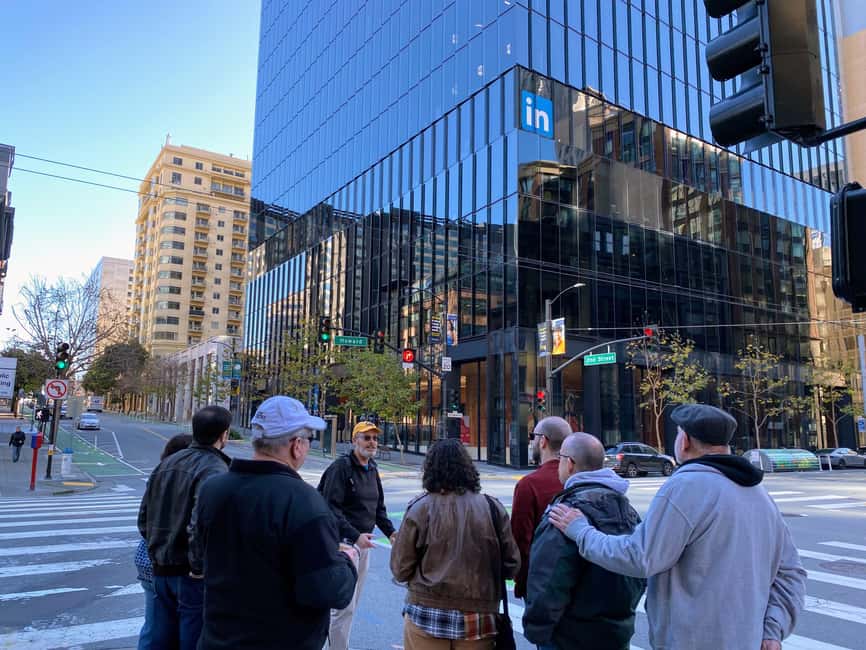
After the earlier waves, the tour turns to later downtown growth, when sleek corporate forms and big mid-century logic took over. You’ll see examples of International Style work, including the Crown Zellerbach Building, which represents the mid-century economic boom.
Next, you’ll also get the story of how the CBD pushed southward around major turn-of-the-millennium moments, including the JP Morgan Chase Building. Again, the point isn’t just to name architects. It’s to understand downtown as an engine—where corporate anchors influenced where people worked, what got built next, and how public space was managed.
And yes, you’ll also hit the current tech-era skyline layer, including star-architect influence. The tour uses those buildings not as bragging rights, but as design puzzles: what the glass and steel look like at street level, how they change wind and shadow, and how they affect the public realm around them.
Public art as an outdoor gallery: the 1% budget rule you’ll feel in every block
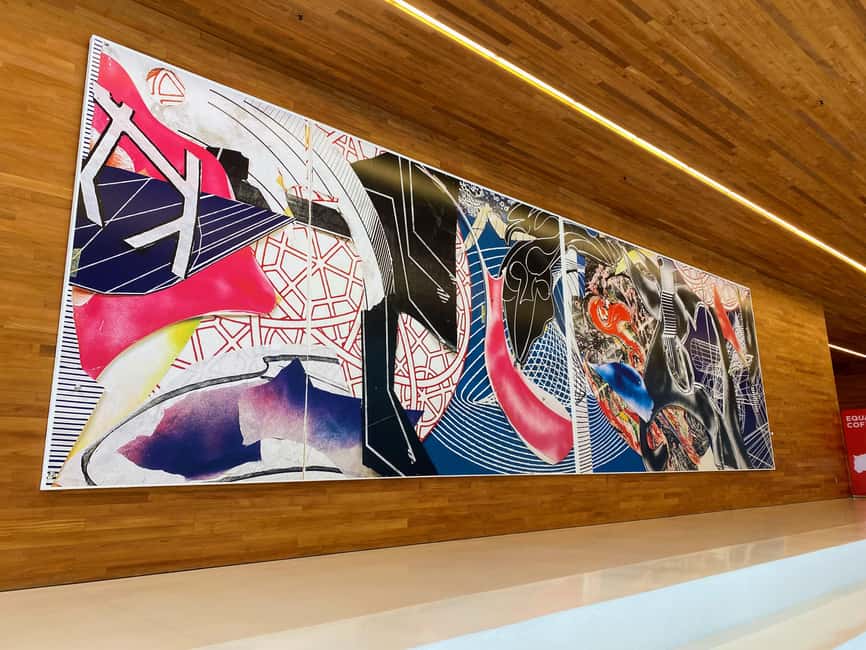
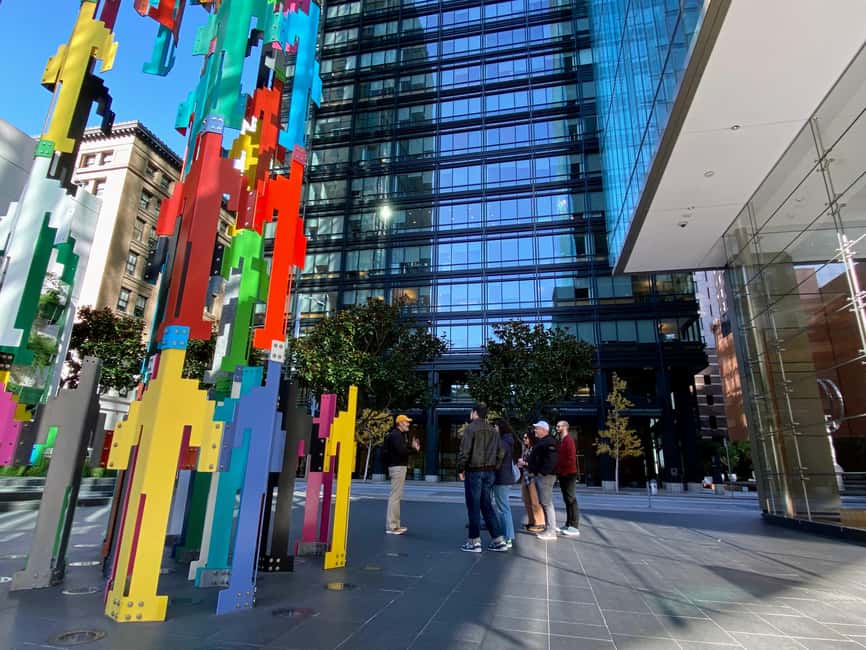
This tour’s secret weapon is the public art program that makes downtown feel like a working outdoor collection. For decades, downtown office buildings have dedicated 1% of construction budgets to public art. That’s why the art doesn’t sit off to the side like a museum exhibit you have to go out of your way to see.
As you walk, you’ll encounter artworks placed in spaces you’d normally pass through without thinking: foyers, pedestrian approaches, and civic-feeling corners. The guide helps you slow down long enough to notice materials, scale, and placement.
You’ll also hear about pieces by major artists, including George Rickey (kinetic sculpture), Jenny Holzer (digital art), and Frank Stella (paintings). The tour also includes quirky work by Jonathan Borofsky and Ugo Rondinone, which is exactly what makes public art fun—some of it is meant to be encountered casually, not formally.
For me, the value here is practical: public art is easiest to enjoy when you understand why it’s there and how it was commissioned. This tour gives you that context so you’ll know what you’re looking at and what it’s trying to do.




Salesforce Transit Center park: the rooftop park with bus-powered fountains
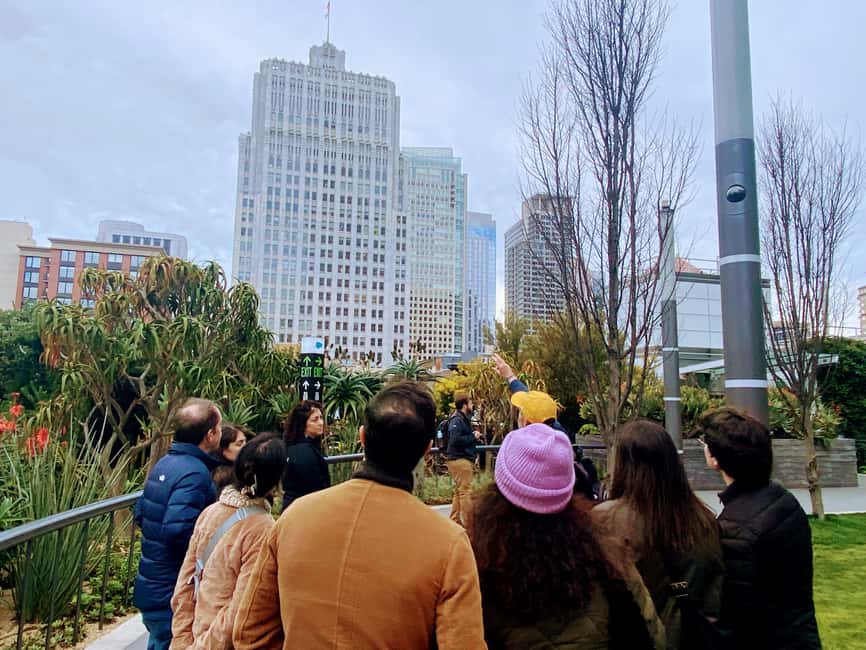
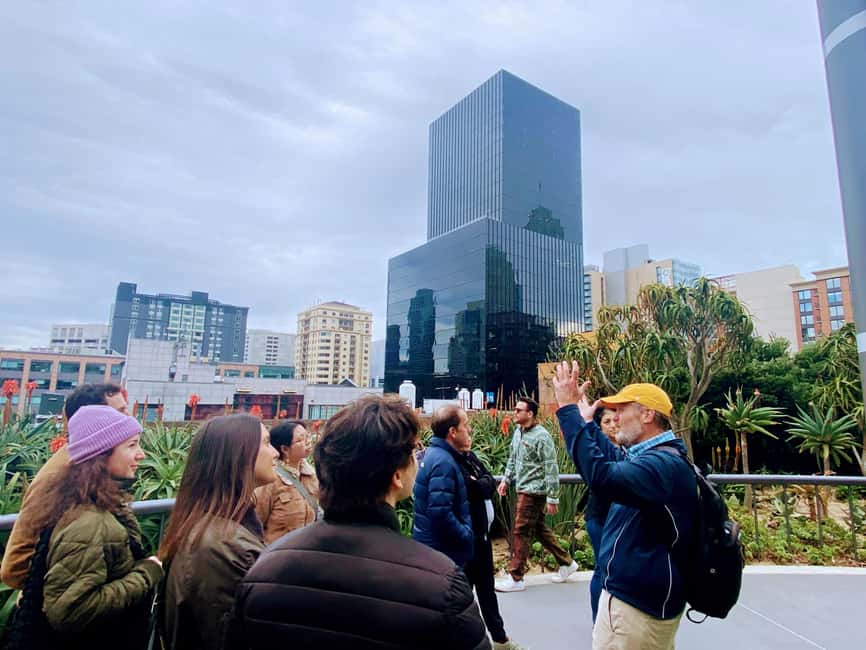
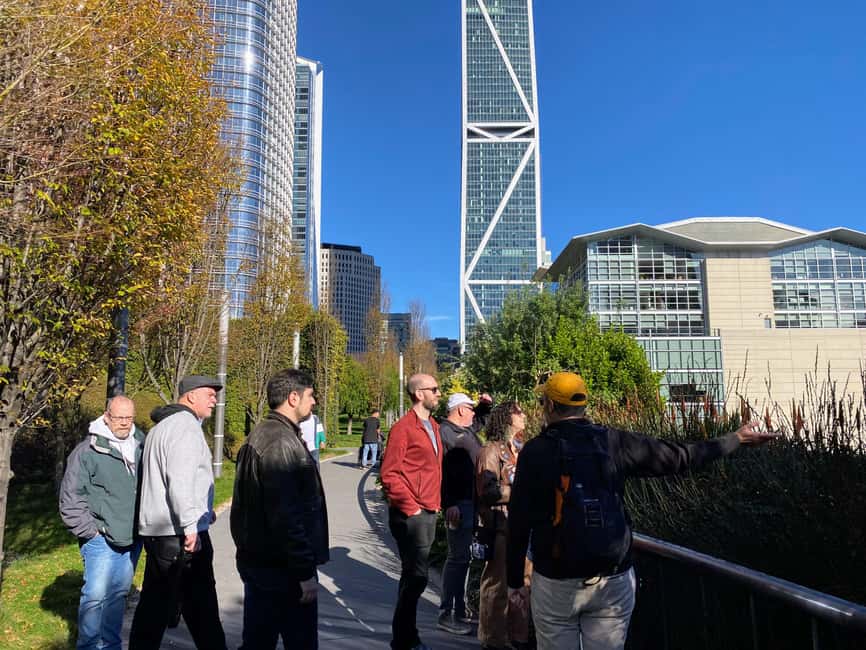
One of the biggest visual rewards is the Salesforce Transit Center area and the elevated park above it. The park is longer than the Salesforce Tower itself in terms of reach, with 4½ city blocks of dedicated park space and about 5½ acres of greenery in an area that didn’t have room in the first place.
Here’s the kind of detail I love because it changes how you experience the place: the fountain jets are activated as buses travel the terminal below. So it’s not just decoration. It responds to the city’s motion.
You’ll also get a sense of why the park feels usable even though it’s elevated. There are quiet spots for reading and practical areas where people can gather for yoga classes, movie nights, concerts, and even a beer garden setting. The tour doesn’t just point out views—it explains how the park functions as a public living room.
And the design is meant to be educational too: the gardens include 600 trees and 16,000 plants organized into zones that replicate 13 ecosystems. You don’t have to memorize the list to enjoy the effect; you’ll just notice how planting patterns vary, which makes the park feel like more than a thin strip of green.
At about 70 feet above street level, you’ll also get broad views of surrounding office and residential buildings that were built alongside the park. That elevated angle is a big reason this stop works on an architecture day rather than just a sightseeing walk.
The SFMOMA finish: using modern art to wrap the day
The tour ends at the San Francisco Museum of Modern Art, finishing at the museum entrance. SFMOMA is one of the largest modern and contemporary art museums in the world, and the exterior itself has a strong architectural presence—almost like a final exhibit after your downtown walking sequence.
This is a smart ending point because it turns your attention outward and then inward. Downtown’s art and architecture got you trained to look at design as something public and daily. Then SFMOMA gives you a chance to see art as collection and setting, without leaving the art-and-architecture theme behind.
If you like museums, this finish is a natural continuation. If you don’t plan to go inside for a full museum block, you can still enjoy the museum presence as an architectural and cultural bookend to the walk.
Price and value: what $44 buys you in real experience
At $44 per person for about a 3-hour experience, this is one of the more cost-effective ways to combine city orientation with design storytelling in San Francisco.
You’re paying for three things at once:
- A guided walking route through downtown where the art and design are hard to interpret without context
- A curated mix of architecture eras and public art tied to the way downtown actually works
- A finish at SFMOMA, a major museum destination, with the tour helping you connect the dots between modern art and modern city design
If your schedule allows only one downtown “thinking tour,” this is a solid pick. If you’re also planning to roam downtown on your own, this makes your solo wandering more meaningful—you’ll know what you’re looking at and why it’s placed where it is.
Comfort, timing, and how to get the most out of the walking
This is a moderate amount of walking, and you’ll want comfortable walking shoes. Downtown sidewalks can change fast—construction zones, building entrances, and places where the pedestrian route is wide for a moment and then tight the next block.
The tour is designed to fit a half-day rhythm: start in the late morning or earlier part of the day (check available start times), walk through the Financial District, then end at SFMOMA. Expect a guided flow rather than constant stop-and-go.
One extra practical point: because you’re ending at a major museum, plan your day so you’re not sprinting to your next reservation. Let the tour calm your pace so the museum stop feels like a payoff, not a chore.
Who will love this tour most?
You’ll likely get the best match if you:
- Like architecture that has a story behind it, not just a skyline photo
- Want to see public art in places where it’s part of daily downtown life
- Appreciate modern and contemporary art enough to enjoy SFMOMA as the finish
- Prefer a walking tour that feels conversational, with room for questions
It’s also a great option for Bay Area returnees. Even locals can find downtown changes surprising, and this route is built to show those changes as part of a longer pattern.
If you want only one or two iconic buildings photographed from afar, this may feel a bit more focused than you’d like. But if you enjoy noticing the details—the placement of sculptures, the style shift across eras, and the logic of public spaces—this tour hits its stride.
Should you book this Downtown Architecture & Public Art Tour?
Yes, if you want downtown San Francisco to make sense fast and you care about more than postcard sights. The combination of architecture waves, public art commissioned through the 1% rule, and the Salesforce Transit Center park gives you a day with both big views and human-scale spaces.
Also, the guide matters here. This tour’s tone is set by an expert English-speaking guide named Jamie (you may also hear the name James used in listings). Multiple stops depend on the guide’s ability to connect design choices to city history and city life, and that connection is where the tour turns from sights into understanding.
I’d skip it only if walking in downtown feels like a deal-breaker or if you’d rather spend your limited time on one museum only, with no architecture-and-street-art focus.
FAQ
How long is the San Francisco Downtown Architecture & Public Art Tour?
It lasts about 3 hours total, including a 2.5-hour walking portion in the Financial District plus time connected to the museum stop.
Where do I meet the guide?
Meet your guide at the Mechanics Monument Plaza at 488 Market Street.
What’s included in the tour price?
You get a 2.5-hour downtown walking tour with an expert English-speaking guide.
What can I see during the tour?
You’ll see downtown architecture across different growth eras and public art throughout the Central Business District. Highlights include artworks by George Rickey, Jenny Holzer, Frank Stella, Jonathan Borofsky, and Ugo Rondinone, plus the Salesforce Transit Center park and a fountain that activates as buses pass below.
Does the tour include a museum stop?
Yes. The tour finishes at the San Francisco Museum of Modern Art (SFMOMA). It also includes skipping the ticket line.
Is there any parking included?
No, parking is not included.
What kind of walking should I expect?
Plan for a moderate amount of walking and wear comfortable shoes.
Is the tour wheelchair accessible?
Yes, the tour is wheelchair accessible.