REVIEW · SAN FRANCISCO
Mission District Food and Culture Walking Tour
Book on Viator →Operated by ExperienceFirst · Bookable on Viator
Mission District has a way of sticking with you. This walking tour mixes street art and real Mission eats in a tight, easy-to-follow loop through one of San Francisco’s most storied neighborhoods. I like that you get guided context for what you’re seeing, not just a photo walk, plus you’ll stop at family-run spots for generous samples. One thing to consider: the tour price covers the walking and guide, but food is an additional expense, so your total will depend on what you order.
You can expect a thoughtful pace, good local stops, and murals that come with stories you’ll actually remember. What I really like is the balance: art stops like Balmy Alley sit next to food stops like taquerias, so the tour never feels one-note. A possible drawback is that you’re walking for about two hours, and the experience depends on good weather, so plan for sun or plan for clouds.
In This Review
- Key things to know before you go
- Mission District murals and tacos in a two-hour loop
- Where the tour starts and how the pacing feels on foot
- Stop-by-stop: what you’ll see and taste (and why it matters)
- Stop 1: Mission District crossroads and the rock-music backstory
- Stop 2: Taqueria San Jose for Mission burrito perfection
- Stop 3: Taqueria Vallarta and the taco bite test
- Stop 4: Balmy Alley Murals, from 1972 to 2024
- Stop 5: La Espiga De Oro for pan dulce or fruit tamale
- Stop 6: Calle 24 Latino Cultural District and mural tradition that lives on
- Food cost reality check: what you should budget
- Guides you might get: Jamie and Seth, both with Mission passion
- What you should watch for during the mural stops
- How much walking is this, really?
- Value check: is $39 a fair deal for this Mission day?
- Who should book this tour?
- Should you book the Mission District Food and Culture Walking Tour?
- FAQ
- How long is the Mission District Food and Culture Walking Tour?
- How much does the tour cost?
- Do I need to pay for food during the tour?
- Is food included in the ticket price?
- Are there options for vegetarian, vegan, gluten-free, or lactose-free diets?
- What’s the group size like?
- What happens if the weather is bad?
Key things to know before you go
- Two-hour format that fits a day of sightseeing without turning into a marathon
- Guided street art stops including Balmy Alley and the Calle 24 Latino Cultural District area
- Multiple food stops with generous samples at well-known Mission favorites
- Optional food budget: bring about $30 if you want to try everything the tour recommends
- Small group size (maximum 20) for a more personal feel
- Vegetarian, vegan, gluten-free, and lactose-free options are available at the restaurants
Mission District murals and tacos in a two-hour loop
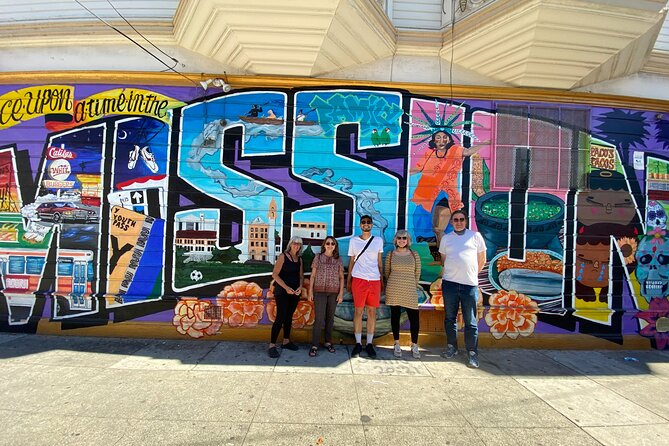
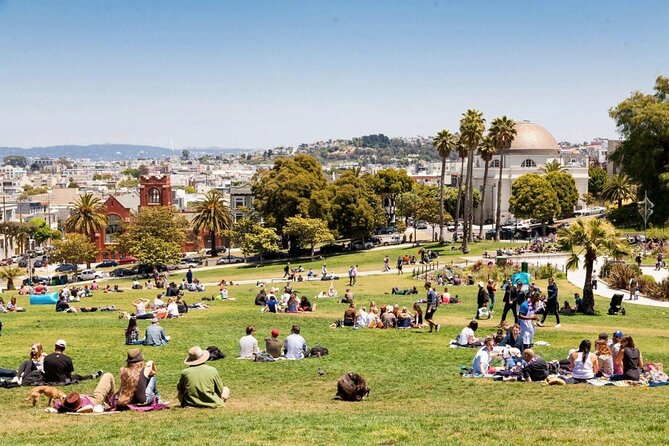
San Francisco’s Mission District is one of those places where art isn’t tucked behind museum glass. It’s on streets, on walls, and in everyday life—especially in the mural corridors you’ll walk through here. This tour brings you to the places where the neighborhood’s Latinx culture and community creativity show up loud and clear, then keeps the momentum going with food stops that taste as real as the artwork looks.
The best part is the structure. You’re not wandering and guessing. You meet your guide, follow a planned route, and get context at each turn. And when you’re hungry, the tour feeds you—literally—at family-owned taquerias and a classic bakery stop for pan dulce or tamales.
For the price, you’re really buying three things: a local guide, a curated route, and access to food stops for samples. It’s not just “walk and look.” It’s walk, look, eat, and learn what makes these spots matter.
You can also read our reviews of more walking tours in San Francisco
Where the tour starts and how the pacing feels on foot
You’ll meet at 3344 24th St and end at La Espiga De Oro (2916 24th St). That’s helpful because the tour is designed as a loop through the Mission—so you’re not constantly retracing your steps or ending far from where you started.
Expect an overall time of about two hours. Each stop is short—often around 15 to 20 minutes—so you keep moving, keep seeing, and keep eating without long waits. This pacing works well if you’re mixing this with other San Francisco plans, since you can usually treat it like a clean block in your day rather than an open-ended activity.
Also, with a maximum of 20 people, you’re less likely to feel lost in a crowd. On the food side, smaller groups tend to move more efficiently through a place, which matters when you want samples rather than a slow sit-down meal.
Stop-by-stop: what you’ll see and taste (and why it matters)
This tour is built around a smart rhythm: cultural context first, then food, then murals and community art—back and forth so the tour feels alive.
Stop 1: Mission District crossroads and the rock-music backstory
Your first stop begins at the Voss Gallery area, and you’ll head toward storied Mission crossroads. Here, you’ll learn how the neighborhood influenced two brothers who went on to create a new sound in rock music. That’s a nice opener because it frames the Mission beyond food and murals. Yes, the walls matter here, but so does the way the neighborhood shaped people who changed music.
One practical note: this opening is shorter, about 15 minutes, so arrive ready to listen. In this kind of neighborhood, there’s a lot to notice, and the guide’s first stories help you “read” what you’re about to see.
Stop 2: Taqueria San Jose for Mission burrito perfection
Next up is Taqueria San Jose, described as an award-winning, family-owned taqueria that has been crafting these hearty entrees since 1980. You’ll get into the Mission burrito mindset—sometimes called burritology—and try an authentic burrito at a place that’s been feeding locals for decades.
Why it’s worth it: a Mission burrito isn’t just a wrap. It’s a local style of comfort food that carries real expectations around size, texture, and how the ingredients hold together. Trying it at a long-running spot is the fastest way to understand what people mean when they talk about “the perfect Mission burrito.”
You can also read our reviews of more food & drink experiences in San Francisco

Stop 3: Taqueria Vallarta and the taco bite test
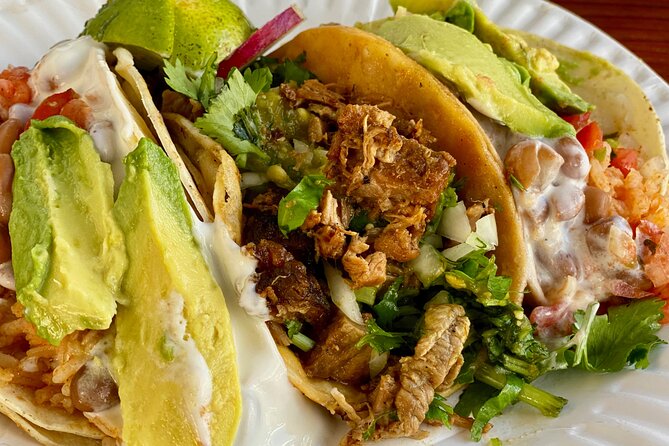
Then you’ll move to Taqueria Vallarta, where the emphasis is on packing serious flavor into a tortilla. The framing here is simple: your job is to take a bite and see how much comes through in that taco moment.
This stop works especially well if you’re the type who likes comparing similar foods across different places. You’ll already have burrito context from Taqueria San Jose, so the taco stop becomes a quick contrast: different format, different role for ingredients, same neighborhood identity.
Stop 4: Balmy Alley Murals, from 1972 to 2024
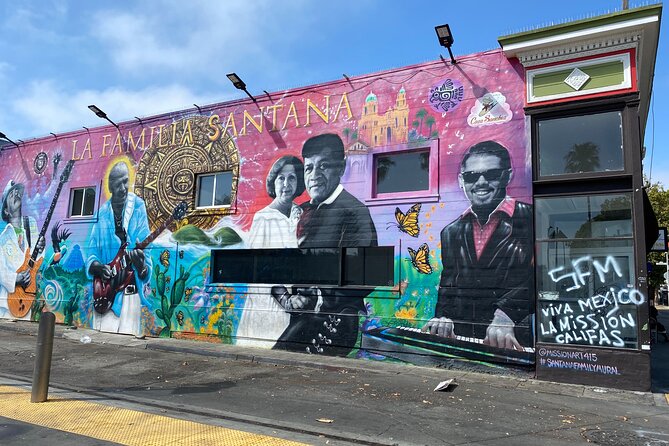
Now the tour shifts from taste to sight at Balmy Alley. You’ll walk down an outdoor art gallery with murals that span from 1972 to 2024. You’ll also learn about women who helped start San Francisco’s community mural movement and stayed at the forefront.
This is one of the tour’s biggest reasons to book. Murals can feel like background scenery unless someone explains the human story behind them—who painted, why the wall exists, and what the neighborhood has fought for and built. Balmy Alley gives you that context in a walking format that’s easy to follow.
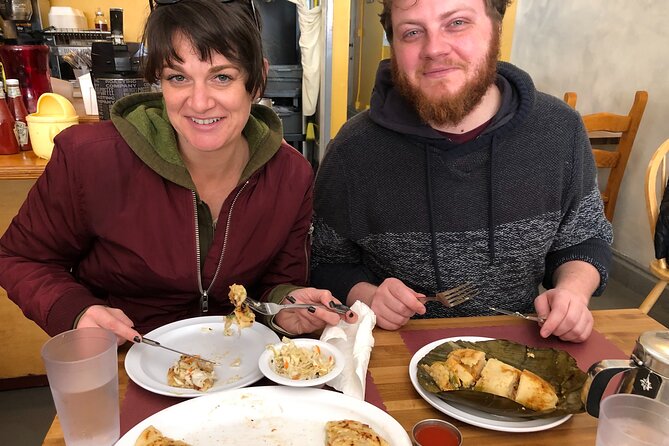
Stop 5: La Espiga De Oro for pan dulce or fruit tamale
For the sweet ending, you’ll visit La Espiga De Oro, where you can try pan dulce or a fruit-flavored tamale option. This stop is shorter—about 15 minutes—but it’s a good finish because it keeps things celebratory and snack-focused.
If you’ve never had pan dulce in the Mission, this is a low-pressure way to sample without committing to a full dessert plan later. And if you’re more curious than you are traditional, the fruit tamale option is a nice curveball.
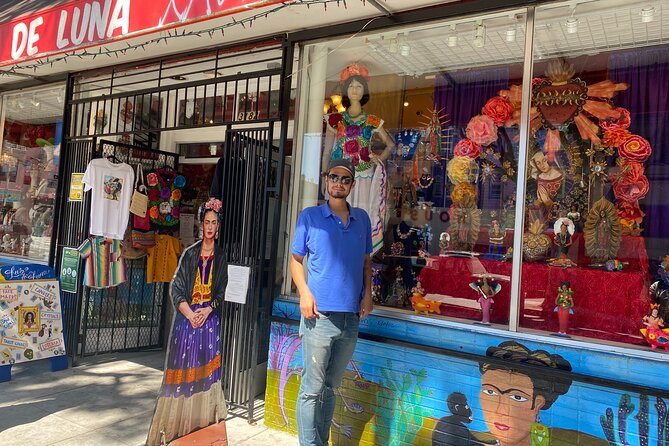
Stop 6: Calle 24 Latino Cultural District and mural tradition that lives on
The final stop is the Calle 24 Latino Cultural District, where you’ll experience how Mission muralism has been part of community life for 50-plus years. You’ll learn about the passion and commitment behind the murals and how that art practice has become woven into the neighborhood.
This ending matters because it connects the earlier mural walk to a bigger idea: community art isn’t just a past achievement. It’s an ongoing effort. You’ll leave with a clearer sense of why the walls change over time and why they keep being made.
Food cost reality check: what you should budget
Here’s the most practical part: the tour price covers the walking portion and the guided experience. Food is an additional expense. The tour recommends budgeting about $30 if you want to try all three recommended dishes, and cash is also suggested because paying in cash gives you a discount at two of the restaurants.
So, what does that mean for value? It means you can keep your cost controlled if you’re strategic. If you come hungry and want the full sample set, $30 is your planning number. If you’d rather spend less, you can do that too—you’re not forced into a sit-down meal price. For food-first people, this format tends to be a smart use of money because you’re tasting multiple Mission staples rather than eating one thing and calling it a day.
Good news: the restaurants can accommodate vegetarian, vegan, gluten-free, and lactose-free options, which is a big deal on tours where every stop usually assumes one menu.
Guides you might get: Jamie and Seth, both with Mission passion
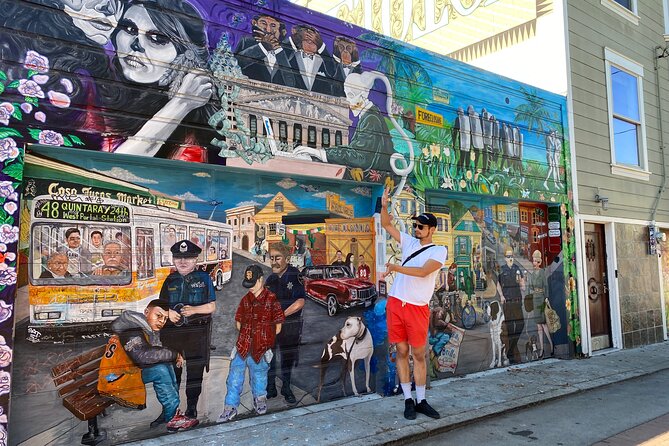
The tour is run by local guides, and the names that have shown up in past experiences include Jamie and Seth. Both are described as enthusiastic about the neighborhood and able to explain the mural subject matter with care. That last point matters here: murals in the Mission aren’t just decoration. They’re tied to identity, community power, and sometimes sensitive topics.
What you should look for as you listen: a good guide helps you notice details you’d otherwise miss—how the art connects to specific people, the meaning behind the timing of mural eras, and why certain stories matter for the neighborhood’s present, not just its past.
What you should watch for during the mural stops
Balmy Alley and the Calle 24 area can be visually overwhelming in the best way. To get more out of it, keep your attention on three things:
- The time span: you’re seeing murals from different eras, not one style frozen in place.
- The human story: community mural movements are built by people, including specific founders and continuing contributors.
- The neighborhood connection: art here functions like local communication, not just street decoration.
A short tour like this can’t teach everything. But it can teach you how to look. If you remember only one thing, make it this: these walls are part of the community’s ongoing conversation.
How much walking is this, really?
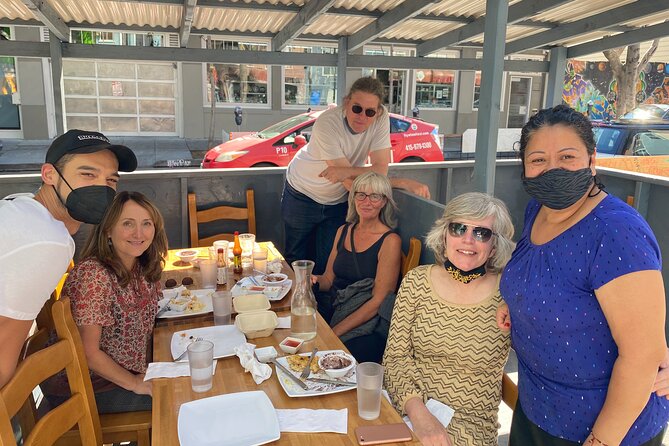
The schedule is built from short blocks, so it feels manageable even if you’re not a long-distance walker. You’re moving between food places and mural areas, with time to pause and listen at each stop. Still, you should plan to be on your feet for about two hours, which is a lot better with comfortable shoes than with trendy sandals.
If you’re sensitive to heat, bring water. If you’re sensitive to cold, wear a light layer. The tour requires good weather, so if conditions look iffy, expect a change to be offered or a refund route depending on what happens.
Value check: is $39 a fair deal for this Mission day?
At $39 per person, this tour can be a very good value when you want both culture and food. You’re paying for:
- a guided route through key Mission District stops,
- expert context at each location, and
- food samples at several local eateries (with food costs separate).
Where it becomes less of a deal is if you’re not planning to spend anything on food and you mainly want a quick mural glance. In that case, you might prefer a self-guided plan. But if you want the guide’s “why” behind what you’re seeing and you’re happy to budget roughly $30 for dishes, this format hits the sweet spot: you get multiple Mission experiences in a compact window.
One more thing: with a small group cap of 20, the tour feels closer to a neighborhood walk with a local than a conveyor-belt attraction.
Who should book this tour?
You’ll likely enjoy this most if you:
- want Mission street art with context, not just photos,
- care about authentic Mexican food as part of cultural understanding,
- like a guided pace that fits into a day of sightseeing,
- need dietary flexibility (veg, vegan, gluten-free, lactose-free options exist at the restaurants).
It’s also a good choice if you’ve already planned other San Francisco attractions and you need one activity that’s both walkable and memorable.
Should you book the Mission District Food and Culture Walking Tour?
Yes, with one simple condition: go in expecting food to be the optional add-on. If you bring about $30 and eat what the guide recommends at Taqueria San Jose, Taqueria Vallarta, and La Espiga De Oro, you’ll leave with a strong sense of the Mission’s culture through both art and cuisine.
If you want murals explained, you’ll be glad you booked instead of trying to interpret the walls alone. And if you’re juggling time in San Francisco, the two-hour format makes this easier to plug into a full day.
If you’d rather do everything free and at your own pace, it might feel more “guided” than you want. But for most people coming to the Mission for the first time, this is a solid, practical way to experience the neighborhood in one go.
FAQ
How long is the Mission District Food and Culture Walking Tour?
It runs for about 2 hours.
How much does the tour cost?
The price is $39.00 per person. The tour includes the walking tour portion, but food is additional.
Do I need to pay for food during the tour?
Yes. The tour recommends bringing about $30 if you want to try all three recommended dishes. Paying in cash can give you a discount at two of the restaurants.
Is food included in the ticket price?
No. Food is not included in the ticket price, though the tour includes multiple restaurant stops for samples.
Are there options for vegetarian, vegan, gluten-free, or lactose-free diets?
Yes. The restaurants can accommodate vegetarian, vegan, gluten-free, and lactose-free options.
What’s the group size like?
The tour has a maximum of 20 travelers.
What happens if the weather is bad?
The experience requires good weather. If it’s canceled due to poor weather, you’ll be offered a different date or a full refund.