REVIEW · SAN FRANCISCO
San Francisco: Chinatown Food and History Walking Tour
Book on GetYourGuide →Operated by Gray Line San Francisco · Bookable on GetYourGuide
Chinatown feels like a living classroom. This 150-minute walking tour turns the neighborhood into a story you can taste, starting at Dragon’s Gate and moving through the places where Chinatown’s past and present overlap. I love the way the route mixes street sights with real food breaks, so you’re never just standing around reading history.
I also like the focus on specific stops, like Old Saint Mary’s Cathedral and Portsmouth Square, which give the neighborhood context fast. One possible drawback: the food you try can depend on availability, so if you’re set on one specific item (like pork buns versus cookies), you’ll want a little flexibility.
In This Review
- Key things to look forward to
- Where the tour starts: Dragon’s Gate to your first street-level clues
- Stockton Street and the street details you’ll actually remember
- Old Saint Mary’s Cathedral: religion and community history in one stop
- Eastern Bakery cookies and tea: a sweet break with real technique
- Portsmouth Square: Gold Rush beginnings and Chinatown’s origin
- Delicious Dim Sum: homemade bites that keep the tour moving
- The Fortune Cookie Factory: learning the technique behind the fortune
- Price and value: what $85 buys you in 150 minutes
- The guide factor: why Joseph-style expertise changes the tour
- Who should book this Chinatown tour
- Should you book this Chinatown food and history walking tour?
- FAQ
- FAQ
- Where is the meeting point for the tour?
- What time should I arrive before the tour starts?
- How long is the Chinatown food and history walking tour?
- How much does the tour cost?
- Is there hotel pickup or drop-off included?
- What’s included with the tour?
- What food tastings should I expect?
- How big is the group?
- What language is the tour in?
- What’s the cancellation policy?
Key things to look forward to
- Small group up to 12 people means you get more back-and-forth than a big bus tour
- Dragon’s Gate start sets the right tone for Chinatown right from the first minute
- Multiple tastings: cookies or pork buns, dim sum, tea, and a fortune cookie
- Historic anchors like Old Saint Mary’s Cathedral and Portsmouth Square add meaning to the streets
- Fortune Cookie Factory visit takes something silly-fun and explains the technique behind it
- Photo stops are built into the walking rhythm, not squeezed in at the end
Where the tour starts: Dragon’s Gate to your first street-level clues
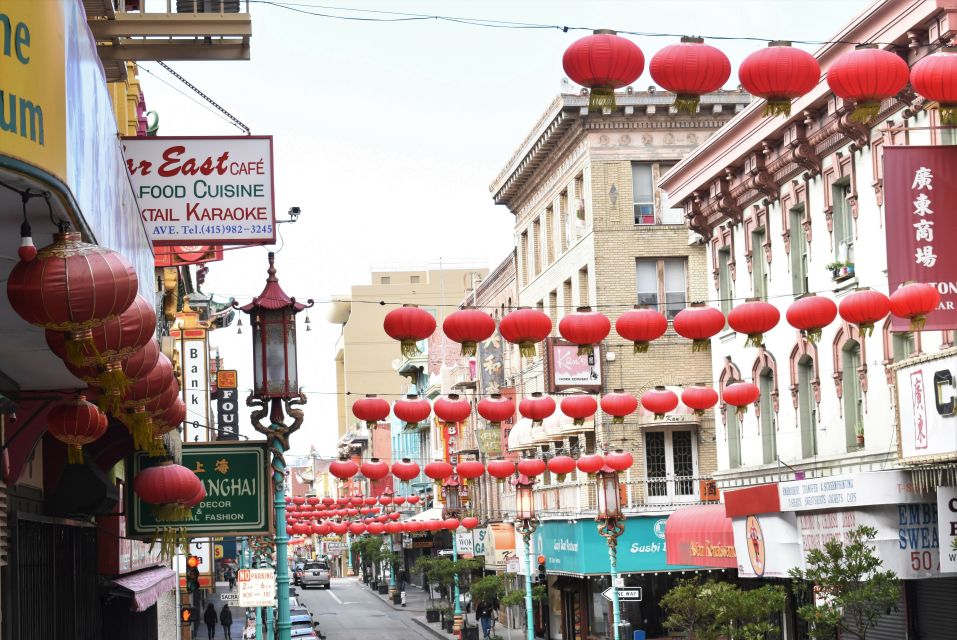
San Francisco’s Chinatown begins in a very obvious place: Dragon’s Gate, the main entrance to the neighborhood. You’ll meet your guide in front of the Starbucks cafe that sits in front of the gate. The guide will wear a Gray Line San Francisco uniform, so it’s not a guessing game, and you can get moving quickly.
Plan to arrive about 15 minutes early. That cushion matters because you’ll want a minute to regroup, spot your guide, and get ready for an unhurried walk. This kind of tour works best when you’re not trying to sprint between snacks and photos.
One thing I appreciate about this start is the mindset it creates. From the first steps, you’re not treating Chinatown like a theme park. You’re treating it like a real neighborhood where people still work, eat, pray, and shop—and that changes how you notice everything.
You can also read our reviews of more walking tours in San Francisco
Stockton Street and the street details you’ll actually remember
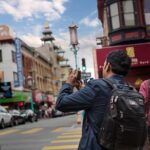
Once you’re in, you’ll head along Stockton Street, passing busy markets and food stalls that sell some of the freshest and most exotic foods in the city. It’s the kind of street where your first instinct might be to look for the next shop sign. The guide nudges you to look for patterns instead.
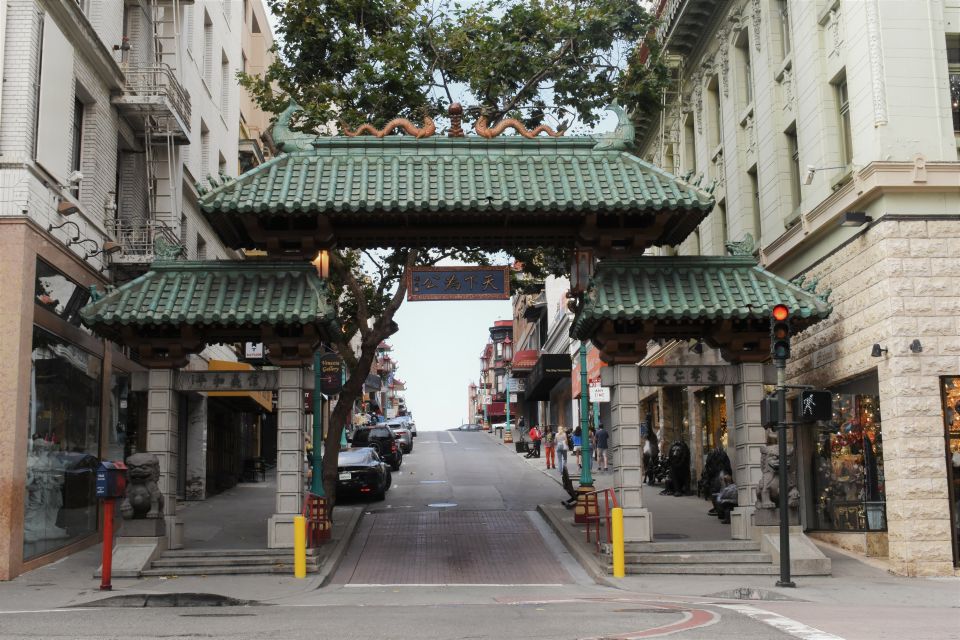
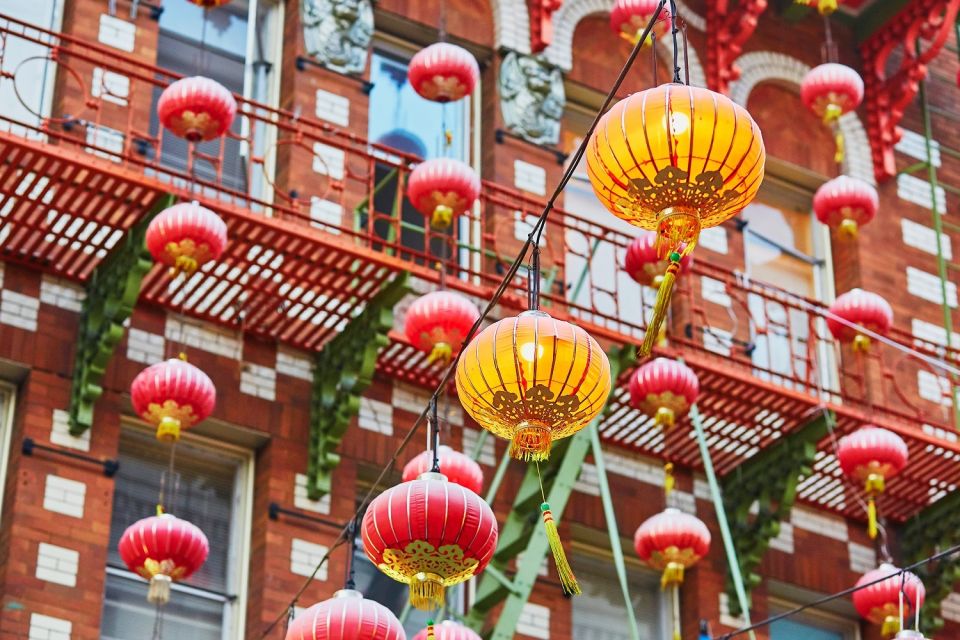
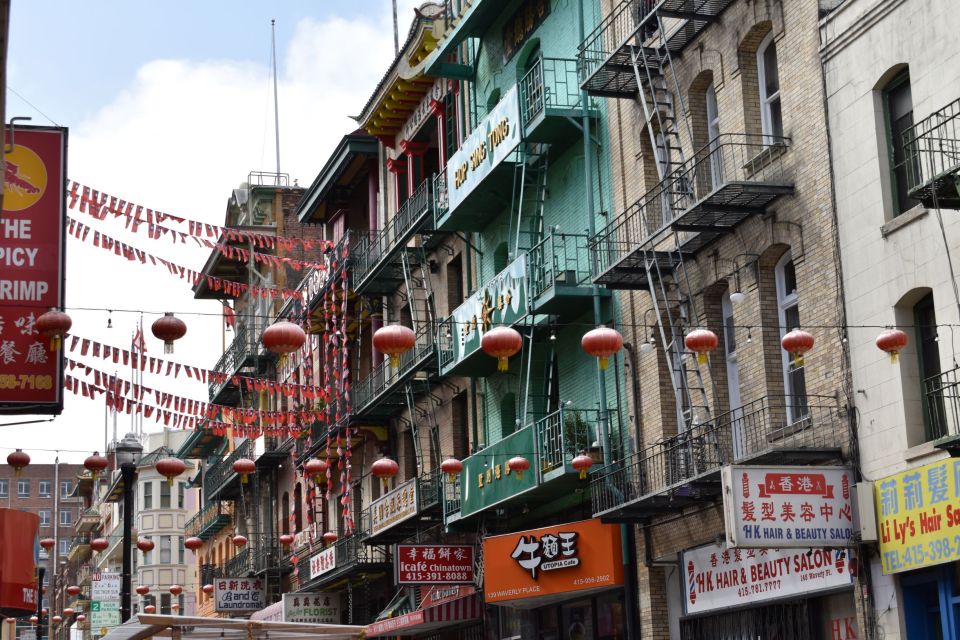
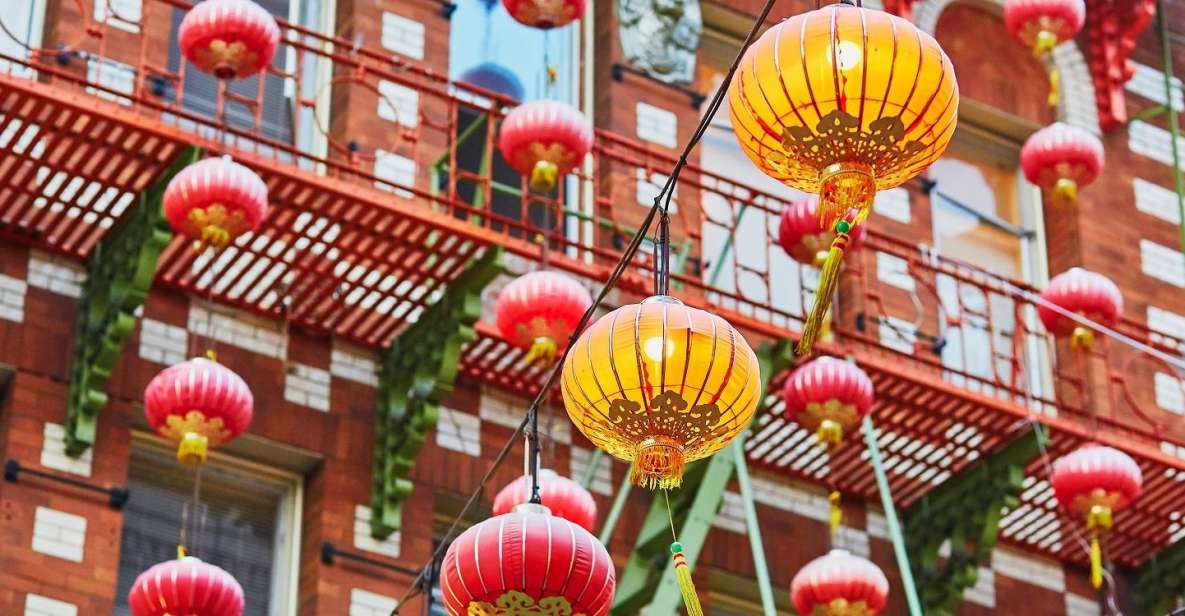
You’ll also see Chinatown’s design flourishes—buildings that echo pagoda-style shapes and streets lined with eye-catching Chinese decorations. When you get the story behind those visuals, they stop looking like decoration-only. They start to feel like identity—something the neighborhood keeps shaping.
If you’re the type who likes photos but hates wasting time, this section is for you. You get several built-in chances to capture the scenes, and you’re walking with context, not just clicking random corners.
Old Saint Mary’s Cathedral: religion and community history in one stop
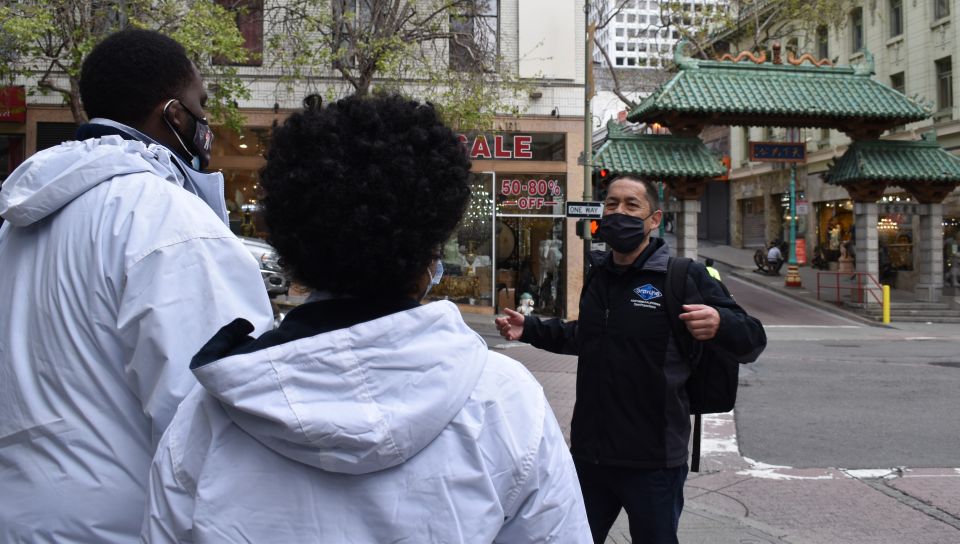
A major value of this tour is that it doesn’t treat Chinatown as only food and shopping. Midway through, you’ll visit Old Saint Mary’s Cathedral, a stop that helps you understand the area’s religious culture and history.
Even if you’re not a church person, this stop helps you read the neighborhood better. Places of worship often become community landmarks, and in Chinatown—like many immigrant neighborhoods—the religious story helps explain what people built, where they gathered, and how the community held together over time.
What I like here is the framing. You don’t just walk up to a building and move on. You’re given commentary that connects the site to the neighborhood’s evolution, so the stop feels like a chapter, not a detour.
Eastern Bakery cookies and tea: a sweet break with real technique
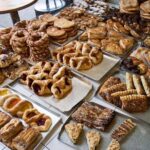
Next comes one of the most practical parts of the tour: Eastern Bakery. This is where you get traditional Chinese cookies along with tea of your choice. The tour also notes a chance to taste traditional pork buns, but that’s subject to availability, so don’t plan your entire snack fantasy around one single item.
The best part isn’t only the eating. You’ll also get some inside cooking tips from the bakery owners, which turns a quick snack into a behind-the-scenes moment. That matters because Chinatown food can look straightforward from the outside, but technique and timing are the difference between something that’s merely good and something that’s really memorable.
Also, tea is a smart inclusion for a walking tour. It gives you a calmer palate reset. Instead of feeling stuffed and sluggish, you can keep going with better energy.
Portsmouth Square: Gold Rush beginnings and Chinatown’s origin
A standout historical anchor on the route is Portsmouth Square. This stop is designed to answer a question you might not even know to ask: how did this neighborhood start, and why here?
Your guide will explain the area’s historical significance for the Gold Rush and California’s early beginnings, then connect those early chapters to Chinatown’s origin. It’s not heavy lecture mode. It’s the kind of explanation that helps you see why Chinatown developed where it did and how the story of the city ties back to this square.
I especially like the pacing here. You’ve already tasted and sightseen, so when you hit Portsmouth Square, you’re mentally ready to put the earlier streets into a bigger timeline. It turns the neighborhood from a set of interesting stops into a place with reasons.
You can also read our reviews of more food & drink experiences in San Francisco

Delicious Dim Sum: homemade bites that keep the tour moving
By the time you reach Delicious Dim Sum, you’ve earned the appetite that comes from walking and looking. This is a true food stop: you’ll taste homemade dim sum, and the tour highlights that Delicious Dim Sum is among the best dim sum options in the city.
The practical side: dim sum is built for a walking tour because it’s shared, flexible, and made to be eaten without needing a long sit-down meal. That means you can enjoy it without wrecking your schedule.
The tour format also helps. Because the guide is pairing food with context, you’re not just eating on autopilot. You’re tasting while learning what makes the dishes part of Chinatown’s everyday food culture.
One more plus: this stop gives you an anchor point in the middle of the walk. If your feet start complaining, you’ll have a built-in reset.
The Fortune Cookie Factory: learning the technique behind the fortune
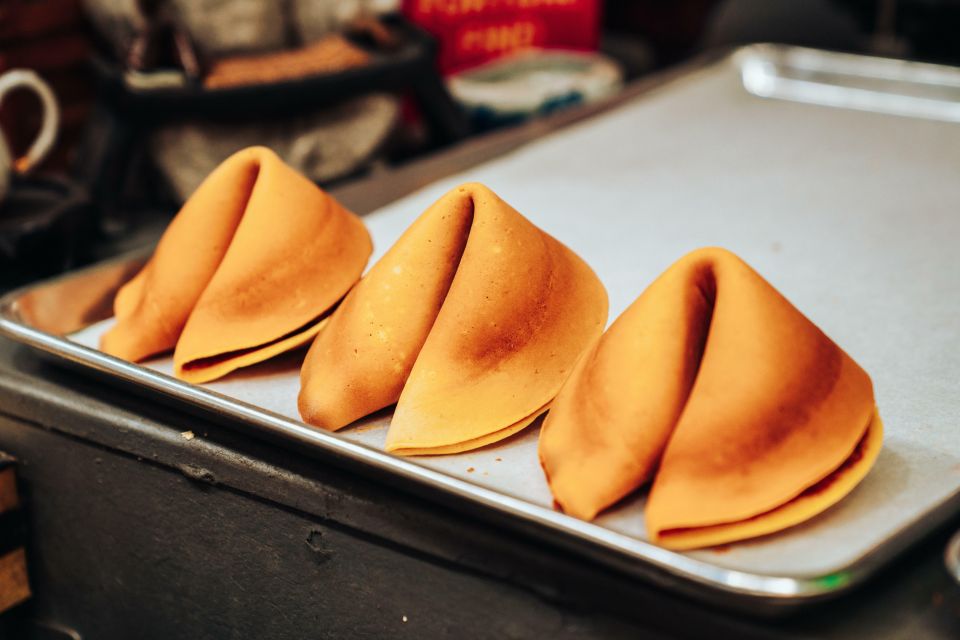
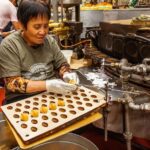
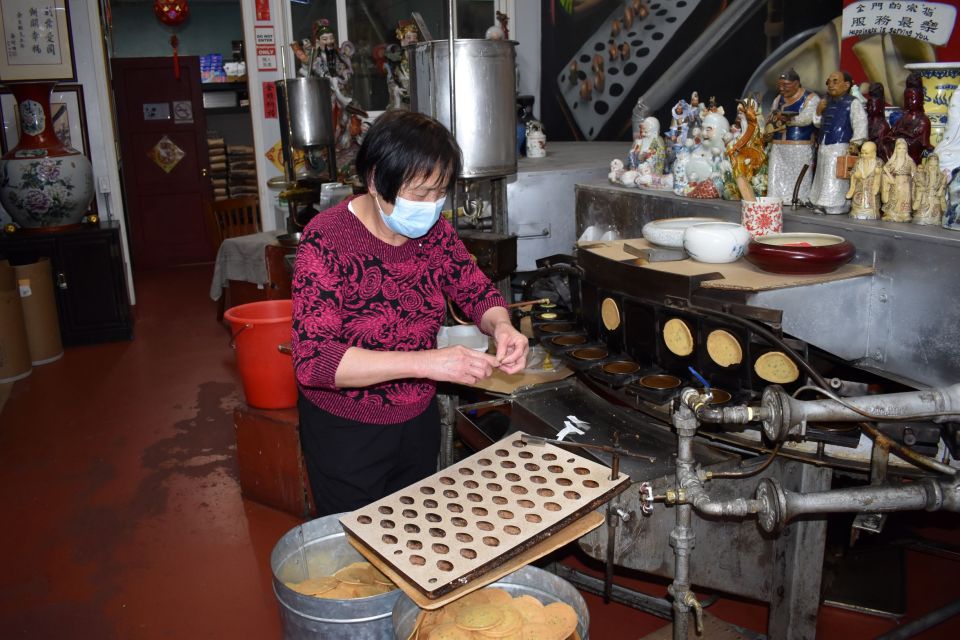
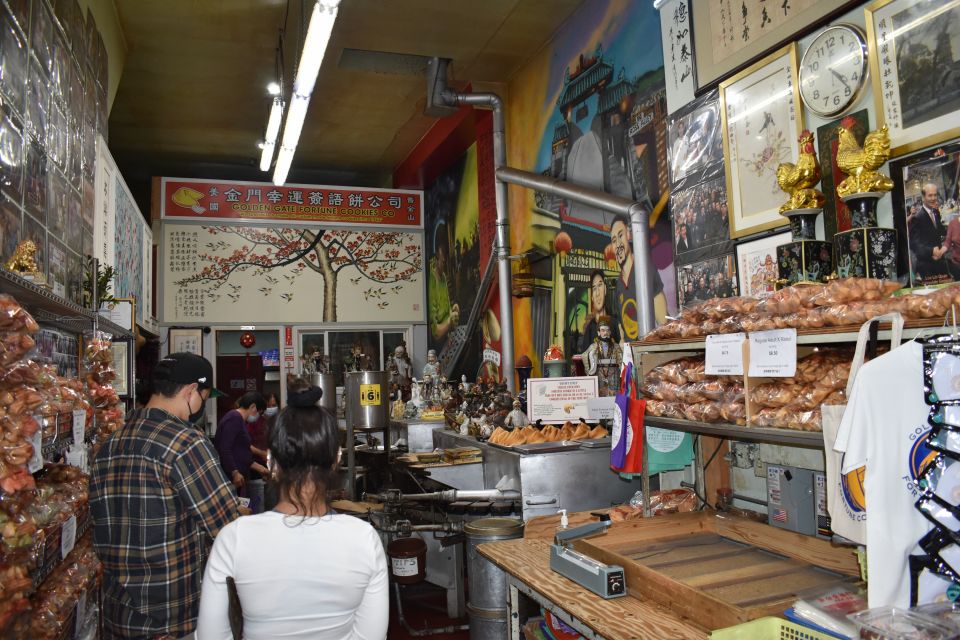
The tour finishes with something fun on the surface and surprisingly informative underneath: a visit to a Fortune Cookie Factory. You’ll taste the fortune cookie and also learn about the cooking techniques used to make it.
Then there’s the history angle. You’ll learn the historical significance of fortune and how this small, crunchy treat became part of the wider experience people associate with Chinese American dining.
This ending works because it’s both playful and grounded. You don’t leave thinking the tour was only about “cool photos” or only about “food.” You leave with a full loop: streets, community, tastes, and the story behind a food artifact that people think they already understand.
Price and value: what $85 buys you in 150 minutes
At $85 per person for about 150 minutes, this tour sits in the midrange for a walking-and-tasting experience in San Francisco. The value comes from the mix of what’s included, not just the tour itself.
You’re paying for:
- a professional local tour guide
- a small group experience (up to 12)
- photo stops
- multiple food items: dim sum, fortune cookie, and cookies or pork buns (depending on availability), plus tea
- an itinerary that strings together history and food so you’re not wasting time
The other value is the group size. A small group keeps the experience human. You’re more likely to get quick answers to questions about what you’re seeing—especially since this tour includes both everyday street scenes and specific cultural landmarks.
One trade-off to keep in mind: there’s no hotel pickup and drop-off. You’ll start at the Dragon’s Gate area and finish within the neighborhood. If you’re already comfortable navigating on foot or using nearby transit, that’s no big deal. If you need door-to-door convenience, plan accordingly.
The guide factor: why Joseph-style expertise changes the tour
The biggest pattern in the experience is the guide quality. Guides like Joseph have a reputation for bringing deep city and Chinatown context without turning the walk into a nonstop lecture. That balance shows up in how the tour flows: food breaks are timed, photo moments feel planned, and the history has a clear purpose.
I also like the way this style of guidance can pull you off the “I’ve seen this before” path. Instead of repeating what you could read from a brochure, you’re learning what to look for while you’re actually looking. That’s the difference between a tour that entertains and a tour that gives you a map for your future walks.
Who should book this Chinatown tour
This tour is a good fit if you:
- want an efficient first-timer orientation to Chinatown with actual stops and not just general descriptions
- like food that’s tied to place and not treated like random sampling
- appreciate a small-group format where you can ask questions
- want a mix of history + tastings in about two and a half hours
It may be less ideal if you:
- hate walking for 150 minutes
- have strong dietary restrictions you need handled with specific substitutions (the tour data only says tastings are included and pork buns/cookies depend on availability, not that special options are guaranteed)
Should you book this Chinatown food and history walking tour?
If you want Chinatown the smart way—guided, structured, and food-forward—this is an easy yes. The price makes sense once you count the guide time plus multiple tastings, including dim sum and a fortune cookie factory stop. The small group size also helps you get more from every segment, especially the history anchors.
Book it if you’re excited by the idea of learning why the streets look the way they do, then rewarding that learning with actual bites. Skip it only if you need lots of flexibility with food choices or you’re chasing a mostly seated, slow-paced experience. For everyone else, this is a practical way to turn Chinatown into a story you’ll carry home.
FAQ
FAQ
Where is the meeting point for the tour?
You meet the guide in front of the Starbucks cafe located in front of Dragon’s Gate in San Francisco’s Chinatown area.
What time should I arrive before the tour starts?
Please arrive 15 minutes before the activity starts.
How long is the Chinatown food and history walking tour?
The tour lasts about 150 minutes.
How much does the tour cost?
The price is $85 per person.
Is there hotel pickup or drop-off included?
No. Hotel pickup and drop-off are not included.
What’s included with the tour?
Included items are a professional local tour guide, small group experience, photo stops, tastings of traditional Chinese cookies or traditional pork buns (subject to availability), dim sum at Delicious Dim Sum, and a fortune cookie at the Fortune Cookie Factory.
What food tastings should I expect?
You should expect traditional Chinese cookies or traditional pork buns (depending on availability), tea (tea of your choice), homemade dim sum at Delicious Dim Sum, and a fortune cookie at the factory.
How big is the group?
It’s a small group with up to 12 people.
What language is the tour in?
The tour is offered in English.
What’s the cancellation policy?
You can cancel up to 24 hours in advance for a full refund.