REVIEW · SAN FRANCISCO
San Francisco: Neighborhood Walking Tour – 6 Route Options
Book on GetYourGuide →Operated by Roam Local · Bookable on GetYourGuide
San Francisco clicks differently on foot. This walking tour makes that happen by pairing iconic streets with a local historian who explains what you’re seeing, not just what it’s called. The biggest plus is that you can pick from six neighborhood routes, so you’re not stuck with a one-size-fits-all loop.
I especially like the way the stops feel specific and story-driven. On routes like Castro and Chinatown, you’re not just taking photos—you’re learning context at places such as Mission Dolores and the first Chinese temple in the U.S., plus you get snack moments built into the walk.
One thing to plan for: this is a lot of walking. It’s not suitable for mobility impairments, and it may be canceled depending on weather.
In This Review
- Key things to know before you pick a route
- Choosing the Right Loop: 6 Neighborhood Routes in a Half-Day
- Price and Value: Why $65 Makes Sense Here
- Walking Pace and Group Size: What Small (Up to 8) Really Changes
- Castro and Mission: Pride History, Victorian Streets, and Mission Dolores
- Chinatown, North Beach, and Russian Hill: From Temples to Beatnik SF
- Cow Hollow: Union Street Charm, Film Connections, and the Palace of Fine Arts
- The Four Peaks View Tour: Mount Olympus, Tank Hill, and Randall Museum
- Golden Gate Park: de Young Tower, Stow Lake, Bison Paddock, and Ocean Beach
- Telegraph Hill and the Old Waterfront: Ferry Building to Coit Tower
- What to Bring for 3 to 3.5 Hours (and How to Spend Smarter)
- Should You Book This SF Neighborhood Walking Tour?
- FAQ
- What routes are available on this San Francisco walking tour?
- How long is the tour?
- Is food included in the price?
- What is included with the tour?
- How big is the group?
- Is the tour suitable for kids or for mobility needs?
- FAQ
- Is the tour in English?
- What should I bring?
- Can the tour be canceled due to weather?
Key things to know before you pick a route
- Six route options let you match the tour to your mood: Pride-and-murals, food and temples, park and views, or waterfront history
- Small groups (max 8) make it easier to ask questions and keep a steady pace without feeling rushed
- A local historian guide brings neighborhoods to life with real context, not just facts on a sign
- Snack stops are included only as purchase options, so you’ll want a little extra cash for food
- Expect hills and stairs on routes like The Four Peaks, plus bring shoes you can actually walk in for 3+ hours
Choosing the Right Loop: 6 Neighborhood Routes in a Half-Day
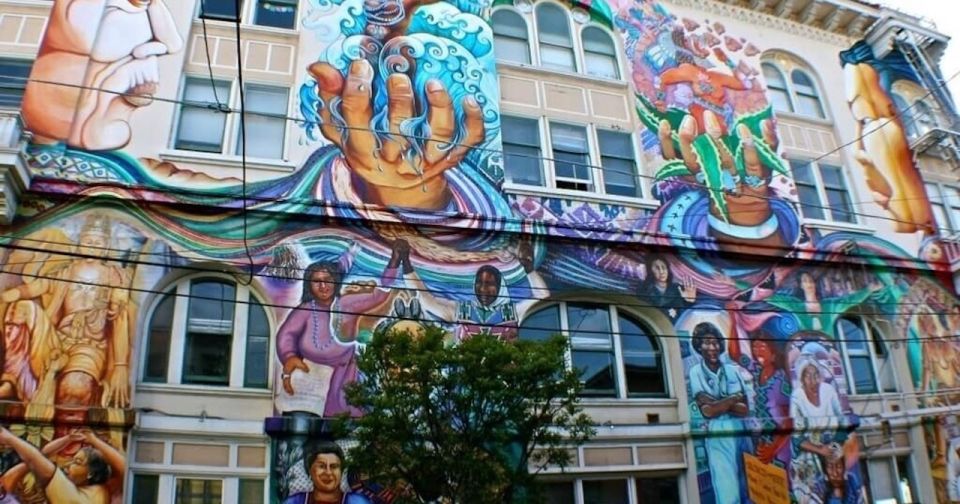
You’ll choose between six different experiences, and each one has its own personality. The tour runs 3 to 3.5 hours, usually in morning and afternoon time slots, which is perfect if you want SF flavor without eating your entire day.
Here’s the quick way I’d decide:
- If you want LGBTQ+ history + murals + classic SF streets, go for the Castro District–Mission Loop.
- If you want the mix of Chinatown culture + North Beach vibes + Russian Hill panoramas, choose Chinatown–North Beach–Russian Hill.
- If you’re more into movie/tech connections and pretty streets, Cow Hollow is a great pick.
- If your feet can handle hills and you want a “view-hunt” day, pick The Four Peaks.
- If you want green space and iconic park sights, do Golden Gate Park.
- If you want bay-and-city heritage, Telegraph Hill & the Old Waterfront gives you that ferry-to-city-history arc.
Also note: the meeting point varies by which option you book, so double-check your details once you reserve.
You can also read our reviews of more walking tours in San Francisco



Price and Value: Why $65 Makes Sense Here
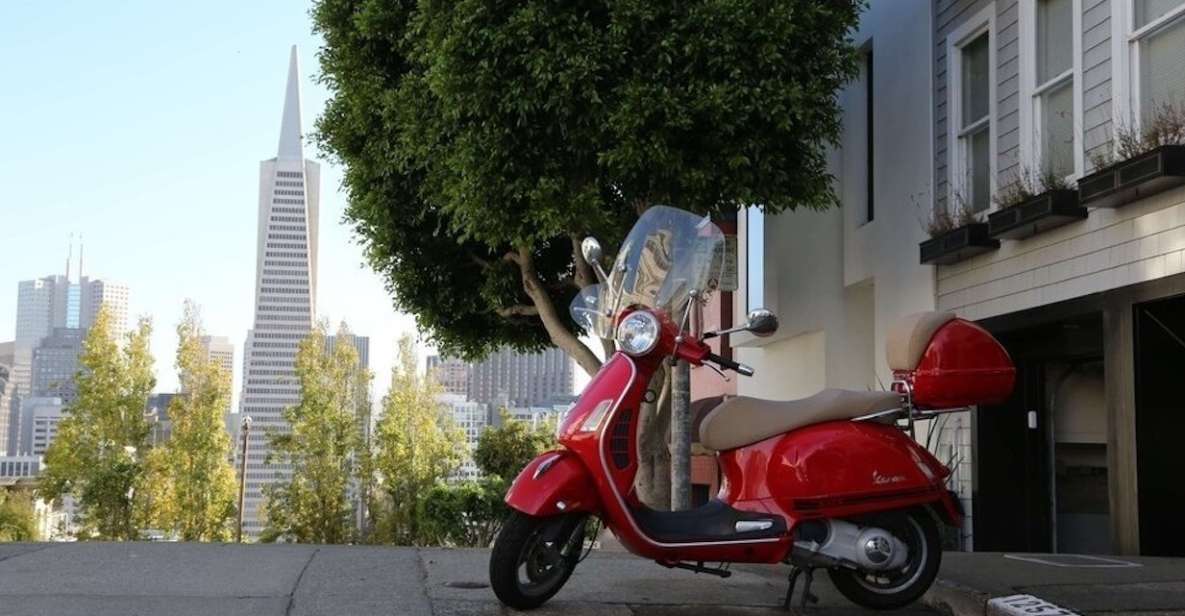
At $65 per person, this tour isn’t “cheap,” but it also isn’t charging you just for walking near famous buildings. Your cost covers a local historian guide, a structured walking route, and bottled water. Snack stops happen at favorite places, but food itself is for purchase—so you’re in control of what you spend.
The value shows up in two ways:
- You get a guide who can connect dots across neighborhoods fast. SF is full of layers, and you’ll notice it more when someone points out what to look for as you go.
- You get a tight time window. 3–3.5 hours means you’ll cover meaningful ground without needing to plan a whole day of hopping between districts.
It’s also set up for a small group of up to 8, which matters. In a big crowd, you end up listening to the guide like it’s background noise. Here, you’re more likely to hear details and actually use them as you explore.
Walking Pace and Group Size: What Small (Up to 8) Really Changes
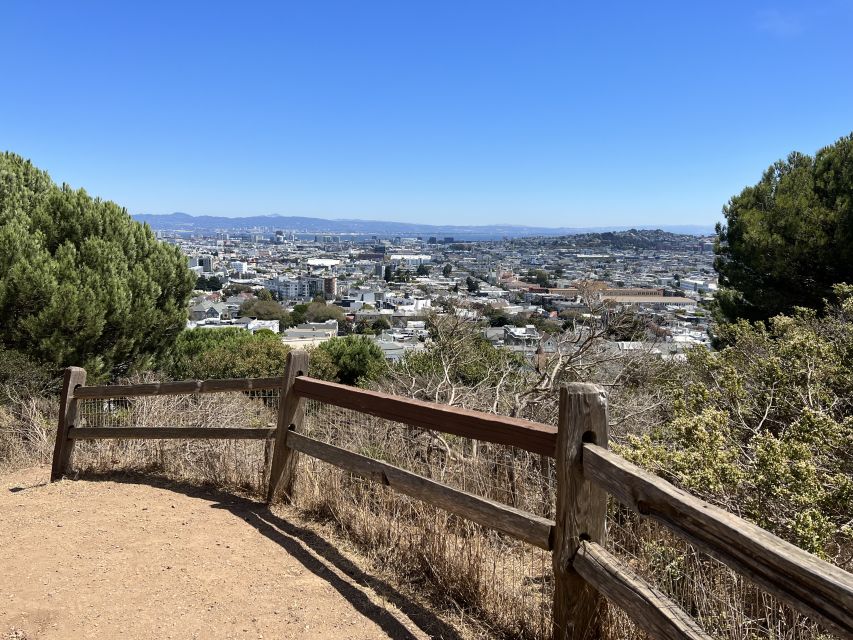
This tour runs on foot only, which is the point. But the small group size keeps it from feeling chaotic. With max 8 participants, you’ll typically move as a unit and have chances to ask questions without waiting for the guide to repeat everything.
A practical note: because you’ll walk continuously for a few hours, this isn’t the best match for anyone who wants lots of long sit-down breaks. You’ll get built-in pauses at stops, plus snack moments, but the overall rhythm stays walking-forward.
And since it may be canceled with bad weather, I’d treat it like an outdoor plan. If rain or fog is heavy, have a backup day in mind.
Castro and Mission: Pride History, Victorian Streets, and Mission Dolores
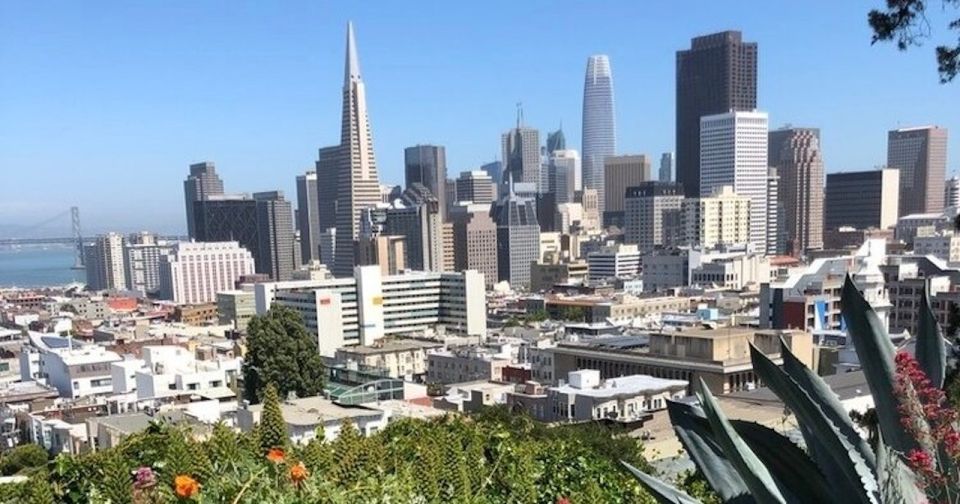
If you pick the Castro District–Mission Loop, you’re choosing one of the most character-rich SF walks. The Castro part focuses on the area’s LGBTQ+ culture and history, and the Mission side brings the Latin flair and nightlife energy you can feel in the streets.
What I like about this route is how it pairs emotion with architecture. You get Victorian-style streets and building detail mixed with modern community identity. One standout anchor is Mission Dolores, described here as the oldest surviving building—so you’re getting a sense of how the city’s story reached this neighborhood, not just a list of landmarks.
Then you get murals in the mix. Murals in the Mission and Castro aren’t decoration here; they’re communication. A good guide will point out what you’re seeing and why certain images show up where they do.
Food-wise, this loop includes stops built around local favorites such as the best cookie shop and taquerias. You’ll want to budget for at least a snack (food is for purchase), and you’ll likely end up tasting something you’d never pick out on your own.
Possible drawback: this route can include areas that feel busy, so keep your attention up for crossing streets and moving through crowds. Also, if you’re not a fan of nightlife-style neighborhood energy, you might find the Mission portion a bit more lively than expected.
Chinatown, North Beach, and Russian Hill: From Temples to Beatnik SF
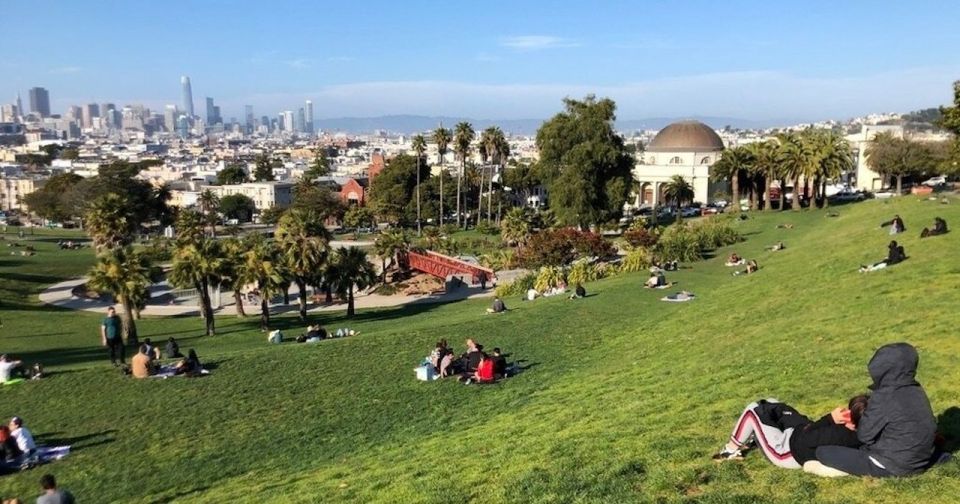
This is the route I’d choose if you want SF with flavor, not just views. The Chinatown–North Beach–Russian Hill walk is built around a series of cultural “firsts,” quirky landmarks, and classic neighborhood contrasts.
It starts with something big: you’ll see the first Chinese temple in the U.S. That alone is worth it, because it gives you a clear historical anchor early on. From there, the tour keeps moving into SF’s urban machinery with the cable car powerhouse, which helps explain how these iconic lines actually function.
You’ll also get Russian Hill panoramas—the kind of views you can’t get from a photo album unless you’re standing where the city naturally opens up. Another highlight is Macondray Lane, a small corridor that feels like stepping into a quieter pocket within the city.
North Beach enters with the Beatnik mecca energy, plus stops like the Fortune Cookie Factory. It’s one of those practical, weirdly charming sights that makes the neighborhood feel lived-in rather than staged.
And yes, there’s food. The tour includes a favorite pizza shop on the route, which is great if you want a simple, reliable meal plan without trying to guess where to eat in a new district.
If you’re the type who likes history but also likes fun surprises, this is the one.




Cow Hollow: Union Street Charm, Film Connections, and the Palace of Fine Arts

The Cow Hollow tour is for you if you want SF that feels a little more polished, a little less chaotic, and still packed with recognizable stops.
You’ll walk Union Street and the Lyon Street Steps, both of which are good for noticing how SF handles elevation. Stairs matter here, not just as a workout—they also change what you see and when you see it.
One of the more “wait, really?” highlights is the Matrix Club, noted as being founded by Marty Balin. That kind of connection helps you understand why SF is full of places with music and film history hiding behind plain storefront fronts.
Then there’s the Lucasfilm campus area and the Palace of Fine Arts. The Palace of Fine Arts gives you a classic SF sight that plays well with your photos, but what makes the walk worthwhile is the context around it—how this district sits within a wider city story of culture and industry.
Possible drawback: this route isn’t all dramatic “big hill” moments like The Four Peaks, but it still requires steady walking. If you’re tired easily on inclines, take a slower pace and wear supportive shoes.
The Four Peaks View Tour: Mount Olympus, Tank Hill, and Randall Museum
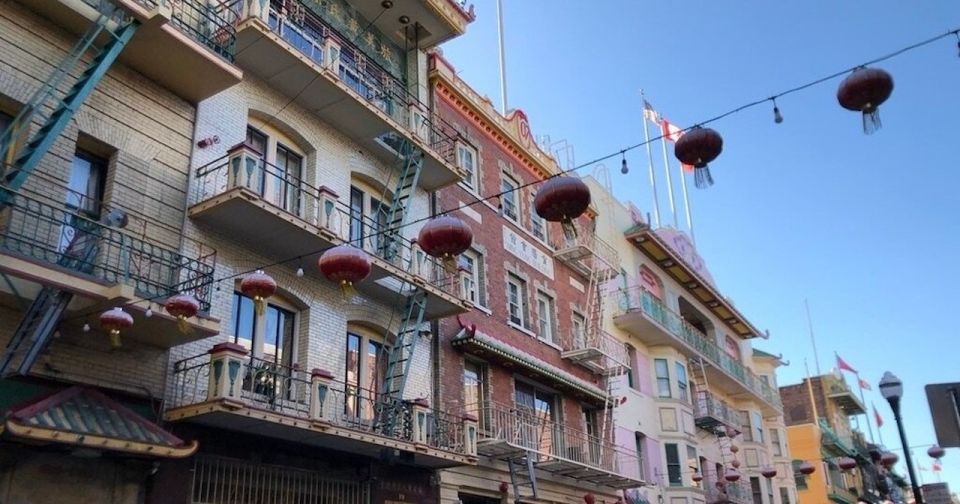
If your idea of a great SF day is views, staircases, and “how did they build this?” moments, choose The Four Peaks. This route focuses on some of the city’s best elevation and vantage points, hitting Mount Olympus, Tank Hill, Corona Heights, and Kite Hill.
Along the way, you get surprises beyond the obvious viewpoints—hidden gardens, staircases, and slides. That matters because it turns the walk into discovery, not just a checklist of lookouts.
Another strong highlight is Randall Museum, with free entry. Even if museums aren’t your main thing, free entry is a nice pressure-free option to recharge.
And yes, there’s a food moment here too: Hot Cookie! That’s the kind of stop that feels like it was picked to keep energy up rather than just to satisfy a sales pitch.
Possible drawback: this tour expects you to handle hills and repeated uphill walking. It’s not the best match if you want flat ground or minimal stairs. Bring water and pace yourself.
Golden Gate Park: de Young Tower, Stow Lake, Bison Paddock, and Ocean Beach
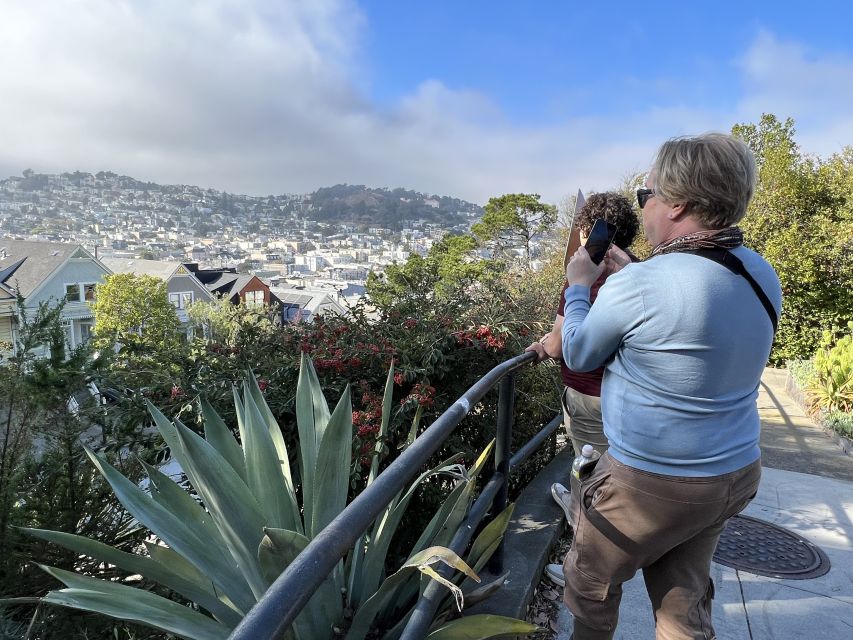
The Golden Gate Park route is a smart way to see multiple “SF poster locations” without trying to coordinate transport between them. This walk includes major sights and a few quieter, meaningful stops.
You’ll hit the de Young Museum Observation Tower—a strong photo and panorama stop. You’ll also pass the National AIDS Memorial Grove, which is included for a reason: it gives the park a human-story layer that goes beyond recreation.
Then it’s on to Stow Lake and the Bison Paddock, two classic park scenes that help you experience the scale of the place. The route also includes the enormous Dutch Windmill, which is both a visual landmark and a useful orientation marker in the park.
Finally, the tour reaches Ocean Beach. That last stretch matters because it shows you how the park’s inland feel transitions toward the ocean side.
Possible drawback: Golden Gate Park is big. Even on foot in 3–3.5 hours, you’ll still cover real distance. Comfortable shoes are non-negotiable, and wearing layers helps because weather can change around the park and coast.
Telegraph Hill and the Old Waterfront: Ferry Building to Coit Tower

This route gives you the SF skyline side, plus historic waterfront energy. The Telegraph Hill & the Old Waterfront tour starts at the Ferry Building Marketplace, a natural hub where you can sense how the city relates to the bay.
One of the most interesting elements is a local visit to secret gardens—a “you wouldn’t find this on your own” kind of stop. Even without turning it into a scavenger hunt, this kind of detail makes the neighborhood feel more personal.
Then you’ll see historic Coit Tower and Levi Plaza, noted as the birthplace of Blue Jeans. That’s a fun way to connect fashion history to place, and it adds a different flavor than the typical “look at the tower” viewpoint.
This is also a route where you get to feel the city’s vertical layout. Telegraph Hill’s slopes and views help your brain connect neighborhoods to the geography, not just to street names.
Possible drawback: you’ll be walking through areas that can be windy and cool, especially near the waterfront. Bring a layer even in decent weather.
What to Bring for 3 to 3.5 Hours (and How to Spend Smarter)
For any of the six routes, you’ll want to prepare like it’s a real walk day:
- Comfortable shoes (this is the big one)
- Water (bottled water is included, but having extra is still smart)
- Comfortable clothes and a layer for wind or fog
- A little snack budget since food is for purchase at snack stops
If you’re hoping to eat a full meal during the tour, plan for this: snack stops are included, but you’re not getting a sit-down restaurant meal as part of the price. I’d treat those stops like “small wins” and keep your main meal for after.
Also, if you’re deciding between routes, think about your body. The Four Peaks tour is more elevation-heavy, while the waterfront route often includes hills too but with more “city-and-bay” momentum.
Should You Book This SF Neighborhood Walking Tour?
I think you should book if you want SF to feel like a story, not like a photo feed. The strongest part is the combination of local historian guidance, a small group, and route options that let you aim your day at exactly what you want—LGBTQ+ history, Chinatown culture, big park sights, city views, or waterfront heritage.
Book it especially if you like walking tours that point out details you’d miss on your own. On a recent tour experience, the guide Ryan stood out for being engaging and well-informed on Chinatown, Russian Hill, and the Castro—exactly the kind of guide you need to make neighborhood context click fast.
Skip it if you need a fully flat route, long breaks, or mobility-friendly walking. And if weather looks ugly, have a plan B day ready, since the tour can be canceled.
FAQ
What routes are available on this San Francisco walking tour?
You can choose from six routes: The Castro District–Mission Loop, Chinatown–North Beach–Russian Hill, Cow Hollow, The Four Peaks, Golden Gate Park, and Telegraph Hill & the Old Waterfront.
How long is the tour?
The tour lasts 3 to 3.5 hours.
Is food included in the price?
Snack stops are included, but food and drinks are available for purchase on all tours.
What is included with the tour?
You get a local historian guide, a walking tour, bottled water, and snack stops at favorite places (for purchase).
How big is the group?
The tour is a small group limited to 8 participants.
Is the tour suitable for kids or for mobility needs?
It’s not suitable for children under 10 and not suitable for people with mobility impairments.
FAQ
Is the tour in English?
Yes, the live tour guide is English.
What should I bring?
Bring comfortable shoes, snacks, water, and comfortable clothes.
Can the tour be canceled due to weather?
Yes, this tour may be canceled depending on weather conditions.