REVIEW · SAN FRANCISCO
Castro District LGBTQ+ History Tour
Book on Viator →Operated by The Native Experience · Bookable on Viator
San Francisco’s Castro has history you can see. This 90-minute LGBTQ+ History Tour connects the neighborhood’s landmarks to the real people and risks that shaped queer rights in the city. I love that it stays human-scale, moving from iconic public moments to objects you can’t unsee.
Two things I really like: the tour uses strong stops tied to specific stories—like the original rainbow flag area and the HIV/AIDS Memorial Quilt piece—and it keeps a pace that makes the walk feel doable. Also, the guide quality comes through fast; I especially enjoyed hearing about Miguel and Eric’s delivery, from steady pacing to clear, concise answers.
One possible drawback: in just 1 hour 30 minutes, you’re focusing on the neighborhood’s most important touchpoints rather than a deep, start-to-finish timeline. If you want every detail on every decade, you’ll likely want a second visit on your own.
In This Review
- Key takeaways before you go
- Walking the Castro’s queer landmarks (without turning it into a museum)
- Harvey Milk Plaza: where community energy meets real-world consequences
- The rainbow flag and HIV/AIDS quilt: symbols with a pulse
- A classic gay bar stop: history you can spot just by looking
- Jose Sarria and the shift from identity to agency
- The first store to hire openly gay workers: where policy met paycheck
- A 1920s palatial-style theater: the Castro as stage and symbol
- Price and pacing: why $39 feels fair for what you get
- Who this tour suits best (and who might skip)
- A note on guides: why Miguel and Eric’s style matters
- Should you book the Castro District LGBTQ+ History Tour?
- FAQ
- Where does the tour start and end?
- How long is the tour?
- How much does it cost?
- What time does the tour start?
- Is the tour offered in English?
- Do I need to bring a ticket?
- Is there a cancellation option?
- Are service animals allowed and is public transportation nearby?
Key takeaways before you go
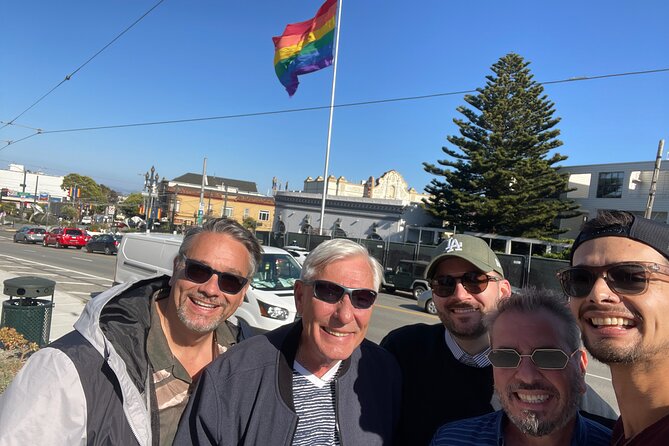
- Original rainbow flag context: you’ll see how the symbol became more than decoration.
- HIV/AIDS Memorial Quilt link: you’ll understand why this community chose visibility and remembrance.
- Harvey Milk Plaza’s role: you get the setting behind major civil unrest, not just a name drop.
- Gay bar history with a practical detail: one venue opened without blocking windows, which matters in a period context.
- Local trailblazers: you’ll hear about Jose Sarria’s personal items and early workplaces that hired openly gay people.
- A 1920s palatial-style theater stop: you get a mix of queer history and city architecture in one route.
Walking the Castro’s queer landmarks (without turning it into a museum)
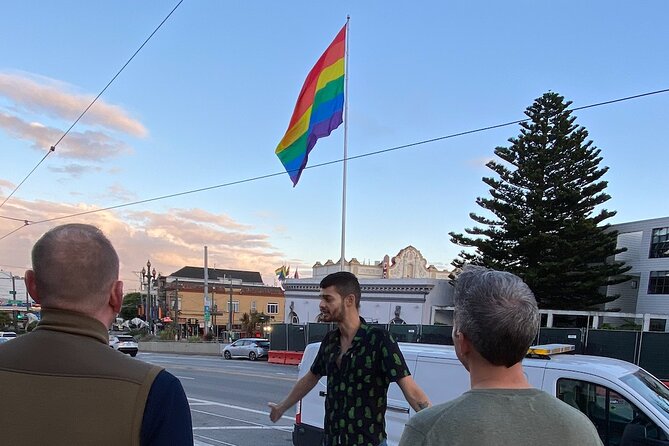
The Castro is one of those places where the streets basically give you a syllabus. But this tour helps you read it. You’re not just snapping photos. You’re linking each corner to people, pressure, and policy—and how daily life in San Francisco got political whether anyone wanted it or not.
At $39 per person for about 1 hour 30 minutes, it’s priced like an experience, not a lecture. And because the group is capped at 30, you can actually hear what your guide is saying and ask questions when something clicks. That matters here, since a few stops are emotional or politically loaded, and you’ll want a bit of context instead of guessing from signage alone.
The tour runs in English and starts at Harvey Milk Plaza at 3:00 pm, ending around 18th Street & Castro Street. That ending point is helpful: you’ll finish right where you’re likely already planning to grab a snack, browse, or keep wandering.
If you’re the type who likes your travel with direction, you’ll probably appreciate the structure. If you prefer complete freedom and no planned stops, you might feel a little herded. Still, the route is tight, which is part of the value: you don’t need half a day to get the big picture.
You can also read our reviews of more walking tours in San Francisco

Harvey Milk Plaza: where community energy meets real-world consequences
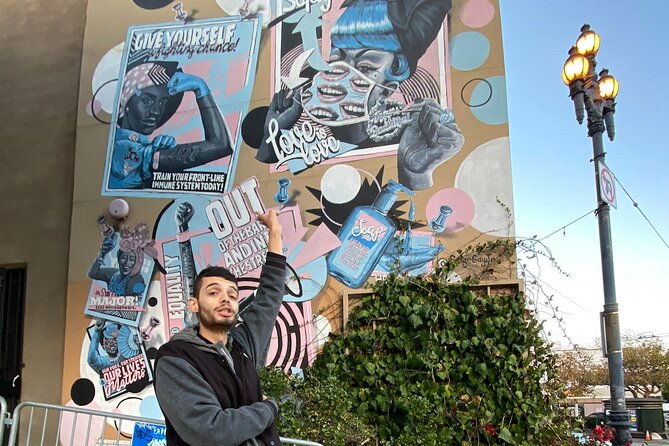
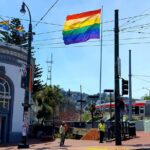
The tour begins at Harvey Milk Plaza, and it’s a smart choice. This is a gathering spot that helped define the gay community’s public presence. And it’s not presented as trivia. You’ll learn how this sense of community turned into something larger—connected to the atmosphere that preceded the White Night Riots.
The setting matters because places like this aren’t neutral backdrops. They’re where people showed up, where visibility carried risk, and where the city had to respond. Even if you’ve heard the names before, standing at a plaza built around civic identity makes the story feel more concrete than a book paragraph.
Timing is also part of the plan. You get about 10 minutes here, with no admission ticket needed. That’s enough time to orient yourself and understand why this corner became a symbol—and then you move on quickly so the tour doesn’t bog down.
Practical note: since this stop anchors the rest, it helps to arrive a few minutes early so you start mentally ready. Once you leave this point, the history starts echoing through the neighborhood.
The rainbow flag and HIV/AIDS quilt: symbols with a pulse
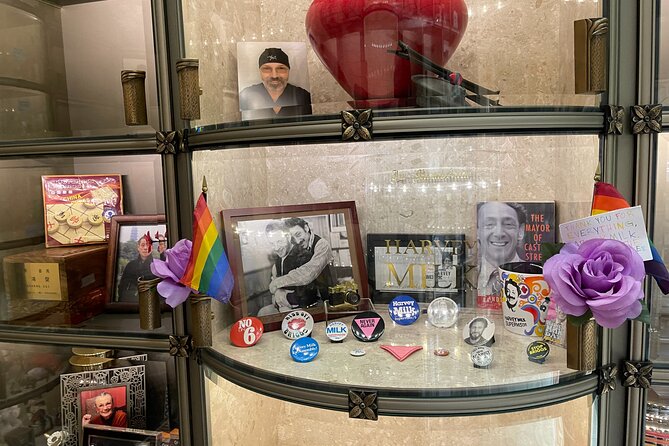
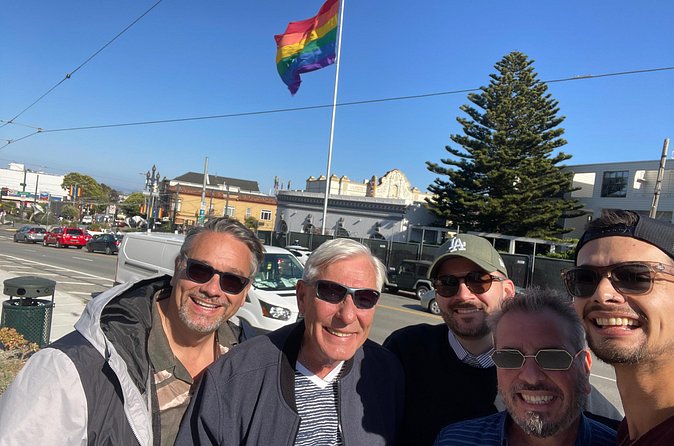
One of the most powerful early stops is the area tied to the original rainbow flag, plus a piece of the HIV/AIDS Memorial Quilt. This is where the tour shifts from names and dates to meaning.
A rainbow flag can look simple from far away. Up close, you start seeing it as a decision: a choice to make identity visible. And you also learn that visibility wasn’t always comfortable. It was something people pushed for because hiding never protected them.
The HIV/AIDS Memorial Quilt connection is equally important. It’s remembrance made physical. You’re seeing part of an artwork-driven memorial tradition that turns loss into a public statement. That matters in the Castro because the neighborhood’s story is inseparable from survival, grief, and advocacy.
This stop also includes Jose Sarria’s personal items. That detail helps you understand that activism wasn’t only organized in meetings. It also lived in individuals—what they kept, how they presented themselves, and how they treated public life like something to claim rather than request.
If you’re someone who likes your cultural travel with emotional honesty, this section is likely the moment you’ll remember afterward. It can feel heavier than the rest of the walk, but the tour doesn’t rush past it. You get enough time to take it in.
A classic gay bar stop: history you can spot just by looking
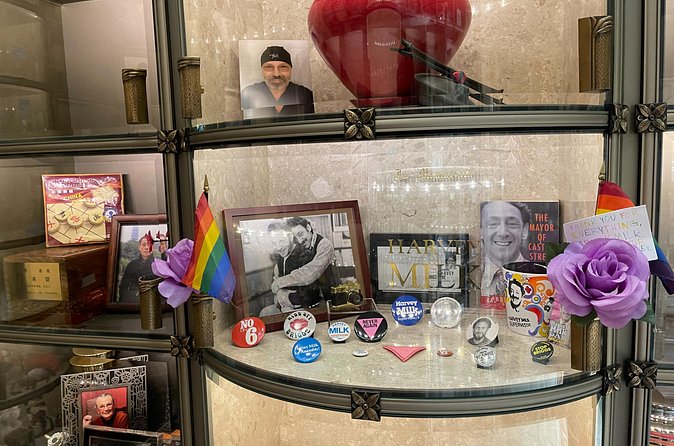
The tour includes a stop at an iconic gay bar that’s been in business for over 50 years. What makes this stop more than a photo opportunity is a specific historical detail: it did not block out their windows when it opened—unlike a customary approach for some gay bars at the time.
That’s a subtle detail, but it’s huge. Windows are about visibility. Blocking them is about self-protection. Not blocking them is about confidence and resistance. You’ll likely connect this to what you learned earlier at Milk Plaza and around symbols like the rainbow flag: public presence was never free, and choosing to be seen was an act.
Also, this bar stop offers a different kind of learning. You’re not only hearing about “what happened.” You’re standing in a place that kept operating through changing social pressure. That makes the story feel less like history in a glass case and more like something that kept happening in real life.
Keep in mind: since it’s a working bar, you should be respectful with your timing and volume. The tour is guided, but you’re still in a public venue.
Jose Sarria and the shift from identity to agency
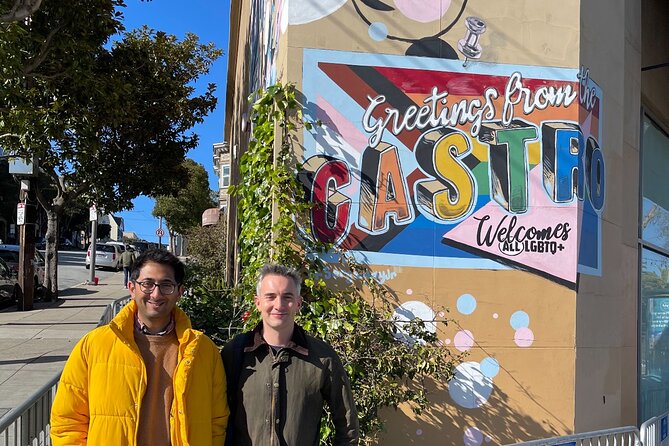
The Castro’s LGBTQ+ story isn’t only about protests and politics. It’s also about community leadership and the courage to live openly.
Jose Sarria’s presence comes through here through personal items included as part of the stop tied to the original rainbow flag area. That choice matters because it suggests a theme: change often starts with individuals, not institutions. Sarria’s story is connected to public queer life in San Francisco, and the tour uses his artifacts to bring that idea from abstract to specific.
You’ll also see how activism and everyday life overlapped. The tour keeps pointing out that being openly gay wasn’t just a lifestyle choice—it shaped who got hired, who had visibility, and what social norms could be challenged.
This section is a good reminder that queer history is not one single event. It’s a set of decisions people made repeatedly, over years and sometimes at personal cost.
If you want to understand how a neighborhood becomes a movement, this is one of the best parts of the tour.
You can also read our reviews of more historical tours in San Francisco


The first store to hire openly gay workers: where policy met paycheck
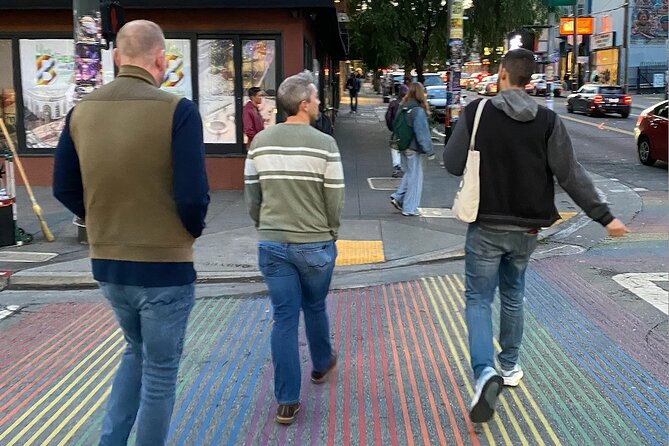
One of the stops focuses on the first store in San Francisco to hire openly gay workers. That’s the kind of detail that often gets missed when people talk only about laws and riots.
Why does it matter? Because jobs are power. Employment affects stability, safety, and independence. It also changes what businesses feel they can get away with, and that influences social attitudes beyond the workplace.
This stop helps you connect the dots between visibility in public spaces (like Milk Plaza) and visibility in daily systems (like hiring). In other words, you get a more complete picture of what equality looks like when it shows up in real life, not only on posters.
In a short tour, that’s valuable. It’s easy to think civil rights history is only courtroom drama or street-level conflict. Here, you see that it also lived in who had the right to work openly.
A 1920s palatial-style theater: the Castro as stage and symbol
The tour ends with a stop that highlights one of the last palatial-style theaters from the 1920s. Even without going heavy on architectural terms, this choice does something useful: it reminds you that the Castro has always been more than a modern identity neighborhood. It grew around city life, entertainment, and public gathering.
A theater is a stage. In queer history, stages often become lifelines—places where people see themselves, where community gathers, and where culture can be built even when mainstream society pushes back.
This stop also balances the emotional stops earlier. The rainbow flag and AIDS memorial connection can hit hard. A theater adds lightness without erasing context. You’re still learning, just with a different kind of atmosphere.
If you like mixing culture and politics—architecture, entertainment, community—this is a good final note before you head off on your own.
Price and pacing: why $39 feels fair for what you get
Let’s talk value. $39 for about 1.5 hours in a neighborhood with this many specific landmarks is not “cheap,” but it also isn’t inflated for a walking tour with a real guide.
Here’s why it feels fair:
- You’re getting an organized route with multiple tightly linked stops.
- You get a guided explanation that ties landmarks to meaning, not just location.
- The group size limit of 30 helps keep the experience from turning into background noise.
- The route connects major anchors like Harvey Milk Plaza with symbols and community history stops.
The biggest pacing strength is that the tour moves efficiently. You get enough time at each location to understand the point, then you’re off to the next. That’s the right rhythm for a short experience.
The main “watch out” is your expectations. If you came for a long, slow, museum-grade history session, the 90-minute format won’t satisfy. But if you came for a fast way to understand what to look for on your own afterward, it’s a very practical deal.
Who this tour suits best (and who might skip)
This tour fits you best if:
- You want an easy way to learn the Castro’s key LGBTQ+ history landmarks without studying beforehand.
- You like guided street-level interpretation where the facts matter.
- You’re traveling solo, as a couple, or with friends and want a shared narrative for the neighborhood.
It might not be your best match if:
- You prefer very long tours with extensive timelines.
- You want to spend most of your time inside venues rather than walking and looking outward.
One more small tip: since the start time is 3:00 pm, it’s ideal for a morning spent exploring elsewhere. Plan to keep your afternoon flexible. You’ll finish near 18th Street & Castro Street, so you can keep going right away.
A note on guides: why Miguel and Eric’s style matters
The tour experience seems to depend on the guide’s flow, and that’s where the standout reviews shine. I like that guides such as Miguel and Eric are described as keeping a steady pace and answering questions in a clear way. That combination is what makes a short tour actually feel satisfying: you don’t just hear facts, you understand them.
Look for the moments where the guide can connect your questions to the nearby landmark. When that happens, you start seeing the neighborhood differently. The Castro becomes a map of choices people made—at home, in workplaces, in public squares, and in cultural spaces.
Should you book the Castro District LGBTQ+ History Tour?
If your goal is to get oriented fast and leave with a sharper understanding of what these landmarks mean, I’d book it. For $39 and about 90 minutes, you’re buying focus. You’re not paying to walk randomly; you’re paying to have the Castro interpreted in a way that sticks.
My advice: book it ahead if you can. The tour is typically booked about 8 days in advance on average, and the max group size of 30 means it can fill up. Also, if you’re the kind of traveler who appreciates symbols—rainbows, memorial quilts, public visibility—this route gives you the context that turns good photos into real understanding.
If you’re on the fence, here’s the simple test: if you’d rather know what you’re looking at than just look, this tour is for you.
FAQ
Where does the tour start and end?
The tour starts at Harvey Milk Plaza (San Francisco, CA 94114) and ends at 18th Street & Castro Street (18th St & Castro St, San Francisco, CA 94114).
How long is the tour?
It’s about 1 hour 30 minutes (approx.).
How much does it cost?
The tour costs $39.00 per person.
What time does the tour start?
The start time listed is 3:00 pm.
Is the tour offered in English?
Yes, it’s offered in English.
Do I need to bring a ticket?
You’ll have a mobile ticket.
Is there a cancellation option?
Yes. You can cancel for a full refund up to 24 hours before the experience’s start time. If you cancel within 24 hours, the amount paid is not refunded.
Are service animals allowed and is public transportation nearby?
Yes, service animals are allowed, and the meeting area is near public transportation.