REVIEW · SAN FRANCISCO
San Francisco: Castro District LGBTQ+ History Tour
Book on GetYourGuide →Operated by The Native Experience · Bookable on GetYourGuide
History has a way of walking with you in The Castro. This 90-minute Castro LGBTQ+ History Tour isn’t just dates on a plaque. You get a street-level story shaped by Eric’s lived experience, including his personal witness of major moments, and by his perspective as a POC queer organizer and activist.
Two things I really liked: how the tour connects big political shifts to specific corners you can see, and how it includes places with emotional weight, like the Pink Triangle Memorial and the Castro LGBTQ+ Memorial at Hibernia Beach. One thing to consider: The Castro can get loud and busy on certain days, so bring patience if street noise, construction, or event setups make it harder to hear every word.
In This Review
- Key things you’ll notice on this Castro history walk
- Where the tour starts: Harvey Milk Plaza, 400 Castro Street
- Eric and the activist-historian approach you can feel
- The US military thread: how a city’s shape can be influenced
- Pink Triangle Memorial: the stop with the hardest emotional weight
- Hibernia Beach (Castro LGBTQ+ Memorial): community memory at the shoreline
- GLBT History Museum: turning street stories into artifacts
- Jane Warner Plaza: naming heroes the city can’t ignore
- Harvey Milk’s former camera shop: politics in a real storefront
- White Night Riots and the 1979 gay rights ordinance: why backlash shaped policy
- So… is it worth $39 for 90 minutes?
- Who this tour suits best (and who might want a different style)
- Should you book the San Francisco Castro LGBTQ+ History Tour?
- FAQ
- How long is the Castro LGBTQ+ History Tour?
- Where do I meet the guide?
- What is the price per person?
- Is the tour wheelchair accessible?
- What language is the tour offered in?
- What stops are included?
- What should I bring?
Key things you’ll notice on this Castro history walk
- Eric’s SF-native viewpoint: a sixth-generation San Francisco historian telling stories from close range
- Military influence in the story: you’ll hear how the US military helped shape the early “gayest city” narrative
- A memorial stop with global gravity: the Pink Triangle Memorial honors gay prisoners killed during the Nazi regime (1933 to 1945)
- Hibernia Beach’s LGBTQ+ significance: a stop that reframes shoreline space as community memory
- Harvey Milk sites you can picture: his former camera shop, campaign headquarters, and residence
Where the tour starts: Harvey Milk Plaza, 400 Castro Street
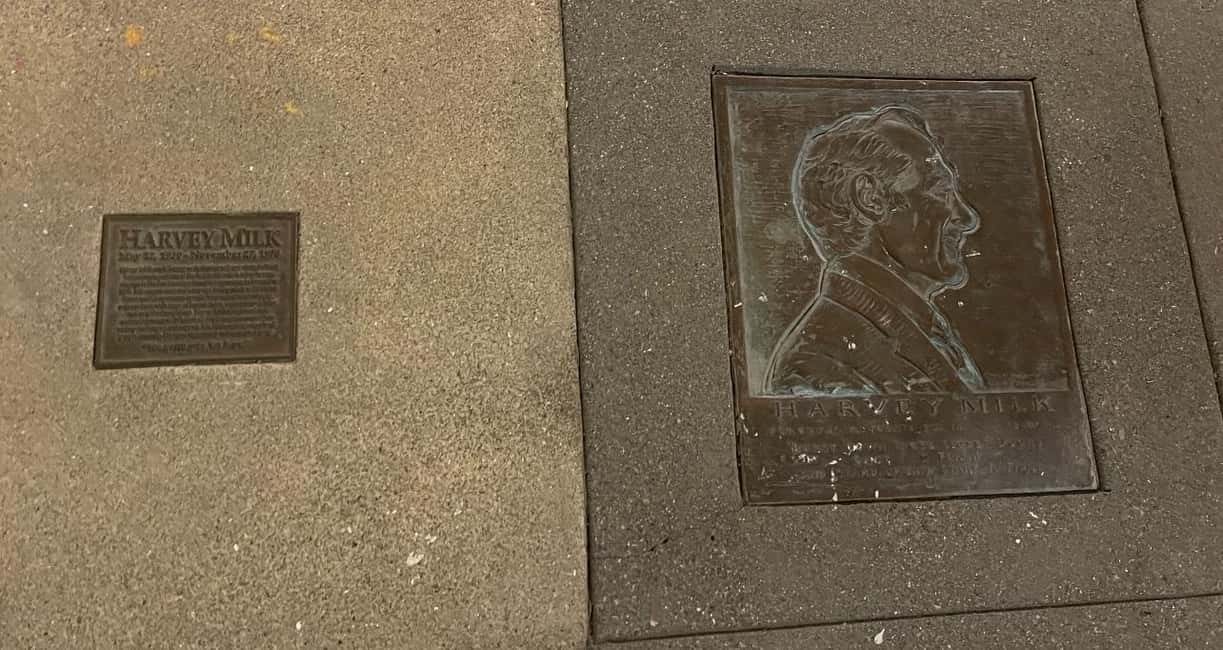
I like a tour that starts where the story actually happens, and this one begins at Harvey Milk Plaza, right next to SoulCycle at 400 Castro Street. That matters because The Castro isn’t one landmark. It’s a neighborhood of layers, and you’ll feel that in the way the guide moves you from one place to the next.
The tour runs for 90 minutes, so it has a clean pace. You’re not getting dragged for hours through “and then we turned left” moments. Instead, the focus stays on the people, policies, and public spaces that helped shape LGBTQ+ life in San Francisco.
You should wear comfortable shoes. The route is short on paper, but it’s still a walk through real city streets. And if you’re visiting during a busy moment (think major holidays and street activity), plan to keep your energy steady so you can follow along even when the street gets noisy.
You can also read our reviews of more walking tours in San Francisco

Eric and the activist-historian approach you can feel
Eric is the kind of guide whose background shows up in how he tells the story. He’s a sixth generation San Francisco native and historian, and he’s also a POC queer organizer and activist. That combination changes the tone. You don’t just hear about progress as if it happened by accident. You hear it as something people organized, fought for, and sometimes paid for.
A key plus: Eric also personally witnessed many of the historical events covered on the tour. That doesn’t mean everything is told as a personal memoir. It means the tour has urgency. It’s not just about what happened; it’s about what it meant when it happened.
From the reviews, there’s also a strong theme of clarity. One of the best things you can hope for in a walking history tour is that the guide keeps it understandable, especially when the day is chaotic. Eric checks in when the environment makes hearing tougher, so you’re not stuck straining the whole way.
And if your group is small, you may get more direct conversation time. One review mentions Eric taking extra time with a solo participant, which tells me the tour isn’t rigid. You can ask, react, and keep up.
The US military thread: how a city’s shape can be influenced
One of the most interesting aspects of this tour is that it starts with an angle many people don’t expect: the role the US military played in the formation of the “gayest city on Earth” idea. Instead of treating LGBTQ+ history as isolated from broader power structures, the tour frames it as connected to migration, work, and how communities grow around opportunity and safety.
What I like about this approach is that it gives you a lens. It helps you see The Castro not as a random “cool neighborhood,” but as a place shaped by forces larger than any single community organization. When you’re standing on a street corner later, the guide’s framing makes the space feel more intentional and less accidental.
Just keep in mind: the tour description doesn’t list a step-by-step military timeline with specific bases or dates. It’s more about unpacking influence—how military presence and movement helped set conditions for the community to form and grow.
Pink Triangle Memorial: the stop with the hardest emotional weight
You’ll visit the Pink Triangle Memorial, described as the first of its kind to honor gay prisoners killed during the Nazi regime from 1933 to 1945. This is the kind of stop that can shift how you experience the whole neighborhood.
The value here isn’t only remembrance. It’s contrast. You’re in San Francisco, looking at a memorial that connects local visibility to a global history of persecution. The guide’s job is to hold both ideas at once: honoring victims, and showing how memory feeds activism.
I also appreciate that the memorial is not treated as a quick photo stop. It’s presented as part of a larger LGBTQ+ story—one that includes survival, resistance, and the decision to build public recognition where it was once denied.
If you prefer a tour that focuses only on later local milestones, this stop might feel heavier than expected. But if you’re open to that weight, it becomes a turning point. It gives you context for why later battles for rights mattered so much.
Hibernia Beach (Castro LGBTQ+ Memorial): community memory at the shoreline
Next up is Hibernia Beach, also known as the Castro LGBTQ+ Memorial. A beach stop can sound casual until you remember what it’s for: turning a public space into a place of acknowledgement.
This is a good moment to slow down mentally. Shorelines make it easy to think in terms of time—what changes, what stays, what gets forgotten. The guide uses the location to connect physical space with lived experience and public recognition.
Practical tip: if the weather’s cool or windy, bring that one extra layer. The walk is short, but you’re standing and listening. And if you’re visiting during a busy period, expect that the shoreline area can have activity. Stay focused on what the guide is explaining, not on what’s going on around you.
You can also read our reviews of more historical tours in San Francisco


GLBT History Museum: turning street stories into artifacts
The GLBT History Museum is one of the stops that helps you connect the walking narration to tangible evidence. On a tour like this, it’s easy for history to feel like talking points. A museum stop anchors it. You get a more grounded sense of how the community preserved records, objects, and context over time.
I like adding this kind of stop because it changes what you do afterward. When you leave, you’re not just repeating memories from the tour. You’re carrying a mental reference point for how the story can be verified and revisited.
The description doesn’t specify how much time you’ll spend inside, so you should treat it as part of a planned flow rather than a museum “day trip.” If you want to go deeper on your own later, this is the stop that will likely create the strongest motivation to return.
Jane Warner Plaza: naming heroes the city can’t ignore
At Jane Warner Plaza, the tour ties location to recognition. The plaza is named after the first openly lesbian police officer on the San Anselmo police force.
That’s a small piece of information with big impact. It shows you how public naming works like policy. When a city puts a name on a plaza, it’s making a claim about who belongs in civic memory.
I also like that this stop broadens the geography of LGBTQ+ history beyond just one city bubble. You hear about someone who was openly lesbian in law enforcement, which is exactly the kind of role that challenges stereotypes and shifts what is possible.
As you stand there, it helps to think: a “history tour” isn’t only about past suffering. It’s also about milestones—people who pushed boundaries and changed what communities could see as normal.
Harvey Milk’s former camera shop: politics in a real storefront
The tour takes you to Harvey Milk’s former camera shop, along with his campaign headquarters and residence. Milk is one of those names that most people recognize, but tours often treat him like a poster rather than a person embedded in everyday place.
Here, the value is the geography. Standing near sites tied to his business and organizing life helps you picture how political work grows out of community contact. A camera shop is a practical business, not a metaphor. A campaign office is where strategy becomes action. A residence is where decisions become human.
The tour also helps you see why his story keeps recurring in civic conversations. Milk wasn’t only about one moment. He represented a way of organizing that made LGBTQ+ visibility political in a new, harder-to-ignore way.
If you care about how activism scales from small interactions to citywide change, this is one of the stops that clicks immediately.
White Night Riots and the 1979 gay rights ordinance: why backlash shaped policy
The Castro story doesn’t move in a straight line. This tour explicitly unpacks the legacy of the White Night Riots and the landmark gay rights ordinance of 1979.
Why that sequence matters: rights can expand, but backlash can also reshape the speed and direction of progress. Knowing that history helps you read later events with more clarity. You start to understand why people fought not just for acceptance, but for durable protection.
You won’t leave thinking of these events as “old news.” The guide connects them to the neighborhood’s identity and to why public recognition and legal change still matter.
One caution: if you’re hoping for a purely celebratory tour, this part will likely feel more complicated. That’s not a flaw. It’s the truth of how political change works.
So… is it worth $39 for 90 minutes?
Let’s talk value without pretending it’s magic.
At $39 per person, you’re paying for a 90-minute guided walk with a local historian (and, importantly, a guide who personally witnessed many of the events covered). For me, the price makes sense if you want more than sightseeing. This is a story-focused tour, built around specific locations tied to major LGBTQ+ milestones and civic change.
You also get a small but meaningful advantage: it’s English and wheelchair accessible, which helps it be practical for more people.
What you don’t get is a “museum day.” The tour is designed as a focused neighborhood narrative. If your goal is deep academic study or spending hours inside every site, you might want to pair this with independent time later. But if your goal is to get oriented fast and understand what you’re looking at, this is a strong use of an afternoon.
Who this tour suits best (and who might want a different style)
This tour is a great fit if you want:
- A guided way to understand The Castro’s LGBTQ+ history through named locations and major events
- A clear connection between street space, civic policy, and community organization
- A guide who can explain the story with real conviction and firsthand context
It may be less ideal if you want a quiet, purely reflective walk without the political edge. Some stops carry heavy emotional weight (like the Pink Triangle Memorial), and the conversation includes backlash and rights battles, not only feel-good milestones.
Also, if you’re sensitive to noise, pick a calmer time of day if you can. On days like Halloween, the Castro can get chaotic, and hearing can be affected by construction or nearby events. The good news: the guide is attentive and adjusts so you can keep up.
Should you book the San Francisco Castro LGBTQ+ History Tour?
I think you should book this tour if you want a fast, grounded way to understand why The Castro looks and feels the way it does. The combination of Eric’s background, the specific stops (Pink Triangle Memorial, Hibernia Beach/Castro LGBTQ+ Memorial, GLBT History Museum, Jane Warner Plaza, and Harvey Milk’s key sites), and the way the tour connects major events to the physical neighborhood makes it more than a checklist.
Skip it only if your style is “show me the sites, no politics,” or if you want a long museum-style experience rather than a tight neighborhood walk. For most people looking to get oriented and learn something real in a short time, this tour is a solid choice.
FAQ
How long is the Castro LGBTQ+ History Tour?
The tour lasts 90 minutes.
Where do I meet the guide?
You meet at Harvey Milk Plaza, next to SoulCycle, at 400 Castro Street.
What is the price per person?
The price is $39 per person.
Is the tour wheelchair accessible?
Yes, the tour is listed as wheelchair accessible.
What language is the tour offered in?
The tour is offered in English.
What stops are included?
Stops include the Pink Triangle Memorial, Hibernia Beach (Castro LGBTQ+ Memorial), the GLBT History Museum, Jane Warner Plaza, and Harvey Milk’s former camera shop, campaign headquarters, and residence, along with discussion of the US military’s role, the White Night Riots, and the 1979 landmark gay rights ordinance.
What should I bring?
Wear comfortable shoes.